By JULIE CARLE
BG Independent News
The Wood County Alcohol, Drug Addiction and Mental Health Services (ADAMHS) Board and staff are in the process of reviewing 47 applications from nine county service providers that are seeking funding for the 2027 Fiscal Year.
The allocation process, which is new this year, is rigorous, time-intensive and designed to ensure fairness and transparency, Executive Director Amanda Kern explained at the March board meeting.
“Every application is being scored by at least two staff members,” she said, about the process to create consistency and accountability in funding decisions.
Kern and the staff recently held the first provider meeting to review their applications, review their scores and talk through questions, concerns and technical issues. Sharing the scoring justification with the providers gives them feedback and helps them see how they have been doing.
“This has been a lot of time commitment, but it really feels worthwhile and a great process working the way that we hoped,” Kern added.
The allocation recommendations will be presented during the board’s Oversight and Administration Committee meeting at 4 p.m. on April 13.
A lengthy discussion centered on the administrative budget, specifically whether to make a grant-funded systems navigator position permanent once the grant funds expire in October. The staff has applied for additional grant monies, but won’t know if the grant is approved for awhile.
“What happens if we don’t get additional grant dollars?” asked board Treasurer Matt Battiato.
If additional grant funds are not acquired, Kern said, “We will be paying for that position with available funds. My plan is that we keep that position and move those costs into the System of Care supports.”
If that position goes away, “We will lose days of productivity if we don’t have this role,” she said, adding that the position has already proven its value over the past two years. The position plays a critical role in managing clinical coordination across the system and preventing
However, several board members expressed hesitation, saying they did not feel adequately prepared with enough data to make a decision during the meeting that centered on long-term financial commitment.
“It’s news to me, maybe to other members of the board that that’s what we were doing today, that we were going to permanently hire an additional staff member to the board,” Battiato said.
“This feels more like we’re taking on a new position,” said Vice Chairperson Frank McLaughlin. “I understand the role that you have as the executive director in terms of personnel, and I really do support that, but I would have felt better having a discussion that we’re kind of dancing around it now about this position.”
“This is something I really thought about and invested in,” Kern responded. “If I felt that it wasn’t a worthwhile investment and it wasn’t producing to the level that I’m expecting my team to produce that, I wouldn’t have even asked.”
“I really don’t want to make this an indication that I’m questioning you, but I guess this feels like taking on a new position, a new permanent position, is something that whether or not the board is technically required to do, it feels like it’s something that we should hear about,” McLaughlin said.
The board agreed to table the decision for a future meeting once more data is provided.
Adapting to state changes
Kern updated the board about the transition to a regionalized Mobile Response and Stabilization Services (MRSS) model, a statewide initiative aimed at improving crisis response systems.
Gov. Mike DeWine had mentioned the topic during his State of the State address. His initiative was to ensure that every adult and child in Ohio would have access to 24/7 mobile crisis services through a regionalized mobile response and stabilization services (MRSS) model.
The change prompted Children’s Resource Center’s plan for 24/7 MRSS to transition to a regional initiative. The state contracted with Coleman Services and then Coleman subcontracted with CRC for crisis services from 8 a.m. to 8 p.m.
The change was described as “a little disruptive,” Kern said, “but we never disrupted coverage.” She credited CRC staff with maintaining uninterrupted 24/7 crisis coverage throughout the transition.
Also at the meeting, the board marked the launch of a suicide review board in February, an initiative aimed at improving prevention strategies through case analysis. Plans are to develop a future overdose fatality review process.
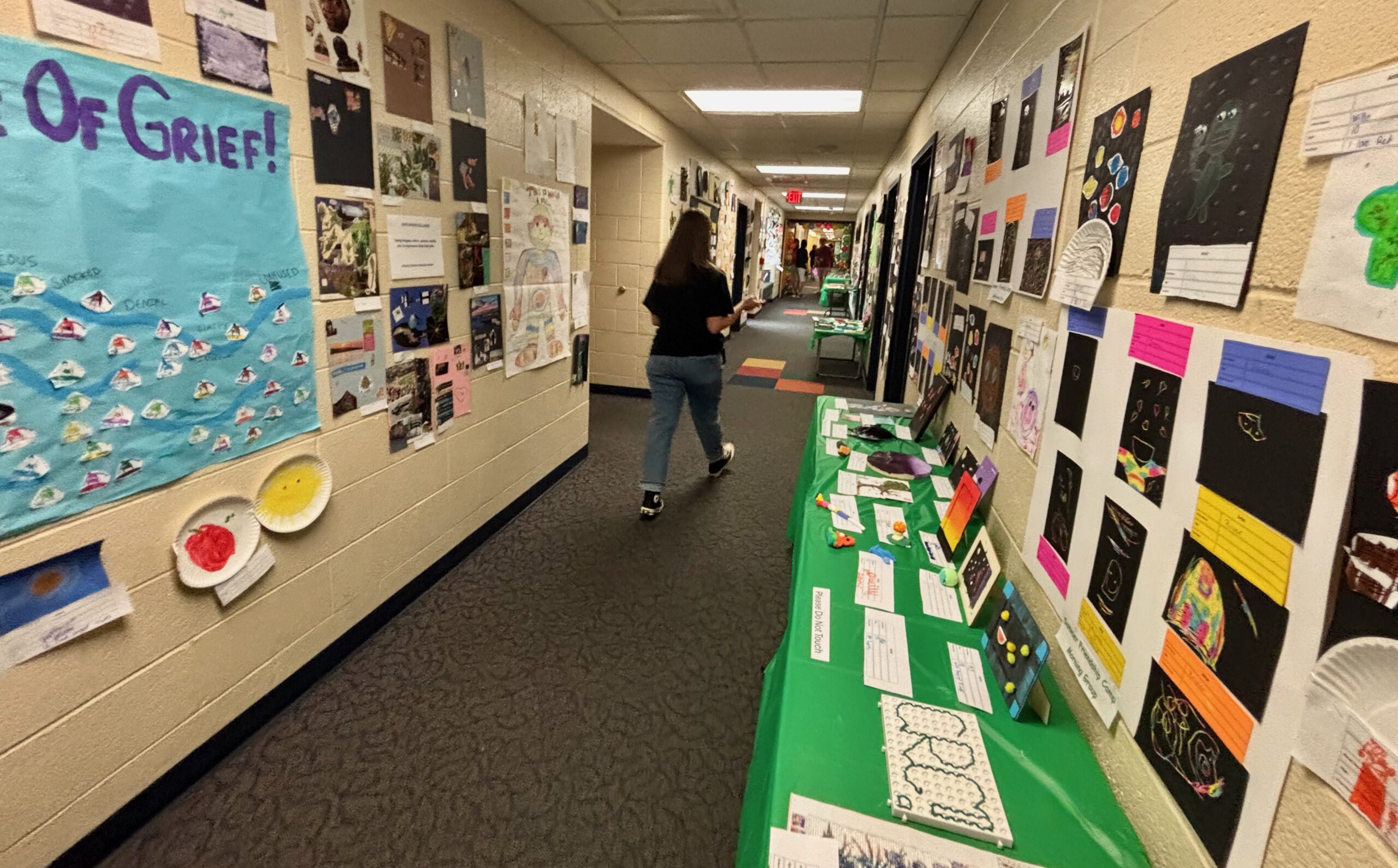
National Alliance on Mental Illness (NAMI) Wood County presented information about their programming. While they do not provide treatment services, the role the agency plays in the county is invaluable.
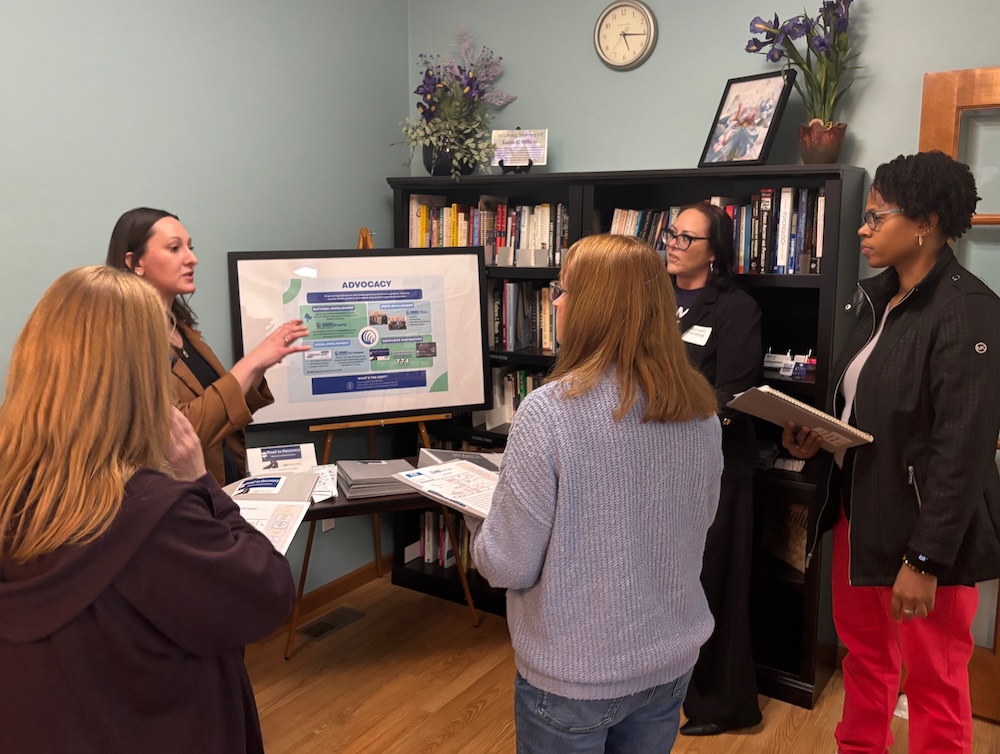
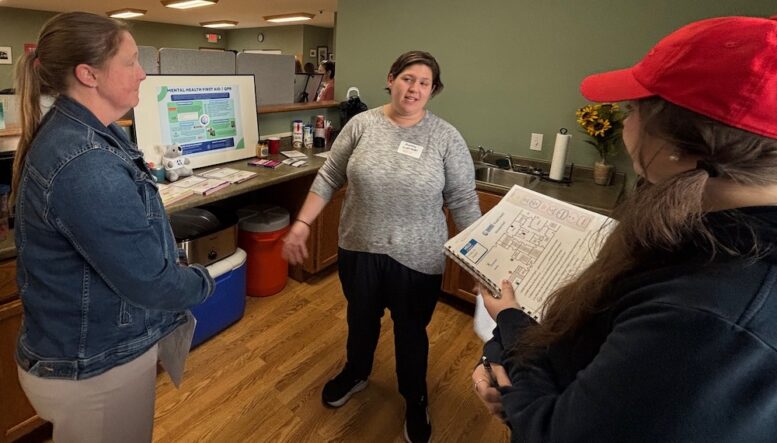
NAMI Wood County Executive Director Jessica Hartman shared a video that included testimonials and then encouraged board members and guests to visit stations throughout the NAMI space to gain additional information from staff and volunteers.
Topics included NAMI education series, NAMI ending silence about suicide, the annual mental health conference series they host, mental health first aid (Question, Persuade, Refer–QPR), Crisis Intervention Team (CIT), awareness and advocacy.