By JAN McLAUGHLIN
BG Independent News
Using skills some view as obsolete, volunteers turned century-old cursive correspondence into computer text on Monday at Bowling Green State University.
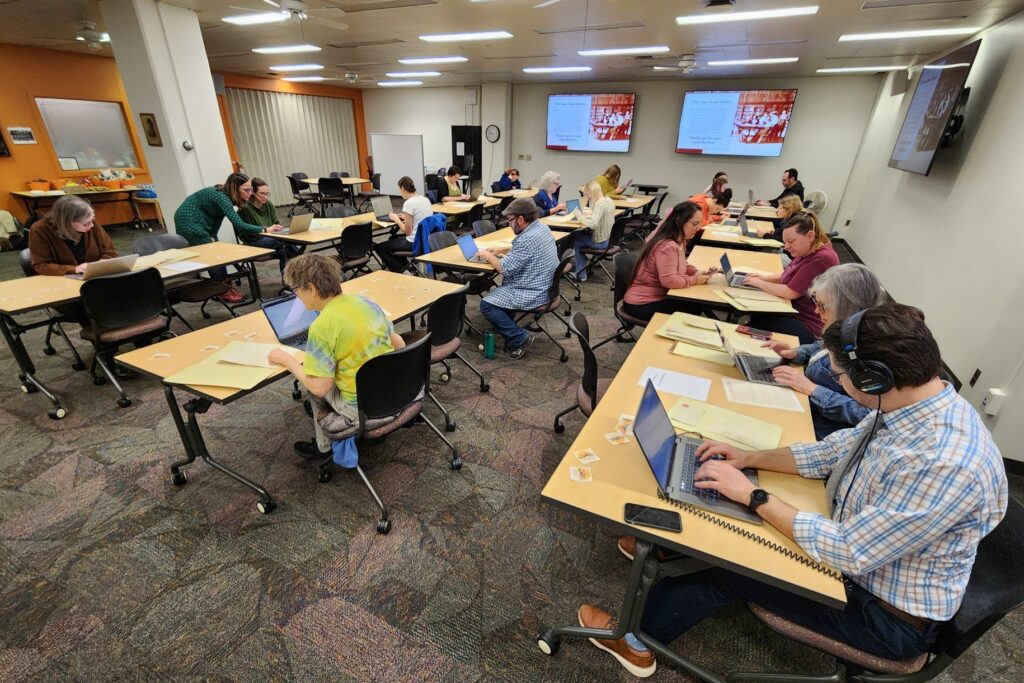
As part of the national AmeriCorps Week of Service, the BGSU Center for Archival Collections invited the campus and community to participate in a program called “Cursive for a Cause” in the Pallister Conference Room at the Jerome Library.
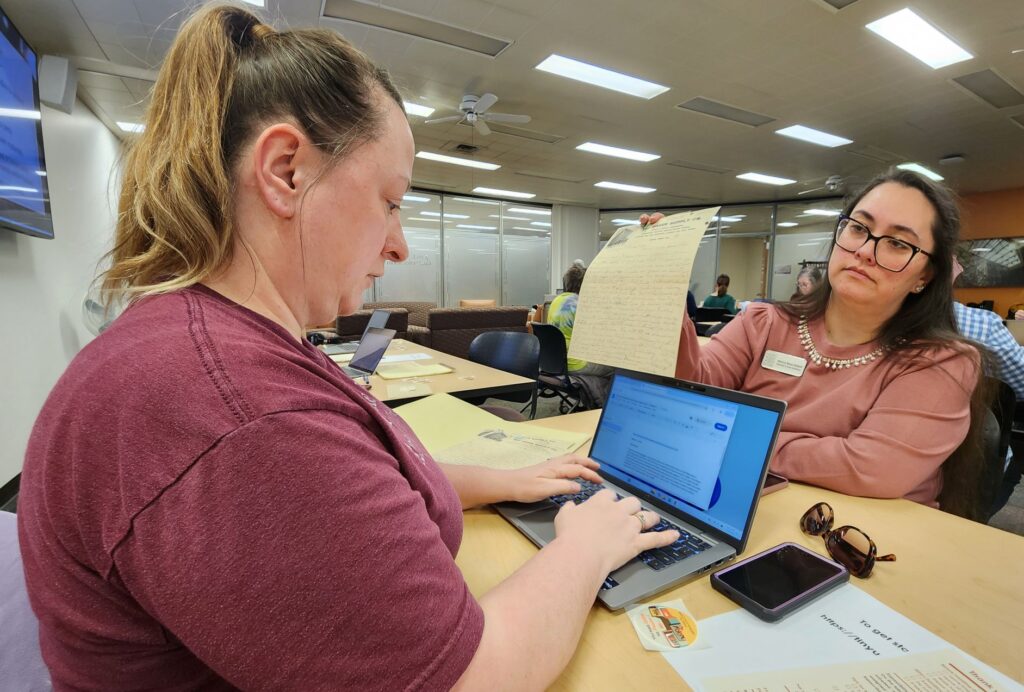
Colleen Yarger, of Bowling Green, volunteered to transcribe cursive pages since she has a deep appreciation for history and is proficient at reading cursive.
“Or I thought I was until I started reading this,” Yarger said looking at the beautiful curling cursive page penned in 1903. “I felt really confident in cursive.”
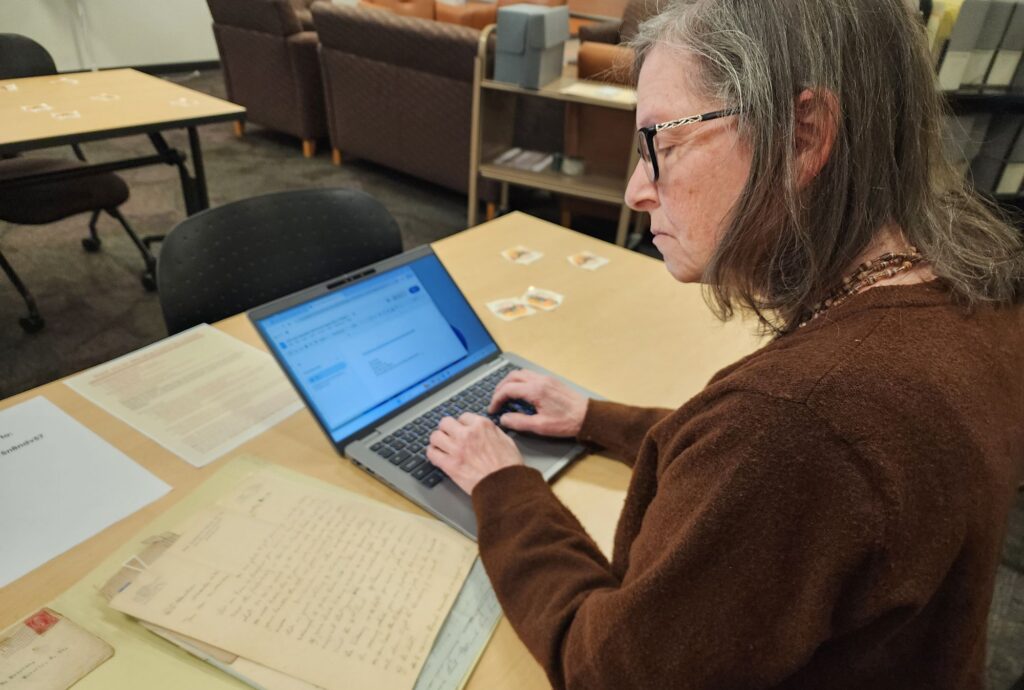
But it quickly became apparent that this task would take some patience.
In collaboration with ServeOhio, the state’s commission on service and volunteerism, the event supported the preservation of women’s history through volunteer transcription of handwritten, cursive historical documents housed in the BGSU Center for Archival Collections.
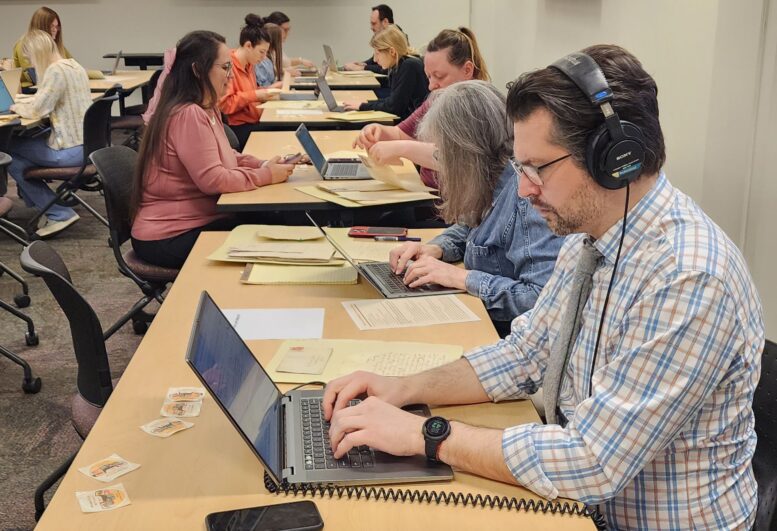
Approximately 20 volunteers from the university and community squinted at the curled lettering to decipher the cursive for posterity. They were provided with laptops to create typed transcripts of the materials.
The documents selected for Monday’s project were written by women. Most were letters, diaries and journals penned by women.
“That’s another aspect of history,” that shouldn’t be forgotten, said Cecilia Seibert, from AmeriCorps.
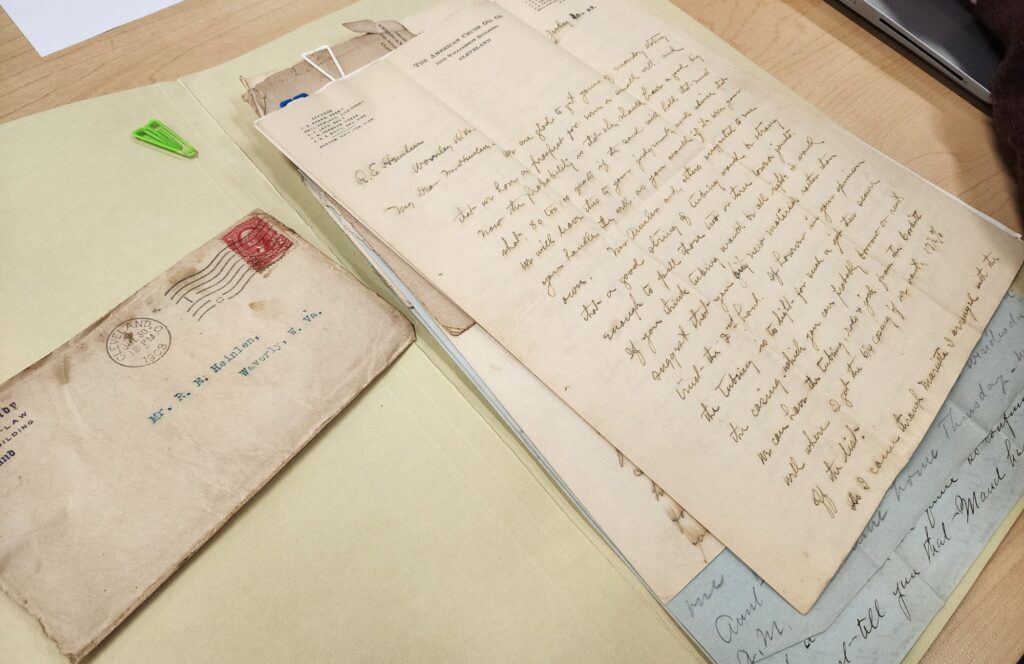
And now is a good time to transcribe the materials – while some people still use cursive writing – or can at least read it, she said.
“It’s not officially dead,” Seibert said. “This is keeping it alive.”
Elementary children no longer line up at the chalkboard, practicing elaborate loops for their cursive writing. Most now communicate using their thumbs on tiny keyboards.
To some youth, cursive writing is as mysterious as hieroglyphics – found only in old documents, in rare love letters, or in unreadable signatures.
It’s a cursive conundrum. Some see this as a natural progression, others as a tragic loss. Plus, there’s a touch of art to cursive writing that just doesn’t exist in typed words.
Some educators, already feeling pinched for instruction time, see cursive as collateral damage in the fight to get better scores on standardized tests. It’s not the schools driving this change, but rather the schools responding to reality.
That leaves archivists – with the help of volunteers – to make sure cursive does not become illegible to historians.
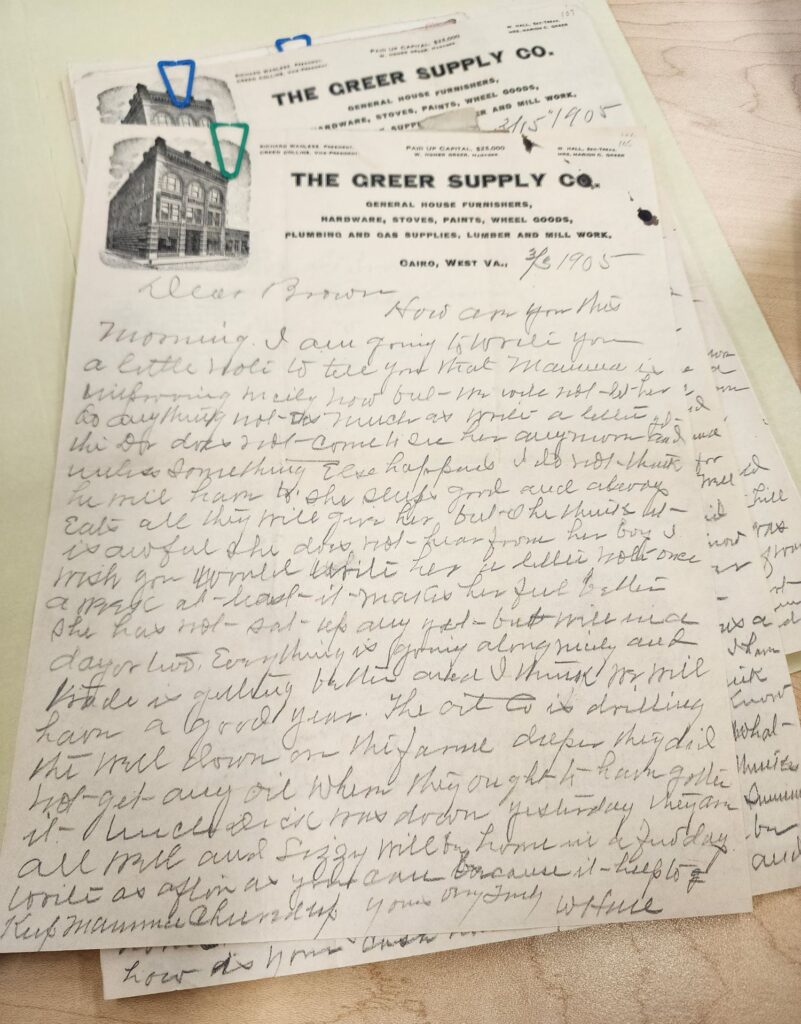
Holly Kirkendall, curator at the Wood County Museum, came Monday to support her archival colleagues. She was handed a folder of personal letters from 1905, written on company letterhead from the Greer Supply Co., in Cairo, West Virginia.
This particular writer had rather messy cursive, difficult to decipher.
“And I’m a seasoned expert,” Kirkendall said. “There’s no punctuation. It’s making me crazy.”
But like the other volunteers, Kirkendall plodded away on the letters, knowing that putting them in computer files will help bolster academic research on women’s lives, works and contributions, making the handwritten materials searchable, digital resources that support accessibility and public history now and into the future.
The letters told of large families, asking questions about school or sicknesses, and requests for more frequent correspondence from loved ones.
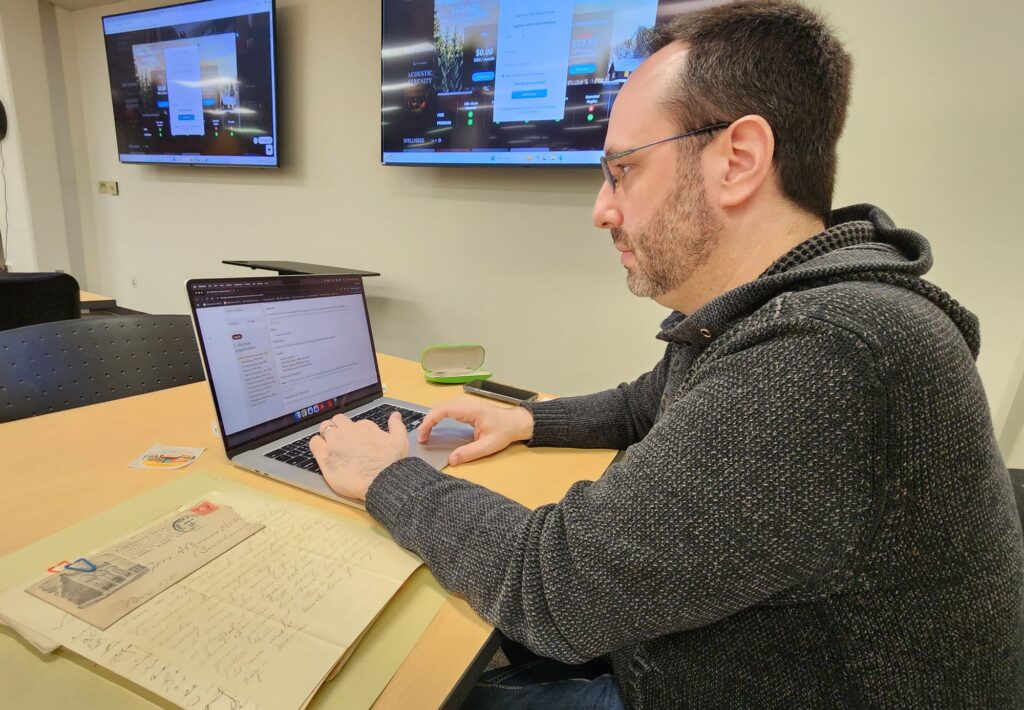
At another table, Rob Snyder, who works at Jerome Library, wanted to help with the project, and felt capable since he’s been reading cursive his whole life.
“I think it’s important to digitize these things to make them accessible to everyone,” Snyder said.
His folder contained beautiful flowing letters between a mother and her son. One letter was signed “Much love for my dear boy, Mama.”
University archivist Jennifer Long Morehart said the organizers were pleased with the number of volunteers, and would like to continue the transcribing efforts.
“We hope to do this again,” Long Morehart said.
Michelle Sweetser, director of the Center for Archival Collections, said the project was a perfect pairing of expertise from the community and university to make history more accessible.
“This can be challenging. We weren’t sure what to expect,” Sweetser said. “But the resources are here.”