
By JULIE CARLE
BG Independent News
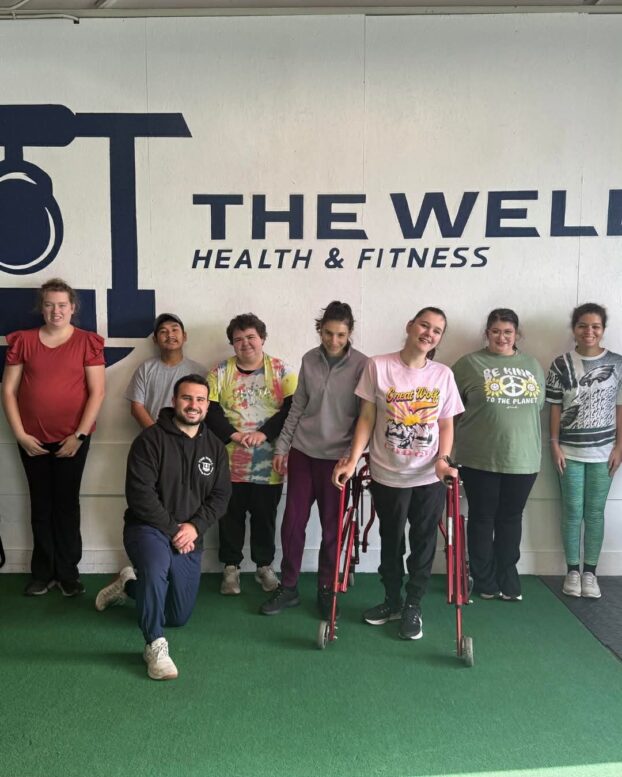
At first glance, the gym looks like many others — racks of weights, exercise stations and the steady rhythm of people moving through their workouts. But at The Well Health and Fitness in Bowling Green, the mission goes far beyond fitness. Here, the goal is inclusion, confidence and building a place where everyone — regardless of ability — can feel they belong.
What started with a single email has grown into an adaptive athlete program that is changing lives for both participants and coaches.
Owner Sam Beaver said the program began almost by accident about a year ago.
“We got an email from someone whose daughter was transferring to BGSU,” he recalled. “She has cerebral palsy and they were looking for somewhere for her to continue training. They said they couldn’t find anyone in the area who would work with her and asked if we could.”
The honest answer at the time was simple.
“We told them we had never worked with someone with cerebral palsy before,” he said. “But if they wanted to give it a shot, we’d do everything we could to make it a great experience.”
That first athlete opened the door to something much bigger.
Months later, as the gym approached a milestone of about 100 members, the staff began asking an important question: Who were the next people they wanted to serve?
“We had a meeting with our coaches and asked, ‘Who are the next 50 people we bring on? What are they struggling with and how can we help them?’” he said.
The conversation kept circling back to adaptive athletes — people with intellectual or physical disabilities who often struggle to find fitness spaces willing or able to work with them.
After researching the need in the community and finding limited options, the gym pursued certification through an adaptive fitness organization. Today, the staff has worked with more than 20 adaptive athletes and currently trains several regularly each week.
But the program isn’t just about exercise.
The first month for every adaptive athlete begins one-on-one with a coach, focusing on something more foundational than strength or endurance.
“Our first priority is building familiarity, trust and a relationship,” Beaver explained. “We want them to understand this isn’t a punishment. This is somewhere we come to have fun.”
After that initial period, coaches determine whether the athlete would benefit most from continuing one-on-one training, joining a small group or participating in larger group workouts.
That flexibility is key because no two athletes are the same.
“If you’ve met one person with autism, you’ve met one person with autism,” he said. “Every athlete is different, so we build programming around the individual.”
For athletes with intellectual disabilities, the exercises themselves often don’t change dramatically. What matters most is how instructions are delivered.
“The simpler we can explain something, the better,” he said. “Instead of exercise science jargon, it’s ‘your butt touches the box and then you stand up.’”
Color-coded stations, consistent routines and visual cues help athletes stay engaged and confident during workouts.
For athletes with physical disabilities, training is tailored even further. Some sessions focus on building upper-body strength or improving coordination. Others mimic real-life situations.
“What happens if someone drops something on the floor?” he said. “Do they have the strength and coordination to get it? Can they reach a phone if they fall from their chair? Those are the kinds of movements we work on.”
While the physical improvements matter, the emotional and social benefits are often just as powerful.
Many adaptive athletes face barriers when it comes to long-term physical therapy, especially when insurance stops covering sessions if measurable progress slows.
“This gives them a place to keep moving, keep building relationships and keep feeling successful,” he said.
Success might mean pushing a weighted sled, holding a dumbbell longer than last week or simply walking through the door with confidence.
One of the most rewarding moments, he said, is watching a new athlete grow comfortable in the space.
“You see someone walk in for the first time a little nervous, which anyone would be,” he said. “Then a few weeks later they come in, put their shoes in the cubby, grab their water bottle and start warming up because that’s just what they do now.”
The impact extends beyond the adaptive athletes themselves.
The gym’s general membership often works out alongside adaptive participants, creating opportunities for interaction and understanding.
“Inclusion isn’t just sending an invitation,” he said. “It’s inviting people to the table.”
Members watch adaptive athletes train, learn how to interact and become part of the same community.
For the coaching staff, the experience has also been transformative.
Working with adaptive athletes has pushed coaches to become clearer communicators, more patient and more creative in their approach.
“It’s helped us become better coaches for everyone,” he said.
The gym currently has three primary coaches — all with exercise science backgrounds — who handle most training sessions, along with several “bench coaches,” members trained to step in when needed.
Hiring the right people has been crucial to making the program work.
“The key to hiring a great coach is hiring the person first,” he said. “You can teach someone the fitness side. But you need the right personality and the right heart.”
Looking ahead, the gym plans to continue expanding the adaptive program carefully and sustainably.
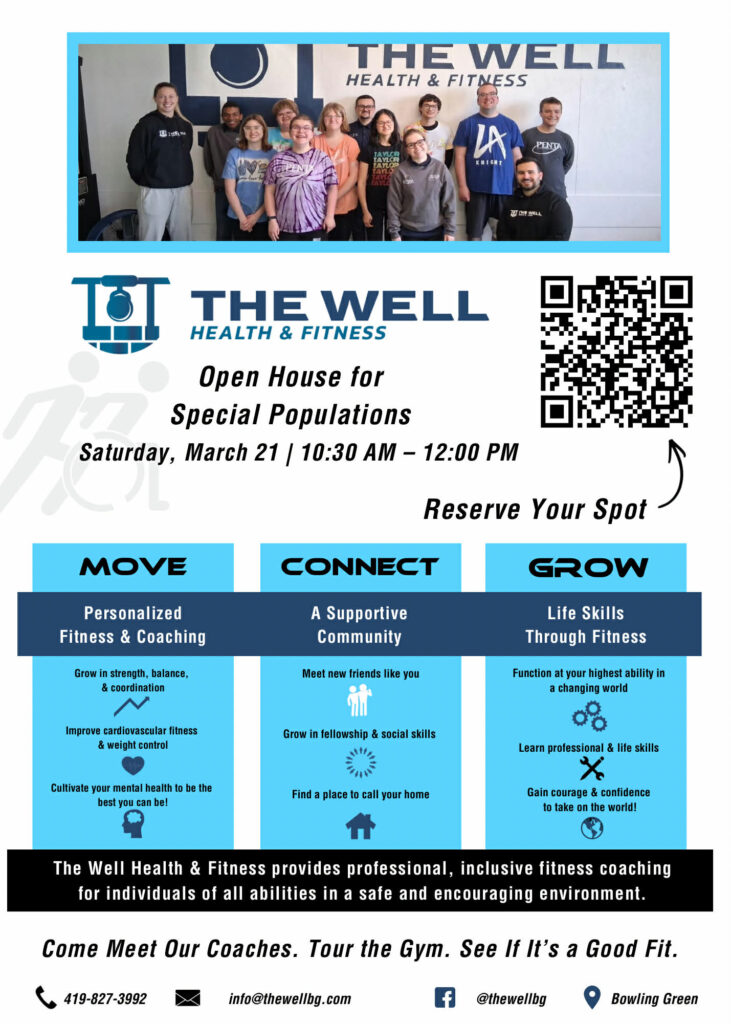
An adaptive open house, scheduled for March 21 from 10:30 a.m. to noon, will give potential athletes and families a chance to tour the space, try exercises and learn about available programs. The Well is located at 1099 N. Main Street, at the rear of Halleck Auto Sales.
But growth isn’t the primary focus.
“We’re about sustainable growth,” he said. “If that means adding one person at a time and doing it the right way, that’s what we’ll do.”
At the core of the gym’s philosophy are three simple goals: make an impact, make a profit and make it home for dinner.
“If you’re not open long enough to stay in business, you can’t make an impact,” he said. “But if you’re making an impact at the expense of your own life, that’s not good either.”
For now, the gym is focused on continuing its mission — one athlete, one workout and one relationship at a time.
“We’re just a place that cares,” he said. “We’re trying to do the next right thing, imperfectly, one shaky step at a time.”
