
BY NICK EVANS
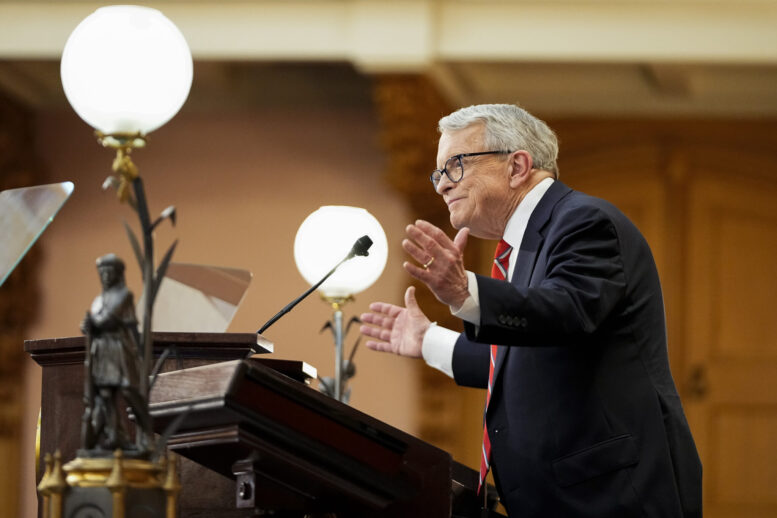
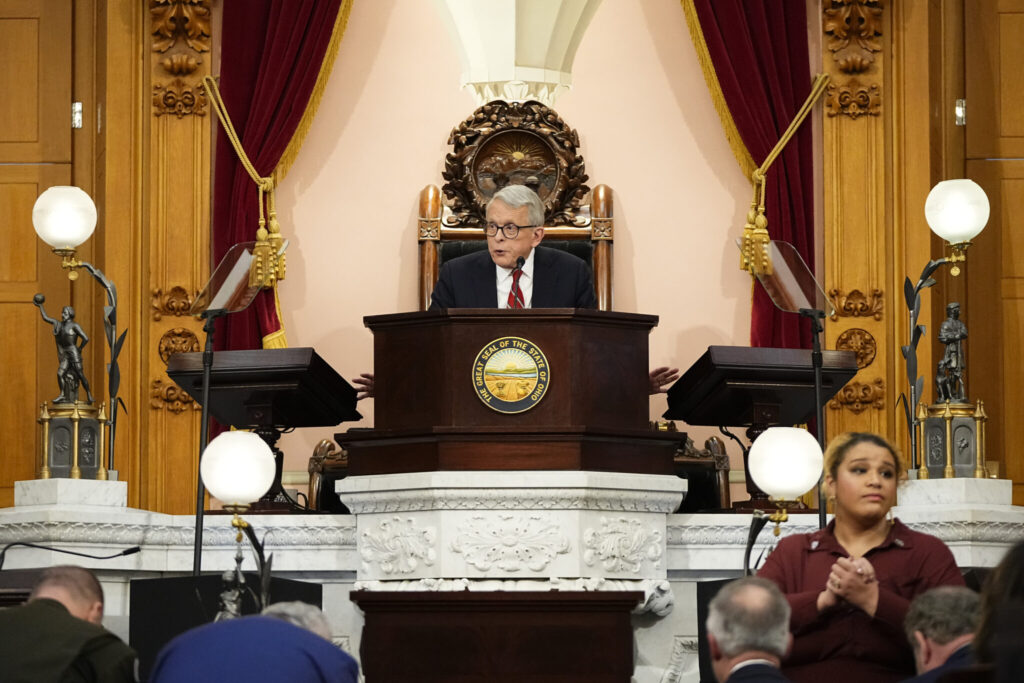
Ohio Gov. Mike DeWine focused on improving the lives of children during his final State of the State address Tuesday, a theme that has been continually central in his annual speeches to the General Assembly.
He touted the state’s success in implementing the phonics-based science of reading and prohibiting cell phones in classrooms. But he called on lawmakers to do more — expand recess, address chronic absenteeism, and take steps to better protect kids online.
After 45 years in elected office, the governor is nearing the end of the road. After he completes his term this year, he’s unlikely to seek elected office again. At an event last December, DeWine flashed a small countdown clock to reporters.
“That’s what I look at every morning,” he said. It’s a reminder to approach everything “with a great sense of urgency.”
After Tuesday’s address, Republican leaders praised what they liked and dismissed or ignored what they didn’t.
Democrats said that while they’re happy to work across the aisle on programs like vision care and water quality, too often, Republican policies benefit some but not all Ohioans.
Science of reading
DeWine’s focus on legacy wasn’t hard to miss. He described how his grandfather planted trees late in his life even though he wouldn’t get to see them grow.
“He planted them nonetheless,” DeWine said, “because he believed in the future, because he believed in building a better world for generations to come.”
“We plant many trees together,” he told lawmakers. “And they are, in fact, growing.”
The central pillar of DeWine’s second-term education policy has been transitioning to the “science of reading” curriculum — for young learners as well as the future educators who will teach them.
DeWine described meeting a dyslexic student named Liam Kramer in 2023.
Kramer had made it through his freshman year of high school without ever really leaning to read. But DeWine said when he started working with a tutor specializing in the science of reading, “things started to click.”
“Liam learned to read, really read,” he said. “He has since graduated from high school and has a job. He just showed Fran and me a picture of the house he owns, and he’s planning for his next career move.”
When DeWine pointed out Kramer in the gallery, he got a standing ovation.
“Liam says the science of reading changed his life,” DeWine said.
On the training side, the governor thanked lawmakers for passing legislation requiring Ohio colleges and universities to use science of reading materials.
A recent audit found two-thirds of colleges and universities are on board, but DeWine expressed optimism that the rest will get there. If they don’t, he said, state law will force them to close their programs.
“Our laws are the toughest in the country,” DeWine said. “In fact, that’s why people from across the country are now calling us, calling Ohio, because they too, want to follow what they call the Ohio plan.”
Healthy habits
The governor highlighted East Cleveland’s efforts to address chronic absenteeism.
School officials follow attendance records and reach out to families if a student misses more than a day or two.
They found kids weren’t skipping school because they didn’t care.
Instead, DeWine said, “they were facing real barriers — transportation challenges, health issues, difficult situations at home, on and on.”
So the school district focused on connected students with the services they need.
“Results speak for themselves,” DeWine said. “East Cleveland reduced chronic absenteeism by over 10% last year. At the same time, reading proficiency among the third graders went up by more than 10%.”
The governor also praised legislation doubling the time for recess and extending it to students all the way through 8th grade.
Recess gives kids a chance for physical activity, he said, but it also makes them more attentive students when they’re in the classroom.
The current half hour allowed for recess?
“That’s simply not enough,” DeWine said.
DeWine also made a mental health case for enacting new protections for kids online.
Eliminating cell phones in classrooms has led to a “culture change” in schools around Ohio, he said, but the time children spend on the internet outside of schools is still robbing them of chances exercise or learn social skills.
And the governor said artificial intelligence tools can present even darker threats.
He urged lawmakers to require automatic parental control features on cell phones and other devices.
He also called on them to prohibit child pornography produced with artificial intelligence, and to hold tech companies accountable if their tools help users kill or harm themselves.
“Ohio law needs real consequences connected with it,” he said. “The Ohio Attorney General and county prosecutors must have clear legal tools to hold these tech companies criminally and civilly accountable. We need that bill.”
Republican response
DeWine told lawmakers they saved 280 lives by passing distracted driving legislation, but he pressed them to go one step further and make seatbelt violations a primary offense.
That change would allowing law enforcement officers to pull a car over solely because a person isn’t wearing a seat belt.
Ohio House Speaker Matt Huffman and Ohio Senate President Rob McColley threw cold water on that idea.
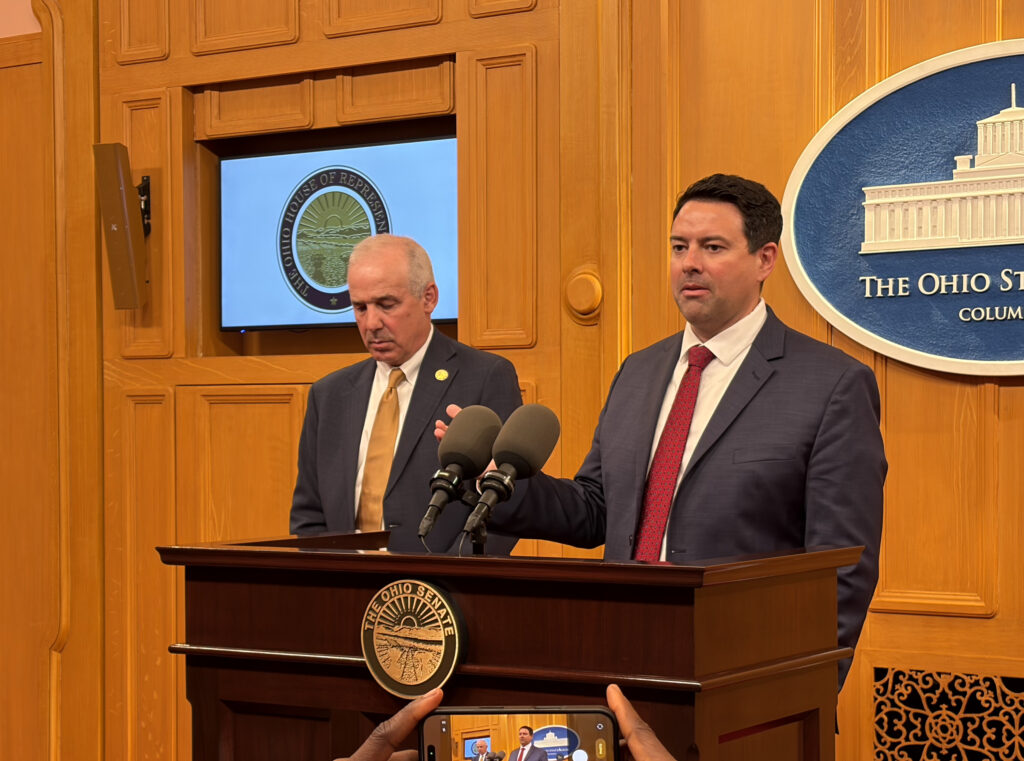
“It’s really kind of an interesting mix of legislators who are concerned about having primary seat belt laws,” Huffman said.
“They range from what I would call libertarian-with-a-small-l within the Republican Party, to urban Democrats who feel like their populations would be most affected.”
Of course, McColley said, people should wear seat belts, and lawmakers want them to wear seat belts, but it’s difficult to convince a majority of lawmakers to back changes in the law.
“To what extent is this going to be used in a manner that may be targeting individuals?” McColley asked. “To what extent that this is going to be used in a manner that is going to be detrimental to the population that’s trying to assist?”
As for legislation to regulate tech companies, the leaders seemed sympathetic but noncommittal.
Huffman said the state has a role to play, but so does the federal government, and he’s not entirely sure where that line gets drawn.
Making a comparison to basic liability laws, Huffman said tech companies clearly need to face some level of accountability for their products.
“If a something explodes in an industrial site, we don’t say, well, the company’s not responsible because they weren’t there,” he said.
“When it happens, they have some responsibility, not just to their workers, but to the people who otherwise would be injured.”
Asked about Senate legislation focused on AI-produced child pornography, McColley said existing revenge porn laws punish people for sharing sexually explicit material without a person’s consent.
“I don’t understand why we wouldn’t apply the same logic to AI-generated material,” he said.
Democratic response
Democrats asked whether Ohioans are better off today than they were a year ago.
Ohio Senate Minority Leader Nickie Antonio pointed to the Trump administration’s immigration crackdown, an expanding war in the Middle East, and Ohio Secretary of State Frank LaRose handing over state voter data as Congress considers legislation requiring proof of citizenship to vote.
“Ohioans across the state are asking themselves, are we better, actually better off than we were a year ago?” Antonio said.
The costs of health care, housing, and utilities are all going up for far too many Ohioans, she said.
“We hope in the final year of the governor’s time in office,” Antonio said, “he will join us in the efforts to support hard-working families across Ohio so that next year, many more Ohioans are in a better place and can say that they were indeed better off than last year.”
Ohio House Minority Leader Dani Isaacsohn said DeWine’s vision of Ohio only looks rosy if you ignore major challenges.
The governor didn’t mention property taxes or the cost of child care and housing — instead, he talked about a physical fitness program spearheaded by Lt. Gov. Jim Tressel.
A wall-sit isn’t going to fix Ohio’s very real problems, Isaacsohn insisted.
“The governor talked about Ohio being strong, and in some ways it is,” he said. “But strength at the top and struggle at the bottom is not a success to be celebrated. It is a failure to be addressed.”
Over and over, he said, Republican lawmakers have backed policies that benefit wealthy Ohioans.
The most recent budget earmarked $600 million for a new Browns stadium, he said, and now the richest 1% of residents pay $50,000 less each year on average.
“We have to stop choosing billionaires,” Isaacsohn said. “That is not to say there’s anything wrong with their success, but it should not earn them a government handout.”
