By DAVID DUPONT
BG Independent News
Not long ago, we were at a fish store in Portland, and the topic of museums came up. Maybe I had a Portland Museum of Art sweatshirt on. Regardless, the clerk said she loved visiting art museums. I replied as I always do in such situations with a hearty endorsement of the Toledo Museum of Art. If you ever find yourself in Toledo, go to the TMA. Or make it the reason for a trip . After all, it’s also a day trip from Toledo to the museums in Cleveland and Detroit.
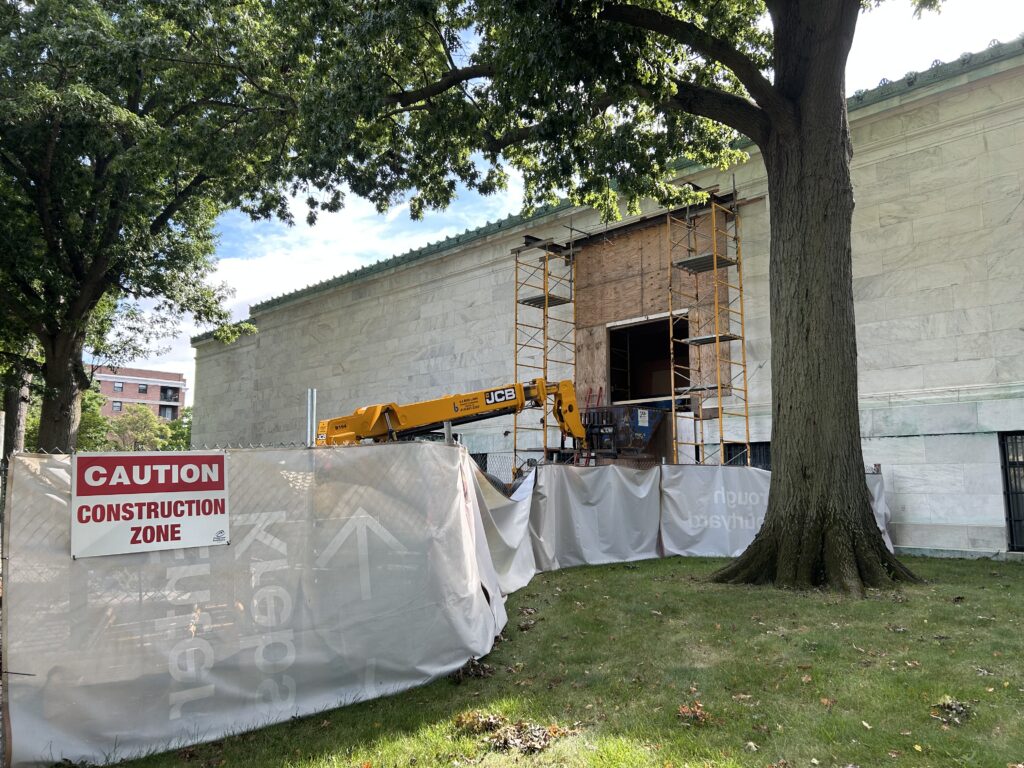
Well, such advice currently has a major caveat attached. The museum’s main structure, the Green Building (so-named for its architect E.B. Green), is closed for a complete reinstallation, the first in 40 some years. So maybe that trip should wait until November, 2027, when the new vision for the museum will be unveiled. In the meantime, construction crews and museum staff are busy inside bring this new vision to life. Click for more information.
For a beloved institution such as the Toledo Museum that causes a certain amount of anxiety including a restiveness among those who long loved the museum and are concerned about what this reinstallationmeans for this cherished landmark.
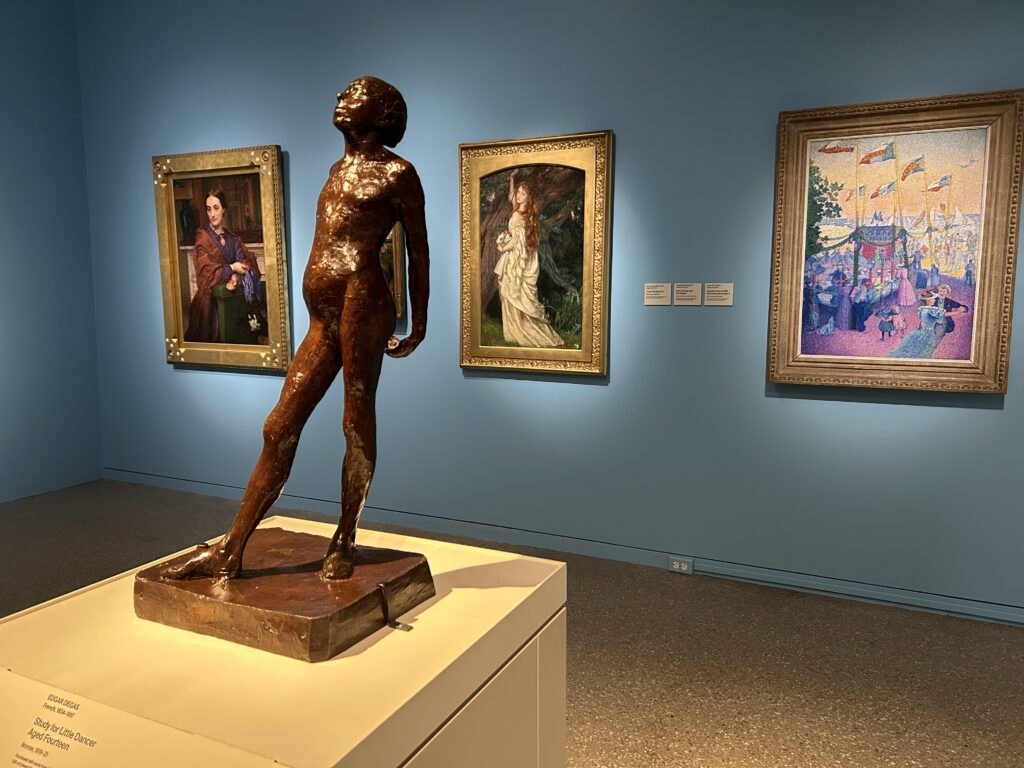
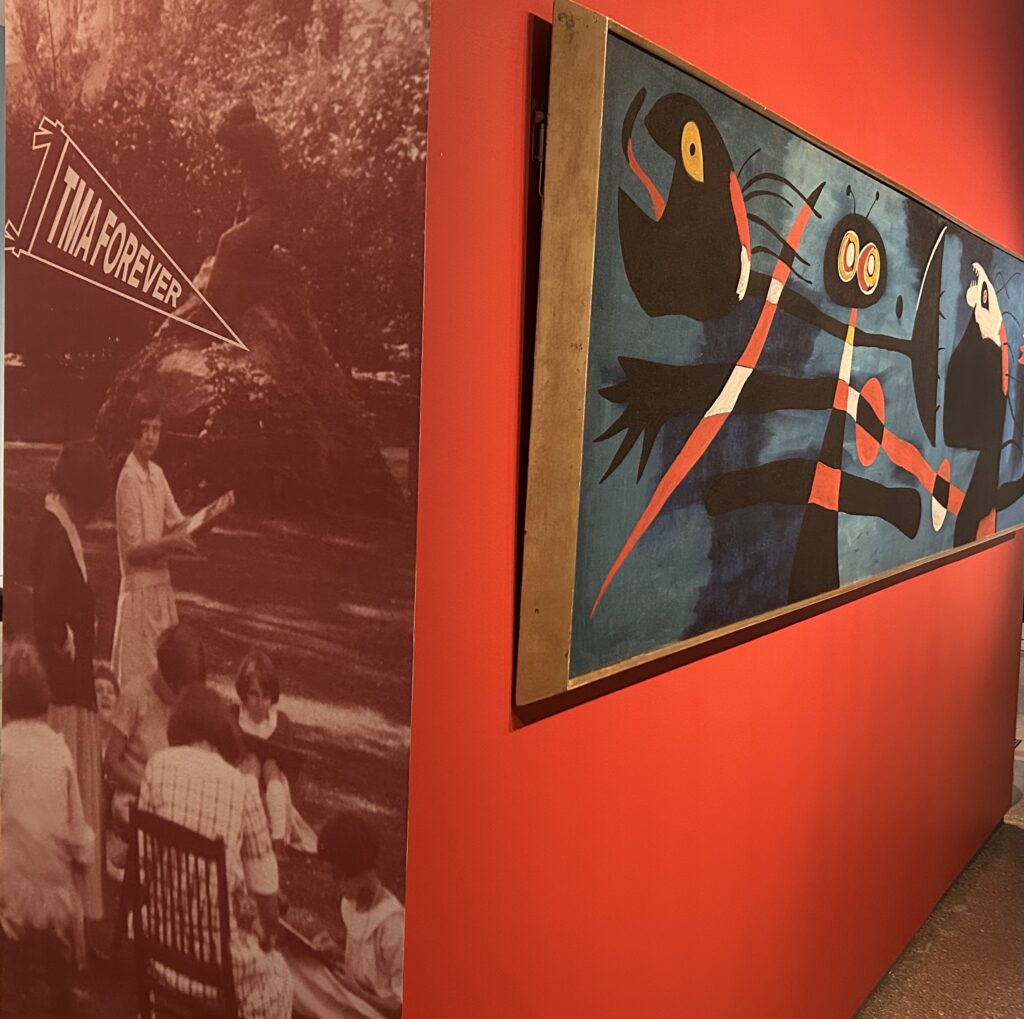
In the meantime, the museum’s Glass Pavilion is open, and through Jan. 3, it is housing the exhibit TMA Forever. The exhibit seeks to address some of that trepidation. TMA Forever features about 40 popular works representing the range of the museum’s collecting interests, acquired throughout its history.
On a recent trip back to Northwest Ohio, I spoke with the show’s curator Anna Marley, the museum’s director of curatorial affairs, during a press preview.
“The concept of the show is that everybody in Toledo has a TMA memory,” Marley said. “It could be when you took classes here as a child or you have a favorite artwork that you want to show friends and family who are visiting from out of town.”
She continued, “so I worked with our team to find some of those favorite works of art and put them together in this exhibition for people to enjoy while we’re renovating the Green Building.”
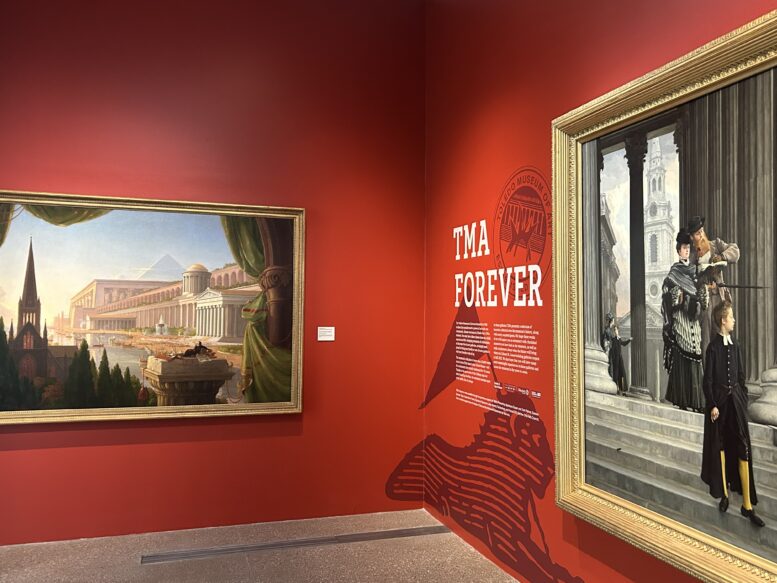
That approach is evident on entering the gallery in the Glass Pavilion. Visitors are greeted by two of the museum’s signature works — Thomas Cole’s “The Architect’s Dream” and James Tissot’s “London Visitors.”
“These are two pieces that we know are incredibly beloved by our community,” Marley said.
The Cole painting, Marley noted, is the most reproduced painting in the museum’s collection. The exhibit traces when pieces entered the collection. “The show actually starts with works acquired in the most important time of collection,” she said. The Cole was purchased in 1949 and the Tissot was purchased in the 1950s.
These and other works were purchased with funds from the Libby Endowment. The Libbeys themselves donated glass and ancient Egyptian antiquities. The Secors, another founding family, donated Gustav Dore’s “The Scottish Highlands.”
Another “Libbey” donation was given by the Libbey Glass company — the beloved Libbey Glass Punch bowl, which came to the museum in 1946.
From the beginning, the museum looked at purchasing new works. TMA Forever includes a painting by Francis Luis Mora of a famous dancer that he completed in 1915, and entered the museum’s collection in 1917.
“There’s a lot of that kind of story in this show,” Marley said. Beyond the classics the museum has had “a mission to have contemporary work.” As someone who studied American art, she said, “what’s fascinating to me is this museum was really committed to buying America art in the teens and twenties when not everyone was doing that.”
Once the reinstallation is complete, she said, there will be an a gallery devoted to “what we were collecting and when.”
To select the works to be included in Forever TMA, Marley first looked at what works people searched for most on the museum’s website. The most searched term was “Van Gogh.”
Marley reached out to the museum head of interpretation Paula Reich. She’s been with the museum for more than 30 years. In her role she interacts closely with the public. “She knows what works people love most of all,” Marley said.
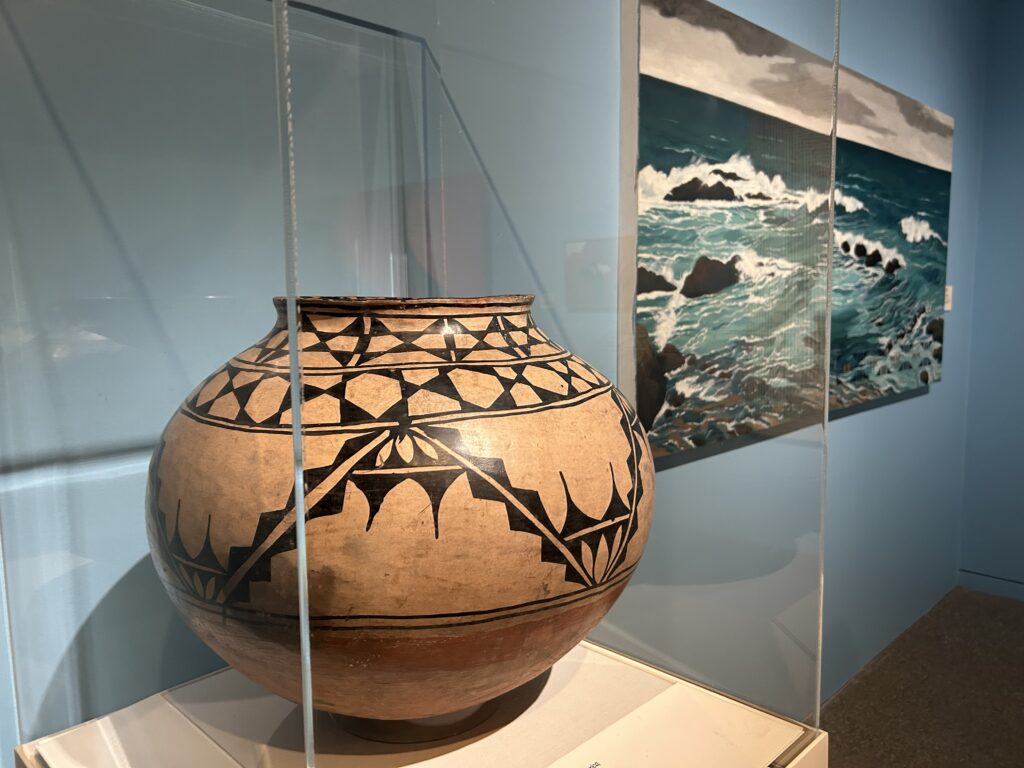
There were a few limitations. Works that are light sensitive, such as textiles and works on paper, were excluded. Typically they’d be rotated every three months, Marley said. The exhibit will be up for four months, and the museum staff will not have the time with the reinstallation to switch out works.
Also, a number of works are touring or available to loan. The shows of TMA pieces — “Impressionism to Modernism” and “Old Masters,” each with about 50 pieces, are currently touring. Another 10 are with Art Bridges that facilitates loans within the United States.
This is a small slice of the museum’s collection of 25,000 items, the curator said.
Marley said she had “an embarrassment of riches” to choose from. She wanted a diversity covering the variety of art from different periods and representing art acquired by the museum at different times.
Van Gogh is represented by “Houses at Auvers.”
Marley said she had a chance to have some “fun” with the display of the piece.
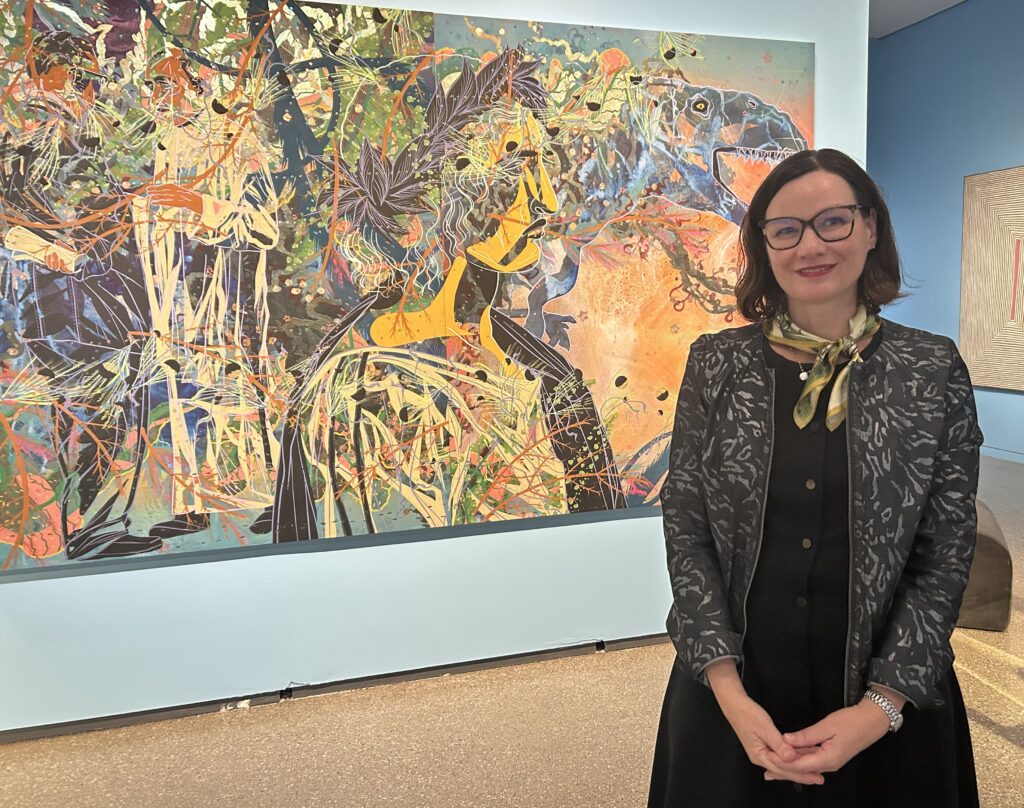
One of the oldest pieces in the exhibit, a funerary wreath of oak leaves, is about 2,500 years old. It’s placed so that in the background is “What Sin Is Purged Here in the Circle Where We Are Standing?” by Vietnamese American artist Tammy Nguyen, painted in 2023 and purchased with funds from the Libby Endowment in 2024. The painting evokes classical mythology as well as current pop culture. Godzilla looms over what seems a dystopian landscape.
Another juxtaposition has Arthur Hughes’ “Ophelia (‘And He Will Not Come Back Again’),” an example of the Pre-Raphaelite style, next to “Saint George and the Dragon,” which was painted 500 years before in a French workshop.
The 19th century Pre-Raphaelites evoked art from before the Renaissance. They longed to go back to a less industrialized time. “Saint George and the Dragon,” Marley said “is exactly the kind of painting the Pre-Raphaelite were interested in.” The female figures — Ophelia and the lady in distress in the St. George painting each sport similar flowing gowns.
A different juxtaposition has pieces representing people enjoying leisure time.
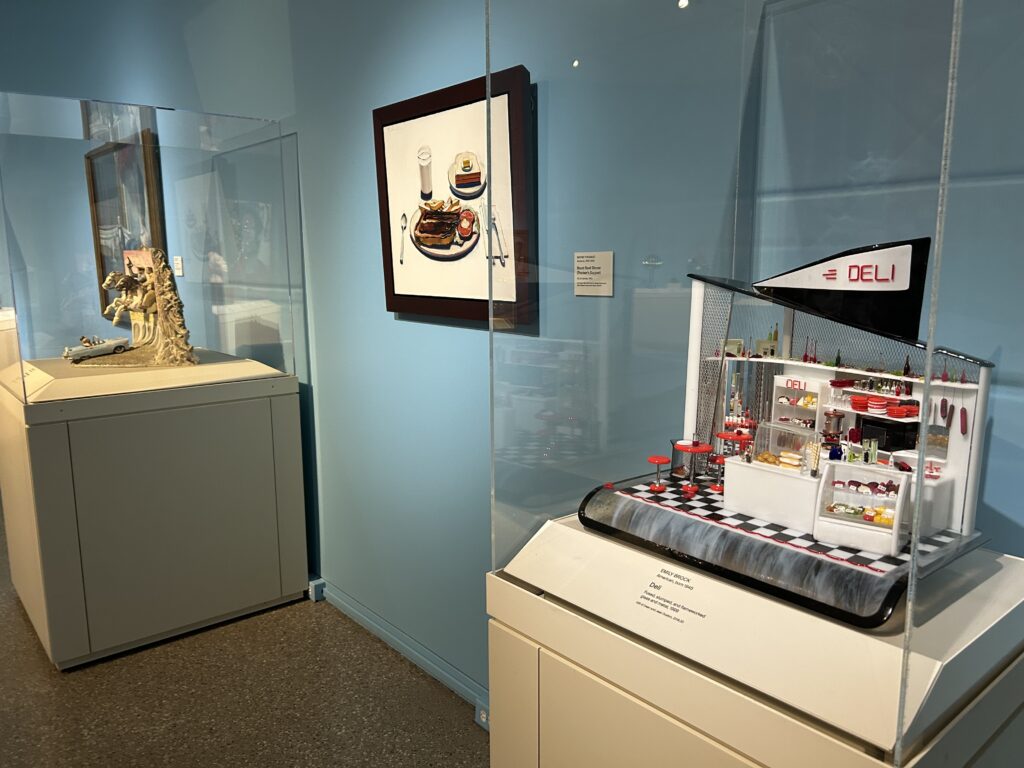
It features a classic still life with a lobster, and Edward Hopper’s theater scene “Two on the Aisle,” with three contemporary works — Emily Brock’s glass and metal “Deli,” Wayne Thiebaud’s painting “Roast Beef Dinner (Trucker’s Supper),” and Toledoan Robert Garcia’s painted porcelain sculpture, “National Waterfall Drive-In Theater,” with the Lone Ranger and Tonto bursting out of the screen.
The end caps of the walls in the display carry on this theme, showing people in historic photos enjoying their time at the museum. A reminder of why the TMA is worth the trip whether it’s a couple blocks or hundreds of miles.