By HEATHER SAYLER
BG Planning Director
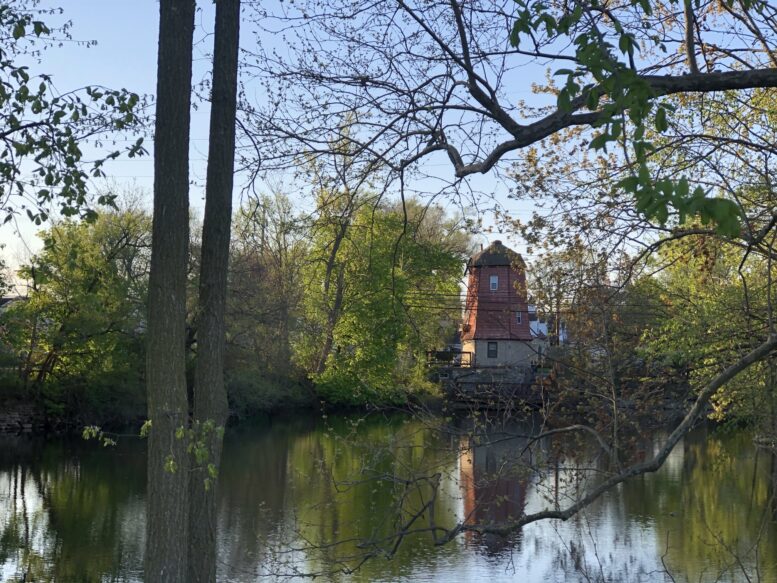
The story of the iconic Bowling Green landmark, the “windmill” located at 722 Clough St., starts with the Urschel family.
Bertis Homer Urschel, who commissioned the construction of the windmill, was a well-known Bowling Green industrialist. Born in 1878 in Topeka, Kansas, he was the son of Jacob Urschel and Helen Van Fleet. The family moved to Sugar Ridge, Ohio, where the father and son operated a stone quarry and lime plant. They also helped build some of the early roads in Wood County.
Bertis likely inherited the entrepreneurial spirit from his father, who learned the tanners’ trade, and had a tanning business in Monclova. He later moved to Kansas to farm. He was a butcher for three years and then returned to Ohio to farm in Waterville and Sugar Ridge.
In Sugar Ridge, Jacob started the lucrative Urschel Lime Company, which he sold in 1900, and moved his family to Bowling Green. He and his sons, Bertis and Clyde, formed the Universal Machine Company in 1906 in Toledo. It manufactured a variety of engines and machines. They moved the company to Bowling Green in 1911, with assistance from the Commercial Club, an organization started to attract jobs to the city.
The family also started the Urschel Engineering Company, the product development branch of the Universal Machine Company, in 1928 in Toledo. Bertis had over 60 inventions and was most known for tubular railroad axles and heating and quenching equipment, as well as automobile and truck parts. By the early 1930s, the Universal Machine Company produced the first entirely hollow tubular automotive axle, used primarily on Chryslers and Plymouths. During World War II, the plant filled many war contracts for use abroad.
There is no doubt that Bertis was well-off with his companies and patents. The Urschels had a “summer” home on the site of the old Vollmar’s Park, where they would also host employee and family events and in 1932, he started building a brick residence for his family just west of the quarry (featured as the October Historic Site of the Month) and a two-story brick building containing four large apartments to the west of that. The quarry is adjacent to the windmill on Clough Street (the house had an address of 207 Troupe Avenue. Note: Troupe had an “e” in the early days; unsure when that changed). The Urschel house, which no longer stands, had two floors and 13 rooms.
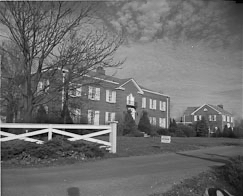
Prior to building this home, Bertis and his family had lived at 244 N. Enterprise St. since 1911, when Universal Machine Company was moved to Bowling Green from Toledo. The house still stands today at the corner of Enterprise Street and Pike Avenue. Sadly, during this same year of the excitement of building a home, he unexpectedly lost his mother in November of 1932 and his father less than a month later.
His parents lived at 625 N. Main St., a residence that remains standing today at the southwest corner of West Reed Avenue and North Main Street.
It is interesting to note that they lived two blocks south of their son, Clyde, at 903 N. Main St., which also still stands today (and is currently receiving attention for a rezoning request). Clyde’s home is where their father Jacob passed away and his funeral service was held.
Bertis’s wife, Orpha, passed away about six months after his parents, in June of 1933. They were married for 33 years and had four children: G. Kenneth, Harold, Helen, and Charles. Orpha died at their North Enterprise Street home, which meant their Troup house west of the quarry and windmill may not have been completed yet. She is buried in Oak Grove Cemetery.
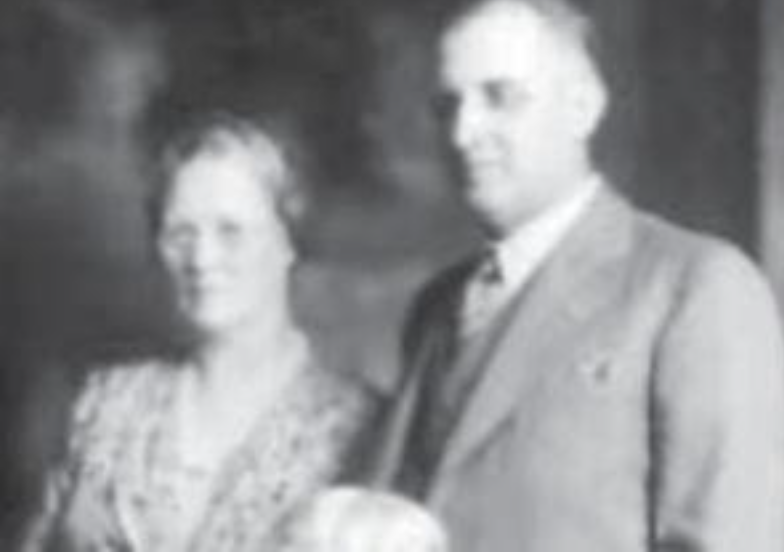
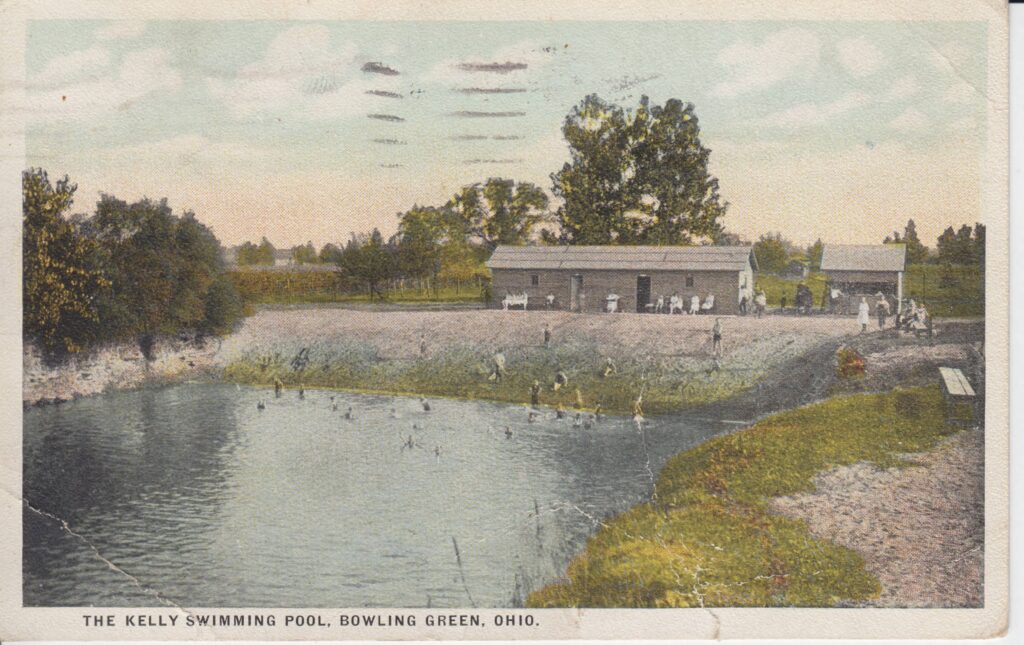
Bertis married his second wife, Lillian Tressel of Fremont, on July 2, 1934. She was a BGSU graduate and taught French and Spanish at the university for six years. In 1936, he had the opportunity to purchase the quarry and bath house from the Woman’s Club, which was adjacent to his home. He decided to stop commuting to Toledo to his engineering company and moved it to the existing bath house, after he remodeled and enlarged it for the office and machine shop. Ironically, the Universal Machine Company had provided the band at the City’s first pool “quarry” grand opening (see October Historic Site of the Month article for more information about the quarry).
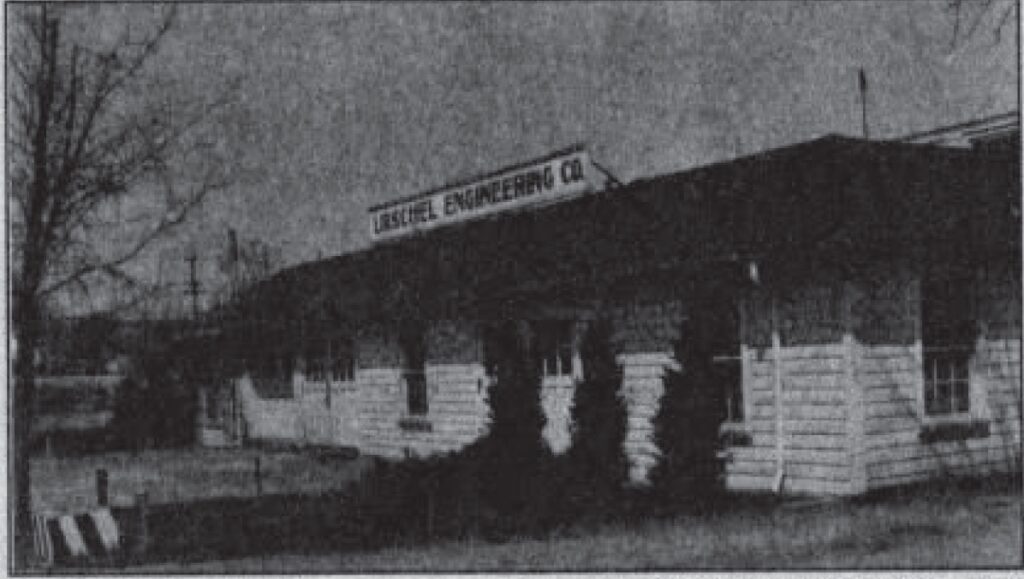
Urschel Engineering continued to be very successful, especially with the arrival of World War II.
According to an article in the Sentinel-Tribune on May 28, 2011 (“How BG firms helped win WWII”), Urschel Engineering had about 70 employees and filled defense contracts for production of tank parts, including specializing in brake housings for English tanks.
So what does this have to do with the windmill?
- Bertis lived next to the quarry and purchased all the land around it for his business.
- Bertis was financially well-off and traveled the world for business.
- The windmill was Bertis’s idea and likely would not exist without him. According to an article in the B-G News on March 24, 1961, Bertis became infatuated with windmills while on a tour of Europe in the 1930s and decided to build one.
The construction plans were purchased from the Netherlands to be as authentic as possible. Articles reveal the windmill was built in either 1938 or 1939 on the northern edge of the quarry. It was originally built to provide an attractive cover for the steam boiler used to heat eight small stone cottage-style housing units built by Urschel that still stand as apartments across the street to the north, and to furnish power to drive a pump for a fountain in Urschel Pond. The latter never became a reality. It was constructed using stone from the nearby quarry, same as the apartments across the street and likely the wall in front of the windmill.
In 1949, Bertis and Lillian planned to retire to Florida after selling their house and apartment building to BGSU. Bertis passed away in 1950, just two weeks after leaving Bowling Green for their Florida home.
Sadly, Bertis outlived his sons Harold C. Urschel, who lived 1901-1943, and Charles, who died as an infant.
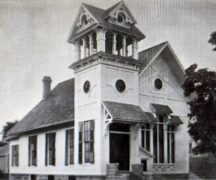
Bertis was active in community life as a member of the school board, City Council, an elder in the Presbyterian Church, and a 32nd Degree Mason. He was also instrumental in establishing the old YMCA (featured on a downtown historical sign located in front of Market Square, on the northeast corner of East Wooster and North Prospect Streets), which lasted from approximately 1903 to 1917.
The couple was very generous to the university with gifts, even selling their properties at a lower rate than was offered to them by private interests. Lillian passed away in 1988 at the age of 90 in Winter Park, Florida.
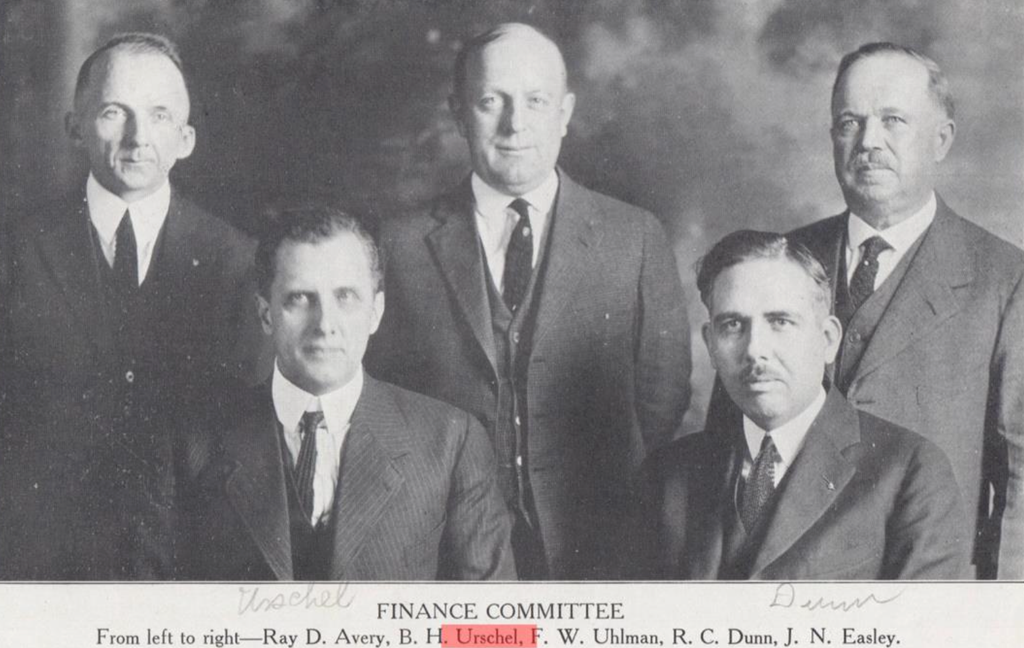
Bertis likely did not get to see the windmill used as housing before his death and, if not, it was unlikely he ever imagined the idea. However, he surely knew that his companies helped to provide jobs for the area for many decades.
To nominate a historic building or site for recognition, visit the Bowling Green City website at https://www.bgohio.org/FormCenter/Planning-13/Historic-BuildingSite-Nomination-Form-83.
Would you like to write a Historic Building of the Month article? Please contact the Planning Department at 419-354-6218.
Learn more about the Historic Preservation Commission by attending the meetings on the 4th Tuesday of each month at 4 p.m., or by visiting their webpage at https://www.bgohio.org/436/Historic-Preservation-Commission.