By JAN McLAUGHLIN
BG Independent News
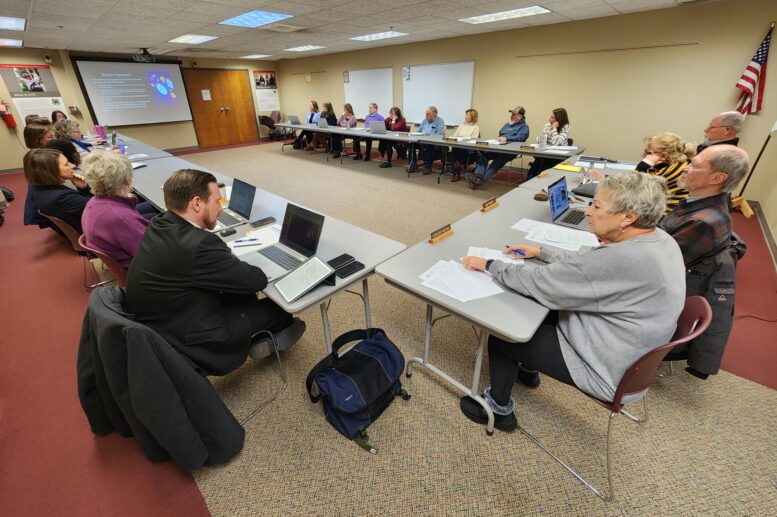
The Wood County Board of Health has reversed its earlier decision to freeze wages for health department employees.
After an executive session on Thursday, the board voted unanimously to grant step increases for all eligible employees, effective for hours worked on or after Feb. 22. The board included in its resolution that the step increases for eligible health center staff also will be covered by the general revenue fund.
The staff will still not see the customary Cost of Living Adjustments (COLA).
On the last day of 2025, with the looming threat of property tax revenues being lost for public services in Ohio, the Wood County Board of Health froze its wages for its employees.
The board voted to suspend any COLA and any step salary increases for its 79 employees.
Wood County Health Commissioner Ben Robison said in January that the health department often uses the annual raises set by the Wood County Commissioners as a benchmark for public health staff. But concerns about the impact of property tax revenue cuts led the board of health to not mirror the county’s 3% raises for 2026.
The wage freeze was in response to concerns about preserving services and the health department budget, Robison said.
“I recognize the board’s concerns about this,” he said.
The state legislature has been whittling away at property taxes, and efforts are underway to get an issue on the ballot this fall to eliminate all property taxes in Ohio.
While property taxes are reportedly the most disliked tax in the U.S., they are the most stable revenue source for local governments. Property tax revenues support public schools, emergency services, and other essential services.
“Every public entity across the state is concerned,” Robison said in January. And all are “determining a path forward to providing services for the public.”
But at the January board meeting, two board members who were not present at the Dec. 31 meeting, voiced objections to the freeze.
Dr. Tom Milbrodt and Dr. Bob Midden both said they believed step increases and COLA raises were deserved and would not put the health department budget at risk.
Milbrodt pointed out how the state has been shifting away from supporting local government for the last 50 years. The health department’s budget is “not dire,” and wages should not have been frozen, he said.
“I certainly would have voted against it and argued about it,” he said. Midden echoed that sentiment.
Milbrodt in January said he wanted the board to take immediate action to restore the customary step and COLA increases. However, some other board members wanted more information about strategies to shore up the general fund balance.
The Wood County Health Department receives a little over $2 million a year in property tax revenues, Robison said. That adds up to about 20% of the health department’s annual budget.
A small portion of the property tax revenue – about $145,000 – comes from inside millage from villages and townships in the county. The remainder comes from a 10-year levy passed by Wood County voters in 2020.
“I think the board is looking at a path forward, at efforts to preserve the agency and jobs,” Robison said.
Midden asked about proposals to replace the property tax revenue if the referendum makes it to the ballot and is passed by Ohio voters.
The two options being considered by the state are sizable spikes in sales taxes or income taxes. Unlike property taxes, which are also paid by businesses, the sales and income tax increases will be on the backs of individuals and families.