By JAN McLAUGHLIN
BG Independent News
Bowling Green City Council backed off some proposed restrictions on what’s allowed in front yards Monday evening.
Several amendments to the city’s zoning code were approved as recommended by the city planning commission – but limiting some uses of residential front yards was a step too far for council members.
When the final vote was taken, council passed an amendment proposed by council member Jeff Dennis, that allowed patios, decks, pergolas, trellises, treehouses, playhouses, swingsets and rain gardens in front yards as long as they were three feet from lot lines and not in the way of utility easements. The proposed change would have limited those items to beyond front yard setbacks.
Council member Joel O’Dorisio proposed that sheds also be added to that list as permitted in front yards.
“I’m opposed to over regulating people’s use of their private properties,” O’Dorisio said.
However, the addition of sheds failed to get enough support to make the list.
Dennis noted that council members had received ample citizen feedback on the zoning changes. He said he considered items such as patios, pergolas and play spaces as endearing traits of neighborhoods. Gathering spaces in front yards should be encouraged, Dennis said.
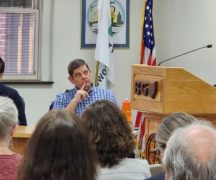
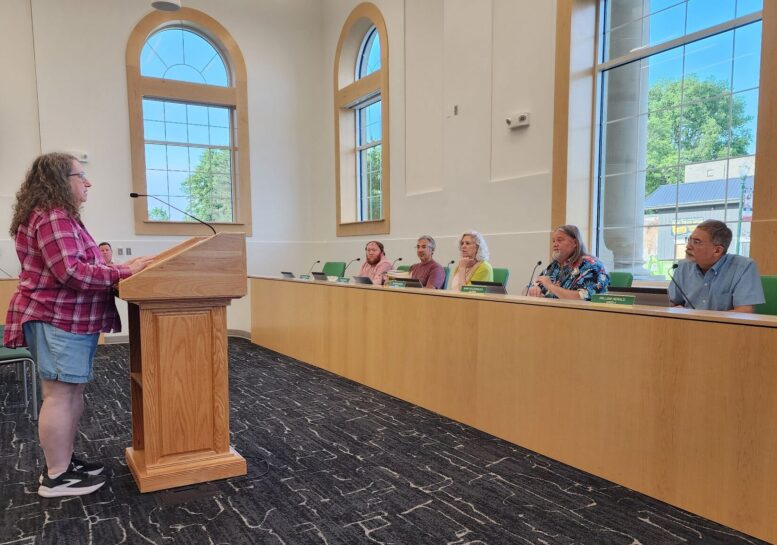
During the portion of Monday’s meeting for public input, one resident Beverly Elwazani took the opportunity to make her viewpoint clear. She said the proposed front yard changes were an example of council “overstretching” its authority.
Residents should be encouraged to make use of their lawns for items such as pollinator gardens, artwork, trellises, play areas and swingsets, she said.
But Elwazani also drew the line at accessory structures like sheds. “I don’t think we need to be putting sheds in the front yard,” she said.
Other changes approved for the zoning code included:
- Wording reflecting the city’s change from paper zoning applications to an on-line portal.
- Language clarifying the term “vision clearance triangles,” which will be measured from where right-of-ways intersect.
- Allowing moving signs such as feather banners as a type of temporary sign.
- Placing limits of lighting in order to reduce light pollution.