By LINDSAY-JO DOUGLAS
BG Independent News
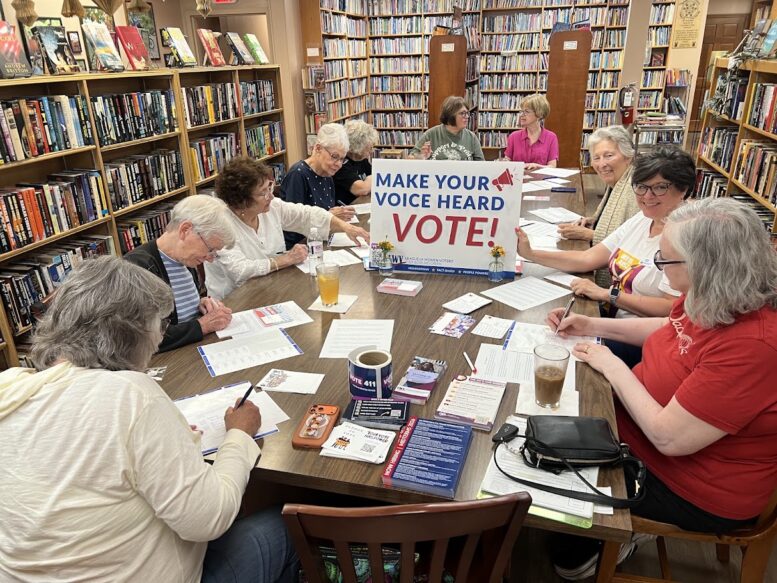
Prior to the Voting Rights Act of 1965, literacy tests, poll taxes, and other bureaucratic restrictions were used to prevent people – predominantly Black people – from voting. The passage of the act banned such practices and strengthened voting protections for people of color. To commemorate the anniversary of this landmark legislation, the League of Women Voters of Bowling Green held a postcard-writing event on Saturday.
“We’re sending postcards to recently registered voters encouraging them to vote and make a voting plan,” said LWVBG President Shar Katzner. “We want each person to know their voice counts, and their voice matters. We’re also providing information on Vote 411.”
Funded by the League of Women Voters Education Fund, Vote 411 provides the public with nonpartisan information, both general and state-specific, on the following aspects of the election process:
- Absentee ballot information
- Ballot measure information, where applicable
- Early voting options, where applicable
- Election dates
- Factual data on candidates in various federal, state, and local races
- General information on such topics as how to watch debates with a critical eye
- ID requirements
- Polling place locations
- Registration deadlines
- Voter qualifications
- Voter registration forms
- Voting machines
When asked why she chose to write postcards, Jean Geist replied, “Anything to get people to vote. We want to provide voters with the information they need.”
Katzner also said that LWVBG would be hosting a public program about election security on Wednesday, Sept. 16, at 7 p.m., at the Wood County Senior Center. Local election directors Terry Burton and Julie Baumgardner will speak at the event.
The League of Women Voters is a nonpartisan organization that aims to promote political responsibility through informed and active participation of citizens in government, to increase understanding of major public policy issues, and to influence public policy through education and advocacy. The league does not endorse specific candidates. It will only support a position on an issue once research has been conducted and consensus has been reached within the organization.