By JULIE CARLE
BG Independent News
For a group of Bowling Green State University students, the World War II atomic bombings of Hiroshima and Nagasaki, Japan, became more than chapters in a history book this summer.
They became stories told by survivors, memorials visited in person, ceremonies witnessed firsthand and questions about war, memory and peace that the students brought home with them.
A BGSU Peace Studies summer trip led by Dr. Christopher Frey and Dr. Vibha Bhalla took students to Hiroshima, Japan, and, for the first time as part of the program, Nagasaki. The group concluded its journey in Nagasaki on Aug. 11 after spending time in both cities learning about the atomic bombings from multiple perspectives.
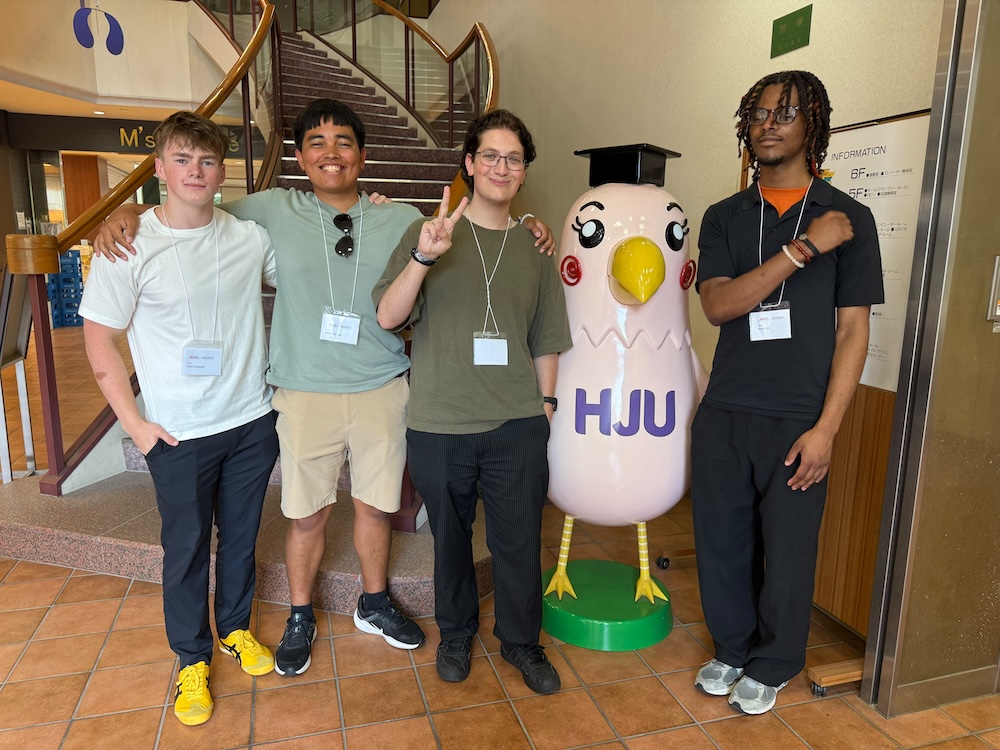
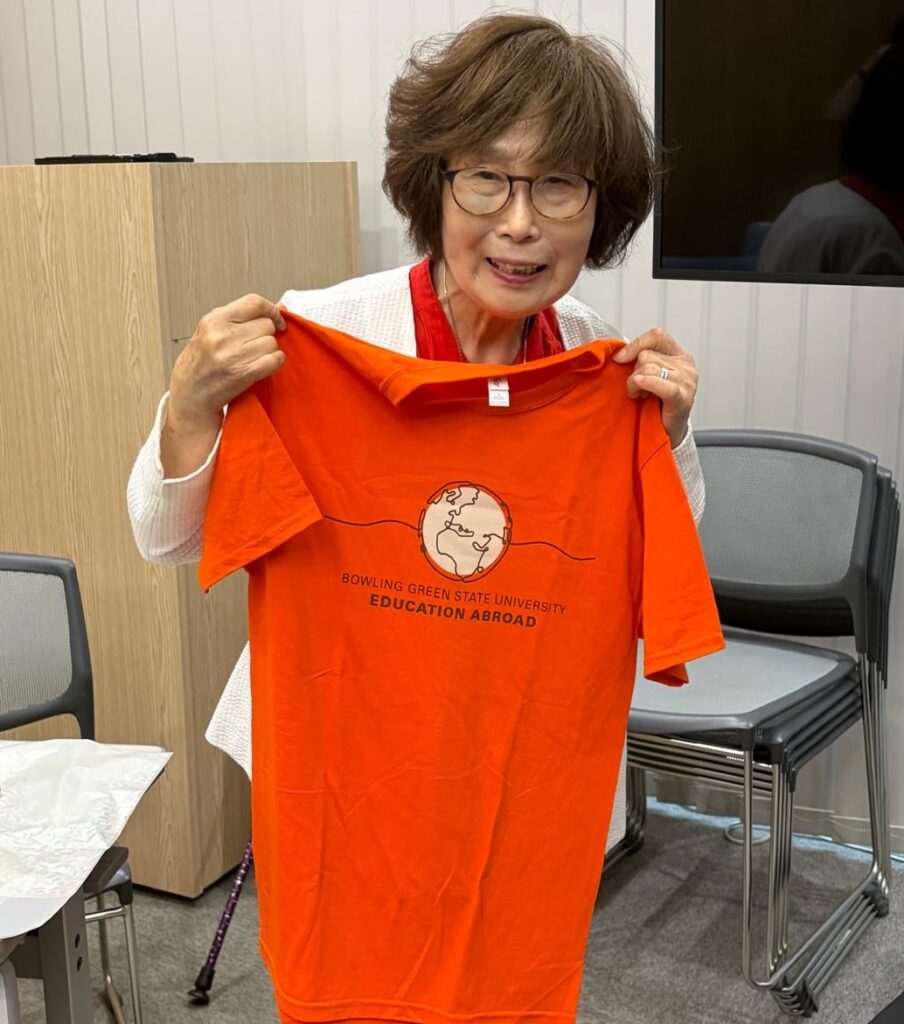
The trip is part of a relationship between BGSU and Hiroshima Jogakuin University that has existed for roughly two decades. Hiroshima Jogakuin served as the group’s host university, with Masae Matsubara serving as host and guide.
Current and former BGSU students also helped the group navigate life in Hiroshima, including Mel Starcher, who had studied at Hiroshima Jogakuin, and BGSU graduates Sage Panter and Matt Thome, who live and work in the city.
The experience combined classroom learning with lectures, museums, memorials, ceremonies and conversations with people connected to the history.
Students met with survivors of the atomic bombing, known as hibakusha, and heard lectures about subjects including the experiences of Korean victims of the bombing, American prisoners of war who died in Hiroshima and, after visiting a Japanese research center, they heard about the long-term effects of radiation on survivors and their descendants.
For Anna McRay, a political science major with a minor in peace and conflict studies, the trip changed the way she understood material she had previously encountered academically.
“I was excited for the human side of learning about the atomic bomb,” McRay said during a BGSU community debrief following the trip.
She had studied the history and context of the bombings in a Peace and Conflict Studies course, but being in Hiroshima and Nagasaki made the human consequences impossible to separate from the historical debate.
“It was so impactful to see people talk about this as it was their life and their stories,” she said.
That distinction—between studying history and experiencing the places where that history unfolded—was repeated by other students.
Hallie Craig, a graduate student in media and communications who focuses on Japanese media after World War II, described the trip as “powerful and grounding.” She said her understanding of the bombings changed when she encountered the different narratives surrounding the war and its aftermath.
The students learned that Hiroshima and Nagasaki have distinct ways of remembering the bombings.
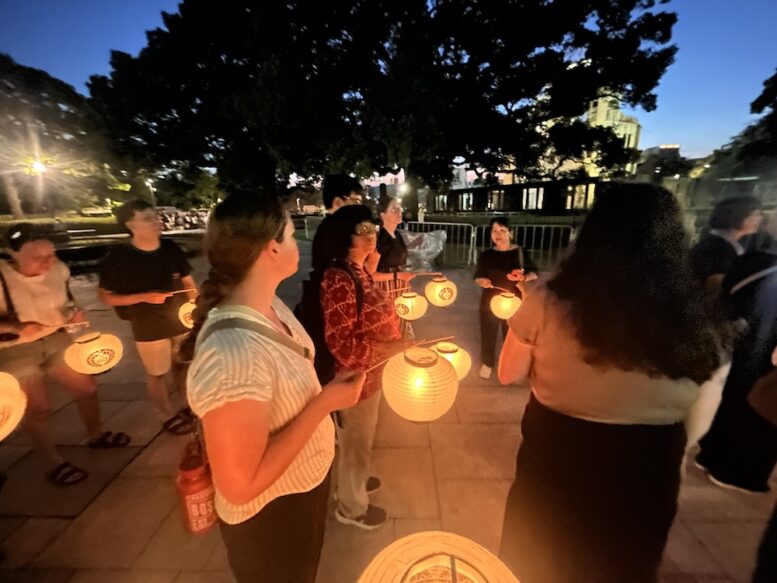
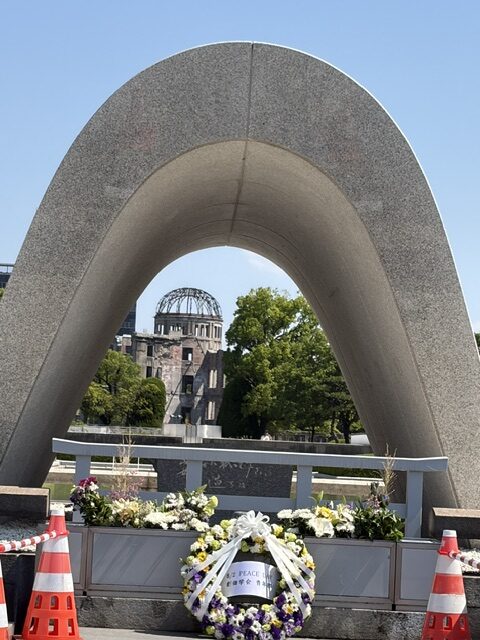
In Hiroshima, the group attended multiple ceremonies, including an official secular ceremony and a Buddhist ceremony involving lanterns. Students also attended a program at a high school that lost approximately 300 students in the bombing, where current students performed a play based on the memories of those who had experienced the bombing.
In Nagasaki, the group encountered another side of remembrance. Rather than attending the formal city ceremony, students visited areas where peace protesters had gathered. Discussions surrounding Japan’s constitution, Article 9 and contemporary politics were part of the experience.
The students also experienced Japan beyond its wartime history.
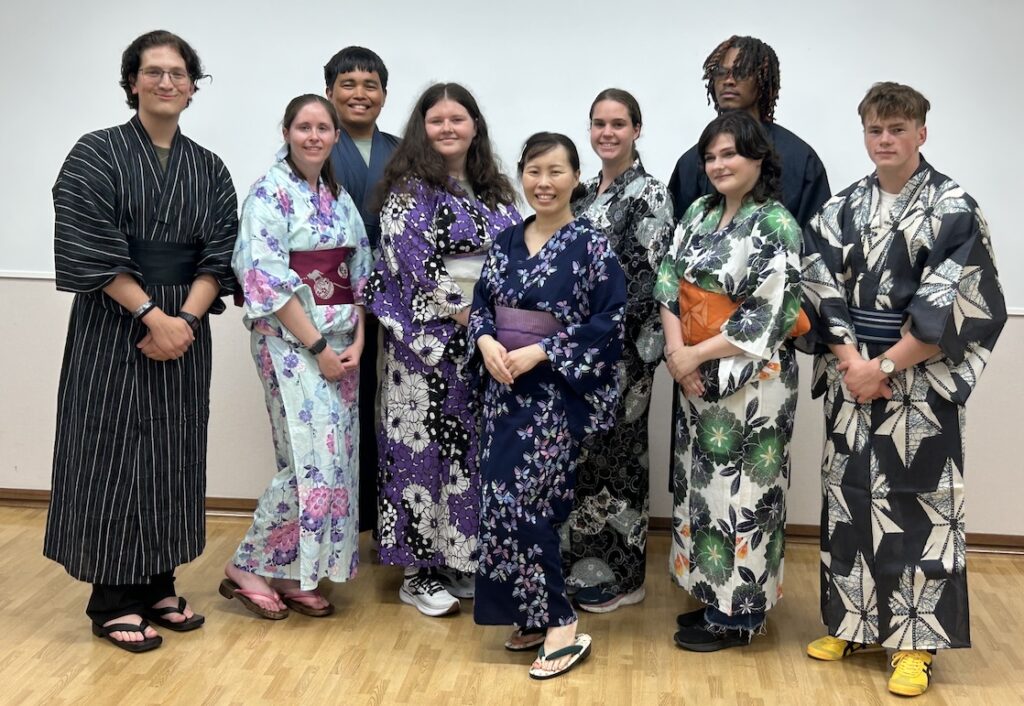
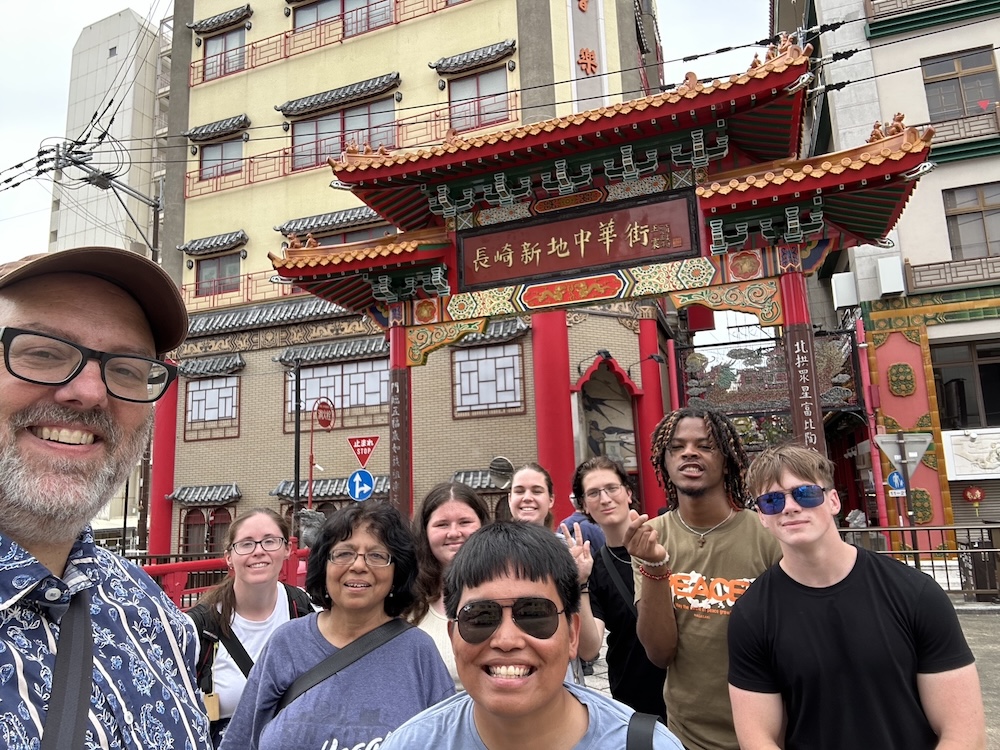
They explored Nagasaki’s Dejima, the historic Dutch trading outpost, visited Chinatown and traveled extensively using public transportation. They were encouraged to venture out independently, try unfamiliar foods, navigate restaurants and stores, and interact with people.
For Frey and Bhalla, that independence was another important measure of the trip’s success.
Students who initially were uncertain about traveling abroad eventually talked about returning to Japan on their own. The trip gave some participants confidence not only to study another culture but to navigate a foreign country independently.
Emma Dailey, a BGSU biochemistry student, said she initially joined the trip largely because she needed academic credit and wanted the experience of studying abroad. She did not expect the journey to affect her as deeply as it did.
Seeing how Hiroshima rebuilt after the bombing and learning about the scientific effects of radiation particularly resonated with her as a science student.
She also described experiencing “reverse culture shock” when she returned home.
For other students, the people they met became one of the most memorable parts of the experience.
Micah Domingo, a flight technology operations student, recalled the kindness of people he encountered in Hiroshima. One stranger approached him, asked where he was from and gave him a postcard wishing him and his family well and expressing a hope for peace.
For Domingo, the experience was difficult to put into words.
“I think you can only really see and feel with the people,” he said.
Colin Campbell, an international business major who minors in Japanese, said he appreciated learning about the war and its aftermath from perspectives that were different from what he had encountered in the American education system.
Rather than focusing primarily on the technology and strategic arguments surrounding the atomic bomb, the trip allowed students to hear from hibakusha, visit museums and learn about the people who were affected.
He also came away wanting to return to Japan.
The trip’s impact extended beyond the students themselves.
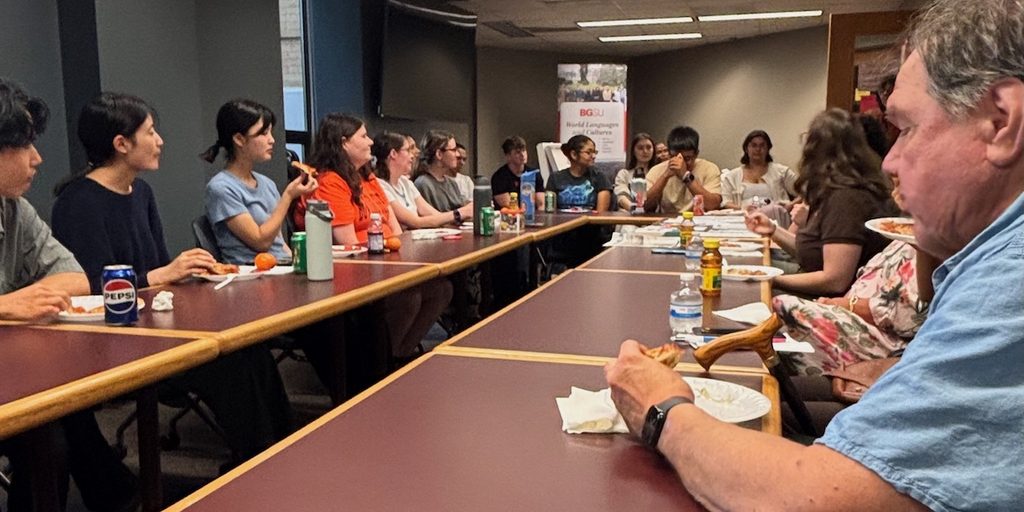
After returning to Bowling Green, Frey and Bhalla organized a debriefing so students could process the experience together and talk with members of the university and local community who wanted to hear their stories. The gathering was designed in part to provide a community for students whose classmates and friends had not shared the experience with them.
This year’s trip also carried special meaning following the unexpected deaths of Akiko Jones of Asian studies and Marc Simon, history and peace studies, both longtime BGSU figures associated with the Hiroshima study abroad trip. Faculty and participants spoke about remembering their contributions throughout the journey.
For the students, however, the most enduring lesson may be the simplest one: history looks different when it has a place, a face and a voice.
The museums, memorials, ceremonies and conversations did not replace what students had learned in the classroom. Instead, they gave that academic knowledge a human dimension.
As Bhalla reflected during the debriefing, the emotional impact of visiting the sites is something “you cannot teach in a classroom. You have to be there to get that.”
According to Frey, BGSU hopes to continue the Hiroshima trip in 2027 and beyond.
For the students who made the journey this summer, the trip is over—but the questions it raised about memory, war, peace and the responsibility to tell human stories continue to travel home with them.