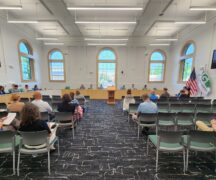
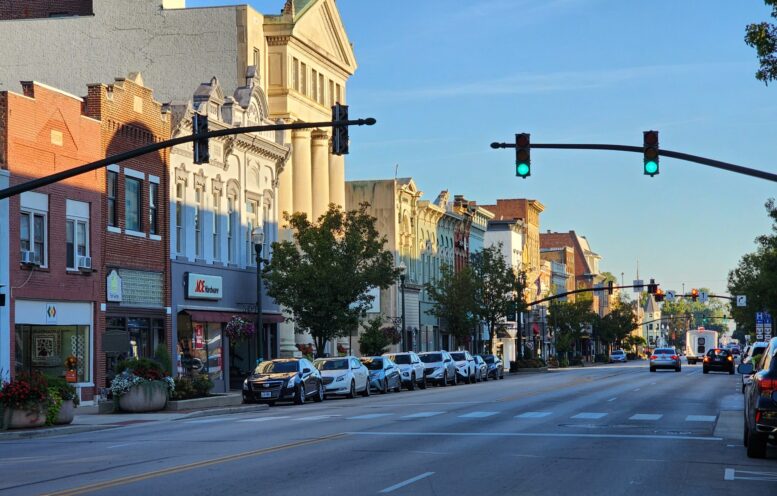
When kids go back to school, the nights get chillier, and crops start to yellow, Bowling Green City Council meets to set its strategic plans for the coming year. Some are continuations of plans from previous years and some are fresh ideas never suggested before.
To make the cut for the city’s strategic plan, proposals must get the votes of at least four of the seven city council members, according to President Mark Hollenbaugh.
A couple of the new ideas making the list for next year are increased staffing for the urban forestry department, and the implementation of a vacant building registration in the city.
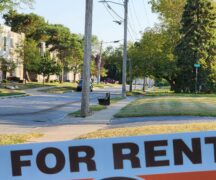
The suggestion for the vacant building registration was born out of the new trend throughout the region of people buying up retail spaces, then sitting on them without developing them, Hollenbaugh said.
One of the previous strategic plan ideas that is continuing with a new twist is the implementation of a fee for rental registrations to provide funding for mandatory third-party inspections. This would involve an annual audit of the self-inspections of rental units.
A recurring sustainability program of creating a downtown pilot recycling/composing program is back on the list. The proposal is making incremental progress, with efforts continuing to get buy-in from business people.
And renewed focus will be put into establishing an interconnection agreement with nearby communities to provide water in an emergency, such as the water crisis involving harmful algal blooms in 2014.
Following is the list of the items that made City Council’s strategic planning list for 2027.
Continue to focus on neighborhood revitalization efforts:
- Increased emphasis on streets, sidewalks and drainage.
- Evaluate current sources of funding for street/sidewalk repair to determine any gaps that exist and develop a plan to achieve sustainable funding for maintenance of current and planned infrastructure.
- Implement a fee for rental registration to provide funding for mandatory third-party inspections.
- Review zoning codes to encourage an increase in both type and supply of housing while removing barriers to the development of affordable housing.
- Collaborate with the city administration on the update to the comprehensive plan.
- Implement a vacant building registration.
Continued emphasis on safer pedestrian and bicycle infrastructure:
- Select a preferred option for the Main Street pedestrian and bicycle improvements and update the bicycle facilities map accordingly.
Emphasize council’s commitment to the city’s sustainability values:
- Prioritize and fund CARIP commitments.
- Create a downtown pilot recycling/composting program.
- Increase energy efficiency and renewable energy generation.
- Increase resources for urban forestry.
Proactively address water quality and availability issues:
- Prioritize the completion of ongoing improvements at the water treatment plant, including plans to increase reservoir capacity.
- Continue efforts to establish an interconnection agreement with nearby communities to provide water in an emergency.