
By JULIE CARLE
BG Independent News
The secret to a good pie might be in the butter, the flour or even the equipment. But according to baking enthusiast Rachel Sizer, the most important ingredient may be a willingness to experiment — and not take baking too seriously.
Sizer recently led two pie-making workshops at the Wood County District Public Library’s Carter House, welcoming participants with a range of baking experience, from those who regularly make homemade pies to people who have always relied on store-bought crusts. The workshop offered an opportunity to explore the techniques behind homemade pies, ask questions and learn how a few simple adjustments can make a difference.
“I really, really love baking,” Sizer told the group, explaining that her interest began when she was a child baking with her mother. After college, she returned to baking with renewed enthusiasm, drawing on childhood memories and lessons picked up from watching the Food Network.
Her enthusiasm has taken her into local baking competitions, too. She has entered pies in the Wood County Fair, earning second place, and participated in the library’s Christmas cookie bake-off, where she also took second.
But Sizer’s approach to teaching is less about competition and more about helping people become comfortable in the kitchen.
“I’m not snobby about my pie or any kind of baking,” she said, reassuring participants that there is nothing wrong with using a store-bought crust when convenience matters.
Building a better crust
The first workshop focused on the foundation of pie making: the crust.
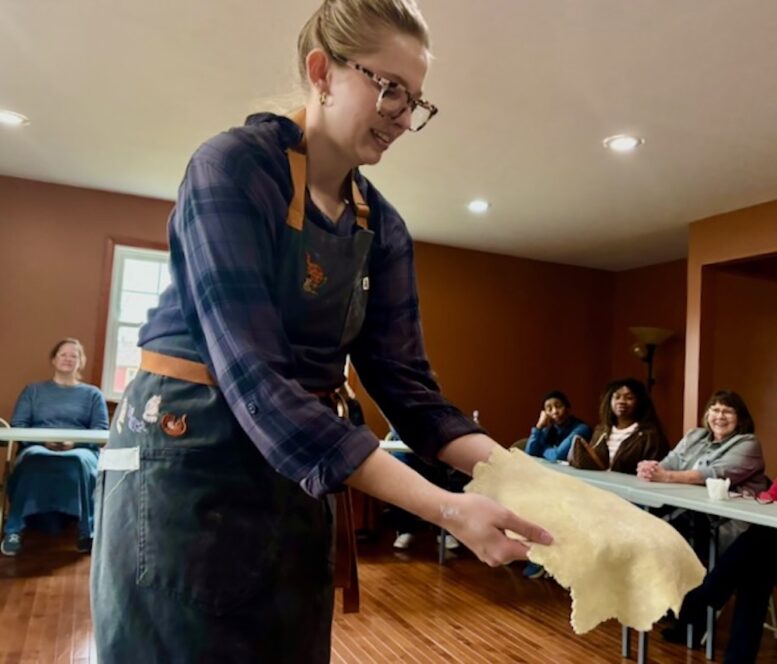
Sizer demonstrated how to make a flaky, all-butter pie crust and explained why keeping ingredients cold is essential. Unlike a shortening crust, which tends to produce a more tender, fine-crumb texture, an all-butter crust develops visible layers as the butter melts and releases moisture during baking.
That process, known as lamination, is what creates the flaky texture many home bakers seek.
Sizer emphasized the importance of measuring ingredients by weight rather than relying entirely on measuring cups. A digital food scale, she explained, helps eliminate inconsistencies because flour can be measured differently depending on how it is scooped or packed.
“If you take nothing else away from this today, it’s the food scale,” she told participants.
Her basic crust recipe uses 300 grams of all-purpose flour, 227 grams of cold, unsalted butter, half a teaspoon of salt and cold water. She also adds a teaspoon of sugar for a touch of sweetness.
Participants learned about different ways to incorporate butter, including using a food processor, pastry cutter or grated frozen butter. Sizer demonstrated how to bring the dough together without overworking it, explaining that visible pieces of butter are desirable because they help create flaky layers.
She also shared practical equipment recommendations, including bench scrapers, glass pie dishes and baking sheets lined with aluminum foil to catch overflowing fruit fillings.
Throughout the demonstration, Sizer returned to a consistent message: baking combines science and experience, and learning what dough should look and feel like comes with practice.
Filling in the details
The second workshop turned attention to what goes inside and on top of a pie.
Sizer demonstrated techniques for preparing fillings and discussed how consistency can change depending on the occasion and personal preference.
For example, a fruit pie served with ice cream might benefit from a juicier filling, while a pie being taken to a potluck or party may need a thicker filling so it holds its shape when sliced.
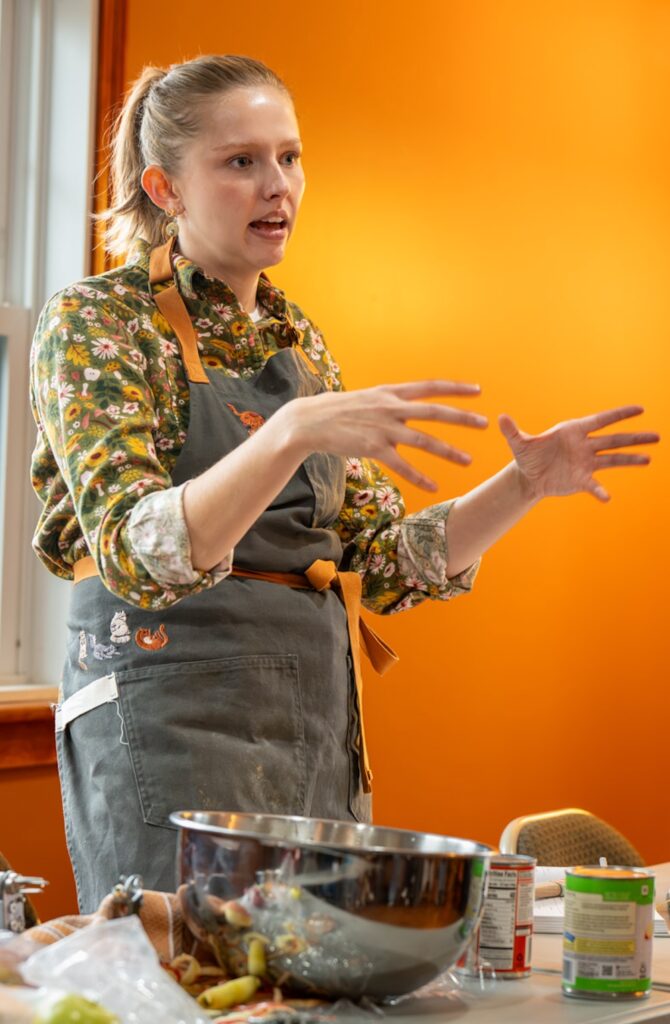
Sizer also discussed different toppings, including traditional top crusts and crumb toppings. Her Dutch apple pie is a favorite example of how a crumble topping can provide plenty of flavor and texture without requiring a second crust.
Apple pie is among the varieties she makes most often, along with cherry pie. She shared practical shortcuts, including using an apple peeler to speed up preparation and making components ahead of time.
One of her favorite approaches is preparing fruit filling the night before and keeping it separate from the unbaked crust until it is time to assemble the pie. This helps prevent the filling from making the crust soggy.
She also encouraged participants to think creatively about leftover ingredients and fillings rather than letting them go to waste.
More than a recipe
One of the workshop’s strongest themes was that there is no single definition of a perfect pie.
Sizer encouraged participants to adjust recipes to suit their tastes, whether that means changing the crust, experimenting with fillings or choosing a different topping.
That welcoming attitude resonated with the group. Participants came with different goals: some wanted to stop buying premade crusts, others hoped to improve crusts they already made, and some simply wanted to try something new.
For Sizer, that willingness to learn is what makes baking enjoyable.
She approaches hobbies with enthusiasm and curiosity, whether she is baking, knitting or crocheting. Professionally, she serves as the City of Bowling Green’s sustainability coordinator, but in the kitchen she is happy to share the tricks, tools and occasional shortcuts that make baking easier.
Her advice is refreshingly uncomplicated: use the tools that work for you, keep experimenting and don’t worry about making every pie look perfect.
After all, as Sizer reminded participants, people are generally pretty happy when there is pie in front of them.