
By JAN McLAUGHLIN
BG Independent News
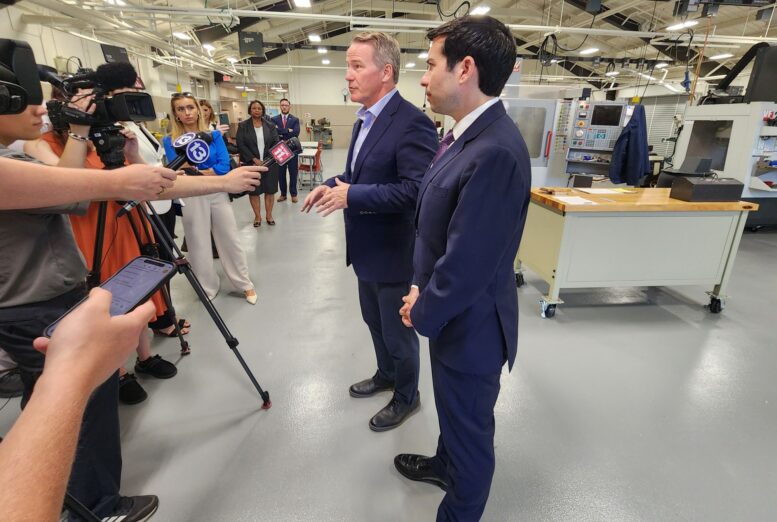
President Donald Trump’s “America First” agenda is breathing new life into Ohio’s manufacturing base, according to U.S. Sen. Jon Husted, R-Ohio, and Acting U.S. Labor Secretary Keith Sonderling.
Now Ohio needs to create more pathways to get qualified workers into quality jobs.
On Monday, the senator and acting secretary were in Wood County at Owens Community College for a workforce roundtable.
Area manufacturers and higher education representatives talked about the success of “earn and learn” programs, which give young students access to manufacturing skills, higher pay scales, and better benefits.
Gathered around the tables were representatives of the Ohio Manufacturers’ Association, Whirlpool Corp., GROB System, TARTA, First Solar, Cenovus Energy, Principle Business Enterprises, Yarder Manufacturing, Bowling Green State University, University of Toledo, and Owens Community College.
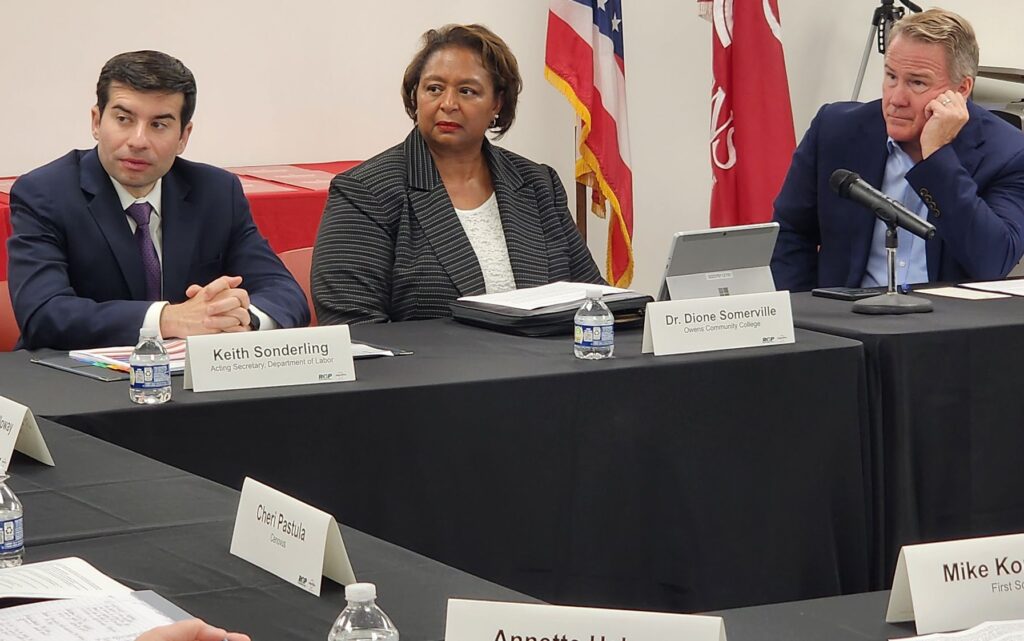
Jobs and manufacturing are coming back to Ohio, said Sonderling, who was named acting Secretary of Labor when Lori Chavez-DeRemer resigned in April after several allegations of misconduct and fraud in office.
Officials want to make sure these high skill, high pay jobs are going to local workers, Sonderling said.
“The president has delivered. Jobs are coming back,” Sonderling said.
“This is actually a national security issue,” Sonderling said. “President Trump wants us to act as a business.”
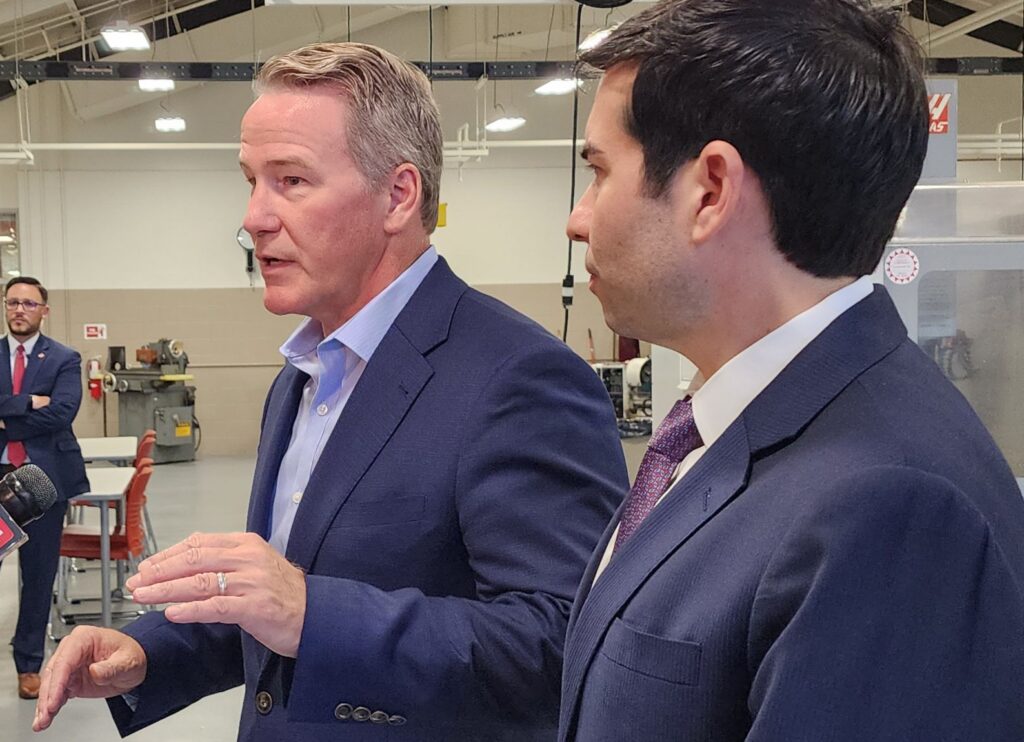
Husted and Sonderling came to Owens Community College to see how federal policies are being put to work. Owens was selected because of its role as a regional workforce solutions leader through customized training, registered apprenticeships, earn-and-learn initiatives and employer partnerships.
Using this formula, “Northwest Ohio can be an economic juggernaut,” Sonderling said.
Ohio has added 3,000 manufacturing jobs in the last year, Husted said. The problem has gone from not enough jobs, to not enough qualified employees, he added.
Husted sees success as helping Ohioans earn more and keep more. He referred to Trump’s “tax cut plan for working families,” as a way for families to get $6,000 tax cuts a year.
However, according to the Center on Budget and Policy Priorities, the average family earning less than $50,000 will get about $250 in tax cuts in 2027, less than $1 a day, while the average tax filer earning $1 million or more a year will receive over $100,000 in tax breaks.
At the same time, about 22 million people, including 4 million small business owners, will see their health coverage costs skyrocket or will lose coverage altogether.
During the roundtable discussion, a representative of First Solar mentioned the challenges businesses are facing with high gas prices and tariffs. When later asked about those issues, Husted said that First Solar has been a big supporter of tariffs.
However, in recent weeks, First Solar has faced multiple securities class action lawsuits alleging it misled investors about tariff impacts, operational challenges at international facilities, and the effects on production and bookings.
Once an economic powerhouse, Ohio is expected to lose 675,000 people by 2050, according to the Ohio Department of Development. Ohio is seeing an aging population and lower birth rates.
Currently the seventh-most populous state, Ohio is expected to be surpassed in population by Georgia and North Carolina around 2030, according to the Department of Development report, which was issued in 2023.
But that is old news, according to Husted.
Under Trump’s “America First” agenda, the focus is on moving manufacturing to the U.S. – and Ohio is seeing more job growth than anytime in recent years.
“We can’t be reliant on our adversaries,” Husted said.
And Northwest Ohio is seeing partnerships between businesses and educators – reaching out to junior and senior high students about the professional job settings and pay for qualified manufacturing employees.
People are starting to grasp the fact that manufacturing is not a dirty word, said the CFO of GROB System Inc. “People are finally seeing there is a future in manufacturing,” Annette Helsep said.
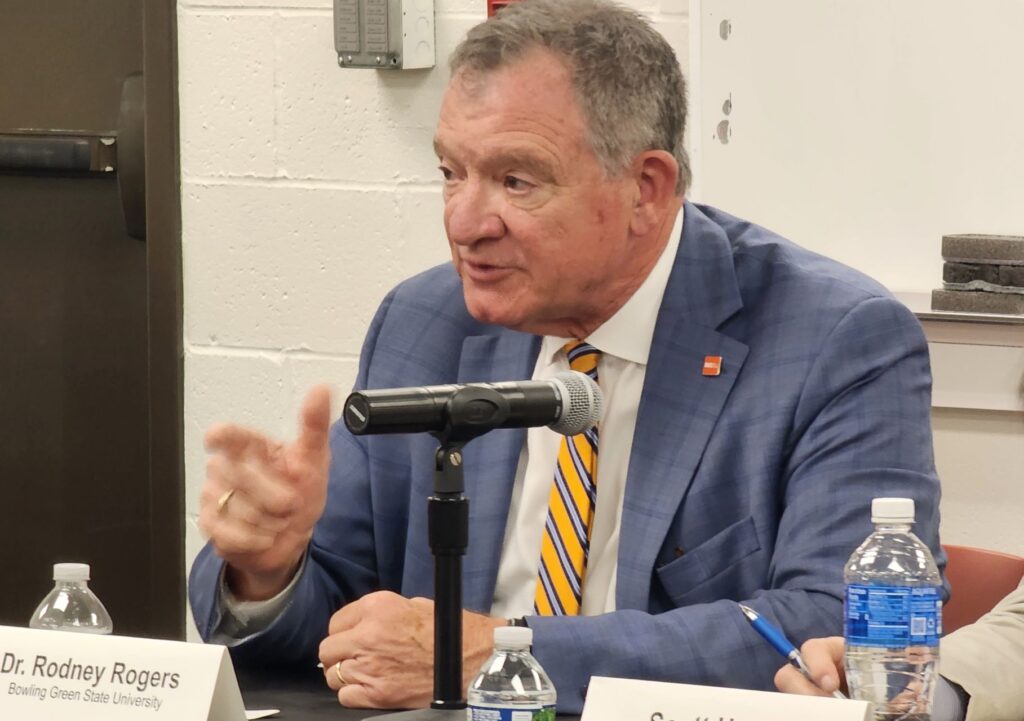
Some of those around the table also talked about the need for education and industry to not be intimidated by the rapid changes in technology.
“I remember Lotus 1, 2 and 3,” an electronic spreadsheet program, and being told his professional goal of accounting would be destroyed, BGSU President Rodney Rogers said. That didn’t happen then, and AI isn’t going to replace all skills now, he said.
First Solar chief supply chain officer Mike Koralewski agreed.
“You’re not going to be replaced by AI,” he said. “You’re going to be replaced by someone who knows AI.”