By JULES SHINKLE
BG Independent News
There weren’t many resources available to Sara Busler when she was first diagnosed with Postural Orthostatic Tachycardia Syndrome (POTS) in the early 2000s. It was the early days of both the internet and POTS – the condition had only been named in 1993, and the search engine of choice was Ask Jeeves.
She describes those days as feeling isolated, wishing she had other patients to help navigate her symptoms.
“I’ve had it for over 20 years; that’s kind of unusual. A lot more people are being diagnosed recently,” says Busler. There’s been an influx of those diagnosed with POTS since the COVID-19 pandemic, as it can develop after viral infections.
“So sometimes my number will get passed along. People feel crazy, and they just want to know someone else’s experience.”
A conversation like that – where Busler can lend her advice on what doctors to see, which medications worked for her – can make a huge difference for people just starting to grapple with a diagnosis.
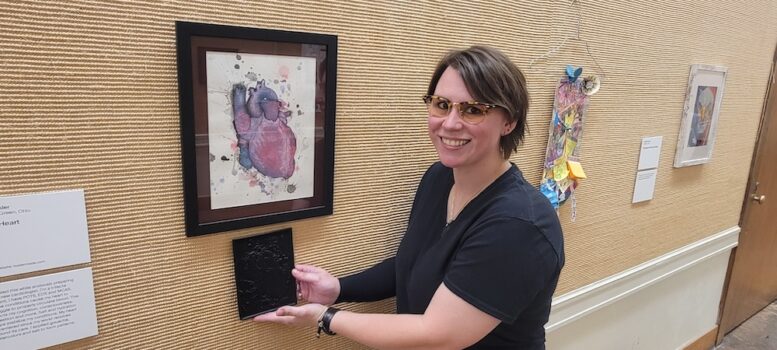
It’s why she cares deeply about advocating for those with disabilities. Her artwork is one facet of said advocacy, one that’s currently on display at the Toledo Museum of Art.
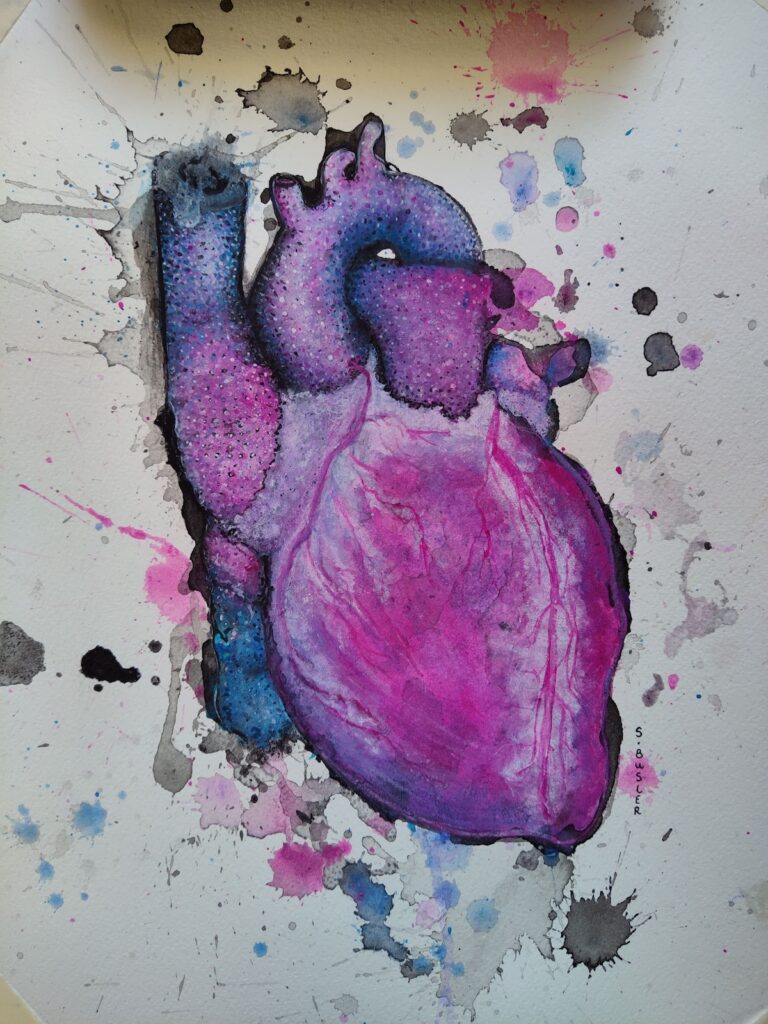
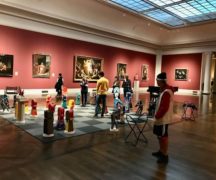
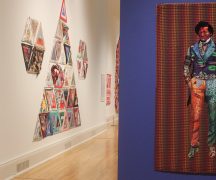
Busler’s piece “Salty Heart” is currently in the TMA as part of an exhibit titled “Disabled Women Make History (and Art).” The exhibit is a result of their yearly collaboration with Disability EmpowHer Network, a nonprofit that offers mentorship and skill-building to disabled girls and women.
According to the organizer’s website, “This event honors the legacy of Lois Curtis and Elaine Wilson, two disabled women whose advocacy led to Olmstead v. L.C., the landmark U.S. Supreme Court decision that affirmed disabled people’s right to live in the community rather than institutions.”
The exhibit is free and open to the public until July 31. A gallery of the exhibition is available online, and there will be a virtual tour on July 29.
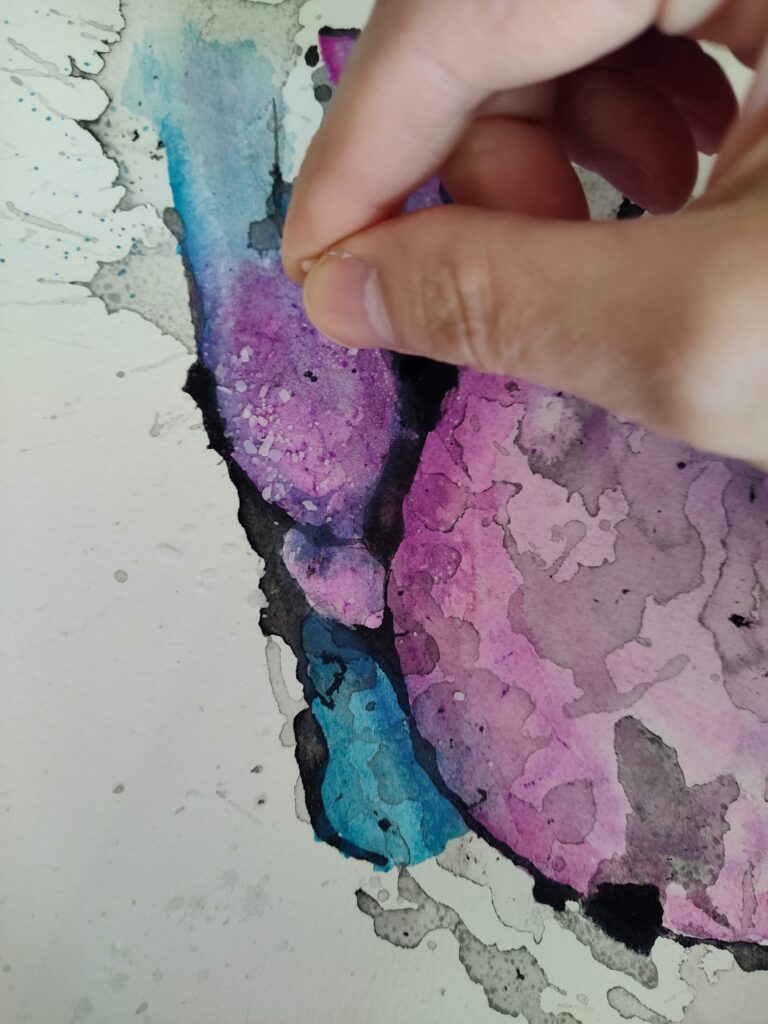
“Salty Heart” is a painting of a human heart done with watercolor, gouache, ink, and salt. The piece is visceral (literally) yet enchanting. Veins wrapping the muscle evoke an anatomical frankness, but its fuchsia palette suggests the subject is personal, well-known, and well-loved. A coat of salt causes the organ to shimmer in the light, reflecting Busler’s use of salt as a stabilizing treatment.
The painting came together in 2022 while she prepared for an appointment with a new cardiologist: “I was super nervous to meet this doctor; I have white coat syndrome. I couldn’t sleep, so I put the inks out and added salt to the paper because […] salt and hydration can help us POTS patients increase blood volume, which makes our blood pressure stable.”
”I was kind of taking care of myself through the painting,” she said. “It was all out of anxiety and not knowing what to do with my big energy.”
Busler decided to take the painting with her to the appointment, where it was well received.
She explains that in addition to being a great icebreaker, sharing her art with a medical provider led to “them understanding that this is something that means so much to me that it shows up in my coping strategies, my self-expression.”
Busler then created a series of anatomy-based works while in waiting rooms. Art, the body, and therapy are so tied together that she refers to her ART-work as an acronym: Awareness of Recurrent Trauma.
One of the first artworks a visitor will see in the TMA is Henri Matisse’s “Apollo,” a mural of boldly colored leafy fronds surrounding a face. Due to a surgery that left the artist unable to paint, Matisse pivoted to making collages of paper cut-outs.
This development parallels Busler’s own experience; she also transitioned across mediums due to a physical disability. She points to Frida Kahlo, too, whose disability made a profound impact on what kind of art she created.
The “Disabled Women Make History (and Art)” exhibition is in direct conversation with this lineage. Artists like Lois Curtis were and continue to be important advocates for advancing the rights of disabled people. Busler calls being part of the show “an honor, and surreal to say the least.”
“Disabilities are a spectrum and culturally enrich our worlds as well as limit them. The emotions I experience with my mental and physical conditions are like the changing seasons. Sometimes I feel warm, and like I want to stop time. Other moments I feel cold, disconnected and can’t wait for this moment to be over,” she said.
“However, the connections I experience with others by having these conversations always leave me feeling grateful for my experiences, and I appreciate the knowledge gained, knowing how others interact with the same world I’m in.”