By JAN McLAUGHLIN
BG Independent News
After studying the final version of Congress’ “Big Beautiful Bill,” Dave Wigent has been mulling over the effect of the Medicaid and SNAP cuts in funding and increases in requirements.
It’s not pretty, according to Wigent, director of Wood County Job & Family Services.
Since Wood County Job & Family Services gets nearly 80% of its funding through the federal government, the cuts are expected to have a drastic effect on local Medicaid and SNAP recipients.
It appears Ohio will lose about $65 million a year in Medicaid funding. And he has no great hopes that the state will pick up any of that loss.
“I’m thinking they will pass the loss on to us,” he said, predicting that it will mean $272,000 less for Wood County.
Though work requirements are nothing new to SNAP recipients, this bill adds them for Medicaid recipients. While many will be exempt due to physical or mental limitations, Wigent predicted it could affect about 3,600 Medicaid clients in Wood County. He expected about 1,000 to lose their coverage.
“Those folks won’t vanish,” he said. Instead they will go to hospital emergency departments or the Wood County Health Department for care – which will have an effect on others seeking care.
“They will have lost all their other options,” Wigent said.
As for the supplemental food program (SNAP), Wigent reminded that undocumented people are already not allowed to receive SNAP.
Many Medicaid and SNAP recipients already work multiple low wage jobs. “They just aren’t making enough to get by,” he said.
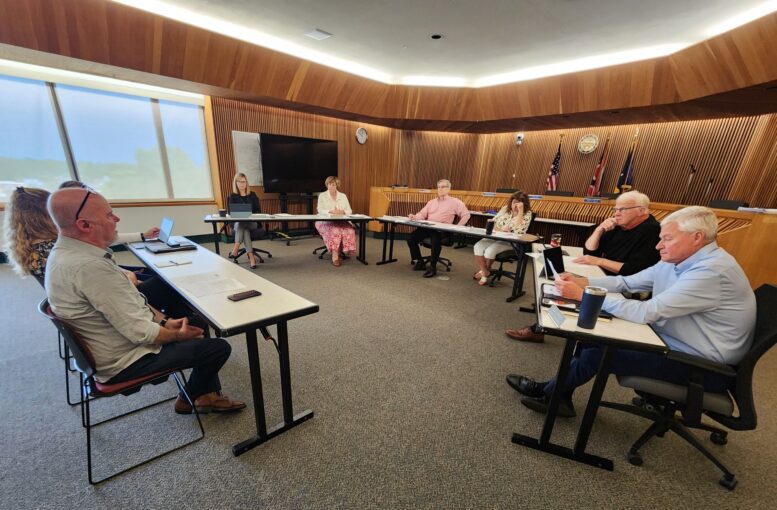
When reporting to the Wood County Commissioners on Tuesday, Wigent said his agency has planned ahead for such cuts. “We’ve made moves on the chess board to try to mitigate it.”
Unlike most JFS departments in Ohio, Wood has put aside money in reserves and is in better shape than 80% of the counties in the state, he said.
“I think we have a full year until I have to start wringing my hands,” Wigent said. “I feel like we’ve done a good job preparing for bad times.”
In expectation of the cuts, Wood County Job & Family Services implemented a hiring freeze in January, plus has left six positions open as staff leaves. The possibility of using furloughs in the future is being considered, he said.
“We’re stocking as much cheese as we can,” he said.
In addition to clients, Job & Family Services employees will also be affected by the federal cuts. The new rules for Medicaid will require redetermination of eligibility every six months.
“They are doubling our workload,” but providing no additional funding for that, Wigent said. Instead, penalties will be implemented for agencies getting behind in the workload, he said.
Even more worrisome for Wigent is the ballot initiative asking Ohio voters to ban all property taxes in the state.
“That would be Armageddon for us,” he said, predicting an immediate loss of $4.4 million a year. “We would be crippled.”
As of last month in Wood County, 7,357 people, including 2,987 children, received SNAP benefits that help them purchase nutritional food. A total of 16,918 people were covered by Medicaid, which helps with medical expenses.
No one is getting wealthy off either of these programs, Wigent said. For most, it’s a matter of survival. The average family getting SNAP in Wood County receives $315 a month in grocery vouchers.
To qualify for public assistance, there are some pretty strict standards to be met, Wigent said. Families have to prove their income, citizenship, household occupancy and other expenses.
The fraud in Medicaid and SNAP programs locally is low, Wigent said. And when it is identified in Wood County, those suspected of committing fraud are pursued and prosecuted, he said.
Wigent cited studies putting client fraud at 3% to 4%.
“There isn’t anybody getting rich on these programs,” he said. “That just isn’t accurate.”
To politicians who say the system is rife with fraud and recipients need to work for their benefits, Wigent said well over 60% of local SNAP recipients are employed, with some having multiple jobs as they try to escape the cycle.
“The lower wage jobs keep them in the program,” Wigent said.
The Medicaid changes proposed at the federal level are “fairly harsh,” and are being pushed by people who don’t really understand the impact to honest people who honestly need help, he said.
“They will make changes because it seems like a simple fix to a problem,” Wigent said. “But you have to get to the county level to really see the effects.”
Despite the rhetoric, the vast majority of Americans on Medicaid are deserving, he added.
As for cuts to SNAP, as the price of groceries spike, local residents are already supplementing their food benefits by getting items at food pantries. Non-profit food banks are already seeing their stock being stretched and in some cases, shelves being emptied.
A bit of good news – if it can be called that – is that the start date for some of the proposed cuts have been pushed back, some to come after the next congressional election and some past the next presidential election.
Wigent said that political move will mean voters won’t notice the hardships caused until after the elections.