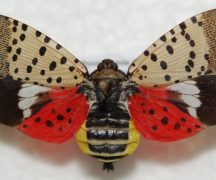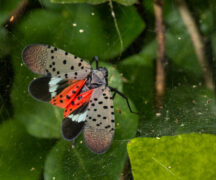
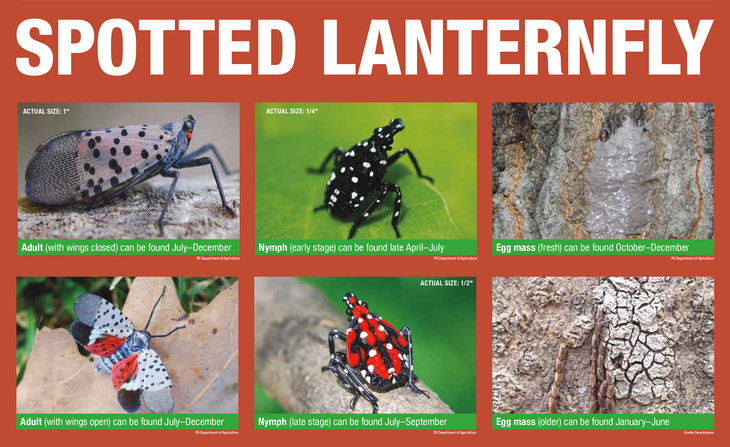
The City of Bowling Green’s urban forester is encouraging residents to stay alert for the presence of spotted lanternflies (Lycorma delicatula), an invasive insect species that has been spreading across parts of Ohio and the Mid-Atlantic region. While their striking appearance may cause concern, these insects are primarily a nuisance pest and do not pose a threat to human or animal health.
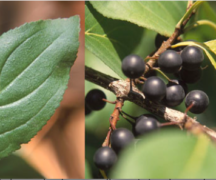
Spotted lanternflies are not a widespread threat to all trees or forests. Their primary hosts are the invasive Tree of Heaven (Ailanthus altissima) and vineyards, which means that vineyards and areas with large populations of these plants are most at risk. Other hardwood trees may be visited by lanternflies, but most are not damaged.
Key facts for residents:
- Spotted lanternflies do not bite, sting, or pose any direct health risk to people or pets.
- While they feed on sap from plants, their activity rarely causes long-term harm to most
trees. - Their presence can result in sticky honeydew deposits that attract sooty mold, making
them an unpleasant nuisance around homes, patios, and outdoor areas.
What the public can do:
- Be on the lookout for spread around train tracks coming from the northern parts of Wood County.
- Report sightings to the Ohio Department of Agriculture at https://buff.ly/wDeejMj
- Avoid moving firewood, yard waste, outdoor furniture, or other materials that may carry egg masses to new locations.
- Destroy egg masses (gray, mud-like patches on hard surfaces) when found during the fall and winter months.
Spotted lanternflies do not pose a threat to most native tree species or to the general public. For more information, visit the Urban Forestry page on the city’s website, https://buff.ly/lTgS8EI or the Ohio Department of Natural Resources, https://buff.ly/aDOeyjJ.