

By JAN McLAUGHLIN
BG Independent News
As many immigrants of color in the U.S. find themselves facing the threat of deportation by ICE, local residents are looking for ways to protect them.
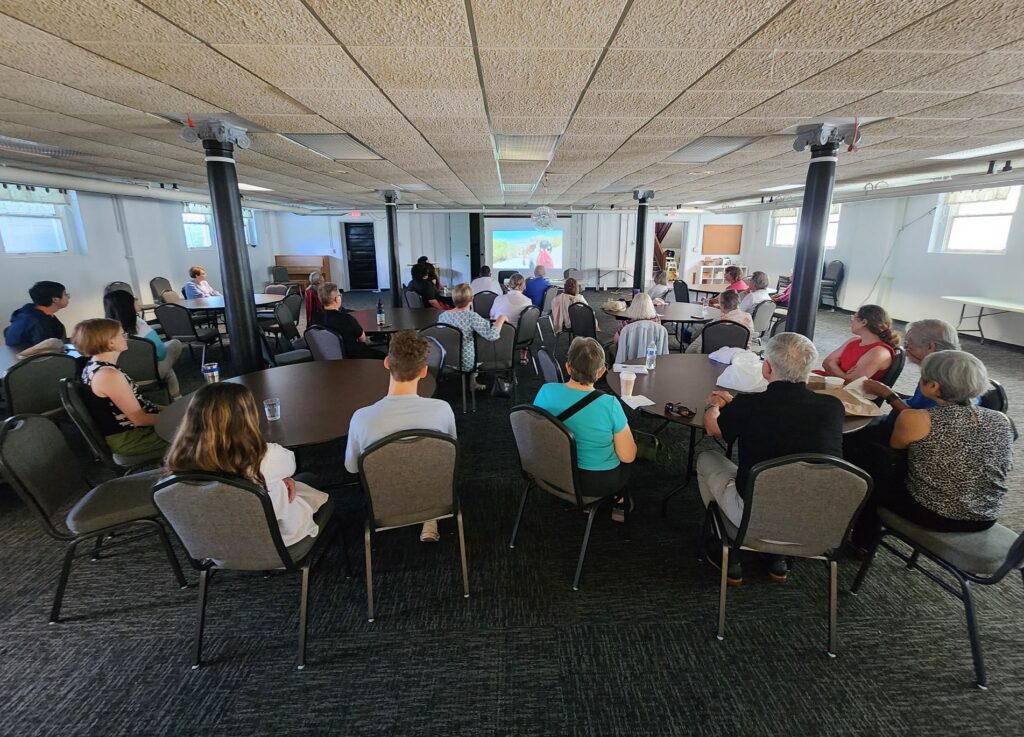
To discuss the plight of local immigrants, documentaries on the “Search for Hope in the Promised Land” were recently viewed and discussed at First Presbyterian Church in Bowling Green. Hosting the discussion were members of La Conexion and O’Leo Lokai, one of three church members who traveled to the Mexican border last year to see the immigration process.
Throughout U.S. history, some immigrants have been painted as unwanted and dangerous. That has kicked into high gear, with immigrants from the southern border often being portrayed as part of an invasion that is a threat to Americans’ safety.
“Migration has become a political tool,” Lokai said.
Some media coverage has egged this on, focusing on the undocumented status of suspects in crimes, but being silent when it’s a U.S. citizen who has perpetrated serious crimes.
According to the Associated Press, research has consistently found that immigrants are not driving violent crime in the U.S. and that they actually commit fewer crimes than native-born Americans.
A 2023 paper from the National Bureau of Economic Research reported that immigrants for 150 years have had lower incarceration rates than those born in the U.S. In fact, the rates have declined since 1960 — according to the paper, with immigrants being 60% less likely to be incarcerated.
Then there is the disconnect between the administration’s rhetoric and reality, cited by AP.
President Donald Trump has pledged to deport “the worst of the worst.” He frequently speaks about the countless “dangerous criminals” — among them murderers, rapists and child predators.
But government data around ongoing detentions tells a different story.
The majority of people currently detained by U.S. Immigration and Customs Enforcement, have no criminal convictions. The latest ICE statistics show that as of June 29, there were 57,861 people detained by ICE, 41,495 — 71.7% — of whom had no criminal convictions. That includes 14,318 people with pending criminal charges and 27,177 who are subject to immigration enforcement, but have no known criminal convictions or pending criminal charges, according to AP.
ICE arrests shot up at the end of May after White House Deputy Chief of Staff Stephen Miller gave the agency a quota of 3,000 arrests a day, up from 650 a day in the first five months of Trump’s second term.
The Cato Institute found that between Feb. 8 and May 17, the daily average of “noncriminals” processed into the system ranged from 421 to 454. In the following two weeks at the end of May, that number rose to 678 and then rose to 927 in the period from June 1 through 14.
“They are just human beings, just like you and me,” the documentary pointed out.
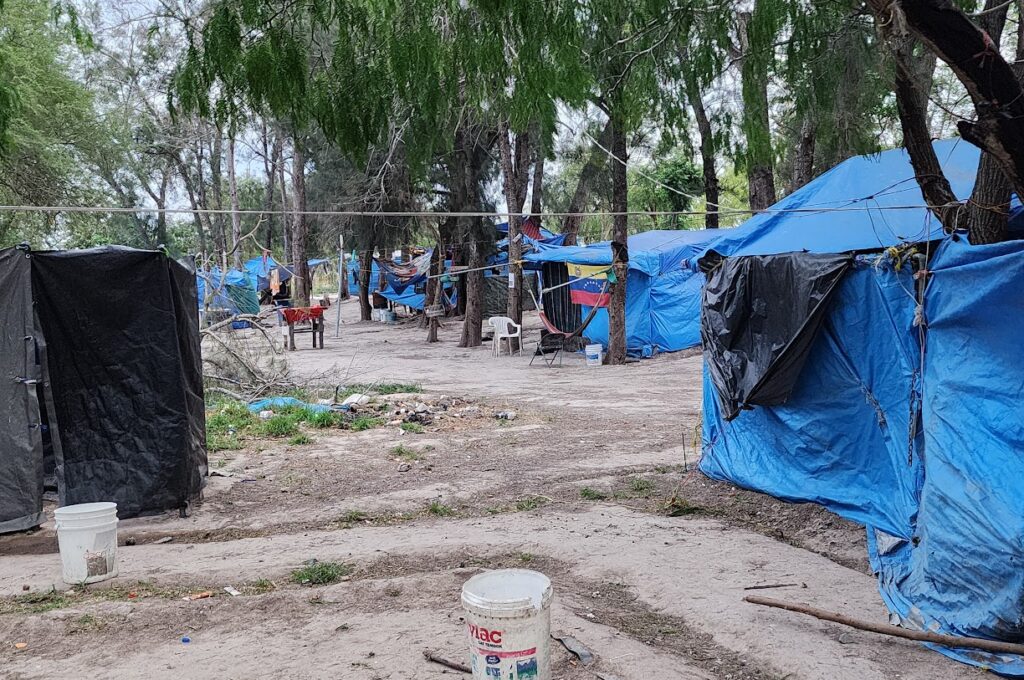
In many cases, the immigrants come to the U.S. to escape extreme violence and poverty in their homelands. Those who try to come here legally have to wait – sometimes for years – in camps on the Mexican side of the border. For some, their immigration appointments never come.
“They always say, ‘Do it the right way,’” Lokia said. But that process is broken.
“We have people escaping horrible conditions,” a speaker in the documentary stated. “And we make it almost impossible for them to get here legally.”
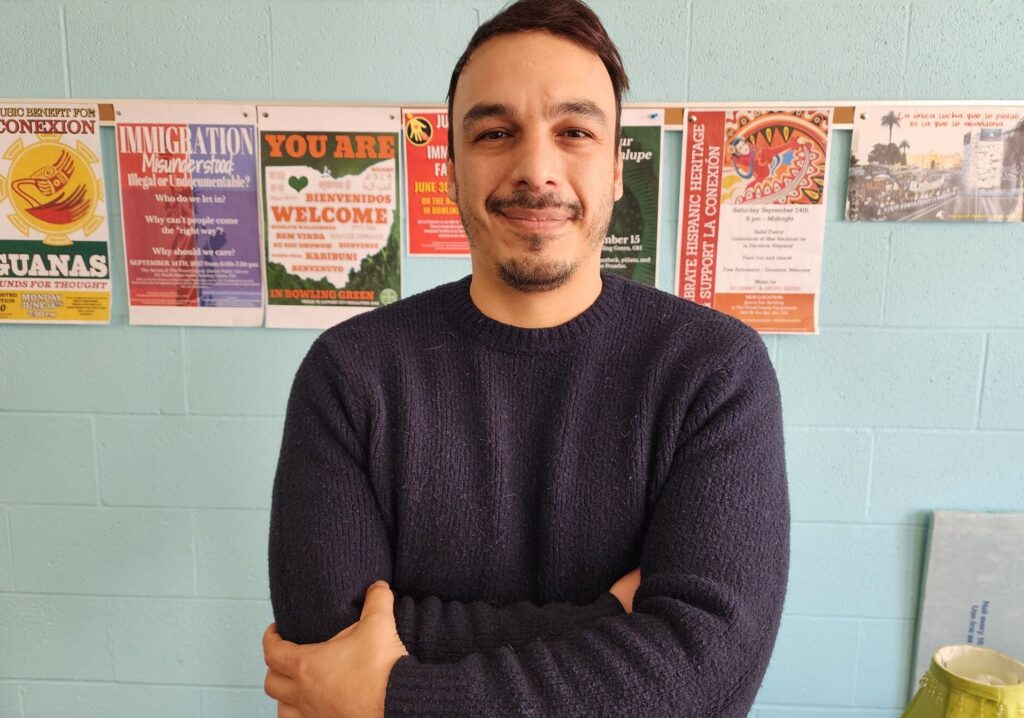
La Conexion of Wood County was created more than 10 years ago to create a space where immigrants can feel seen and safe, said Braulio Franco, program director for La Conexion.
“Today we find ourselves in a most difficult situation,” with immigrant families living in fear, Franco said. “They want to raise their children in peace.”
“This is not just about immigration status. This is about human rights,” he said.
La Conexion Executive Director Lucia Myers said the organization gets daily calls for assistance, education, support.
“Here we are again – standing in the same place we did five years ago,” Myers said.
Many local immigrants came here legally, and are picked up by ICE when they try to follow the rules and appear at immigration court proceedings.
Though there have been no ICE raids in Wood County, some agricultural workers are in fear of being detained and transported to ICE detention centers, Myers said.

In May, Myers talked about adults no longer attending English as a Second Language courses offered by La Conexion, fearing ICE will target those types of programs. And children worry they will come home to empty houses, with their parents being arrested while they are at school.
“A number of our community members are afraid right now. Even if you are a citizen, if you fit a certain profile, you are at risk,” Myers said.
So La Conexion is working to prepare local immigrants for potential encounters with ICE. La Conexion has been working with legal services such as ABLE to make people aware of their rights. The organization is dispersing small orange cards that explain the Fourth and Fifth Amendments in the U.S. Constitution – that provide protection to all in the nation.
“We want people to know their rights,” Myers said.
La Conexion is also suggesting that members of the Latinx community have all documents and notarized letters gathered in case they are needed.
“Anything to keep their loved ones together,” she said. “We want to be active, not reactive.”
Legal aid lawyers are swamped, and court interpreters are stretched thin, Myers said.
Even for immigrants who came to the U.S. legally, and jumped through all the necessary hoops, there is no guarantee of due process.
Even for those who have lived here for decades, and paid taxes on their incomes, there is a risk.
The targeting of Latinx populations has led to many local residents limiting their interaction in the community.
“A lot of people are just sticking to their homes,” Myers said.
ESL classes for adults, and tutoring for K-12 students have seen attendance drop drastically, or all together. Some seasonal workers are not returning to work the fields this year.
In addition to preparing local Latinx community members, La Conexion is also telling other community members how they can help. For some people, advocating for their neighbors may take the form of donating to nonprofit groups, or writing letters and making phone calls to legislators.
“Or speaking up when the need calls for it. Making good trouble,” Myers said.
“I know we all feel like there’s nothing we can do,” she said. But speaking out is important.
While “Know Your Rights” trainings are being offered in Spanish, La Conexion is also working on “Know Your Neighbors’ Rights” in English.
“We invite you to stand with us,” Franco said.