By DAVID DUPONT
BG Independent News
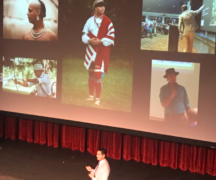
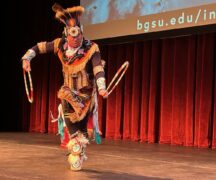
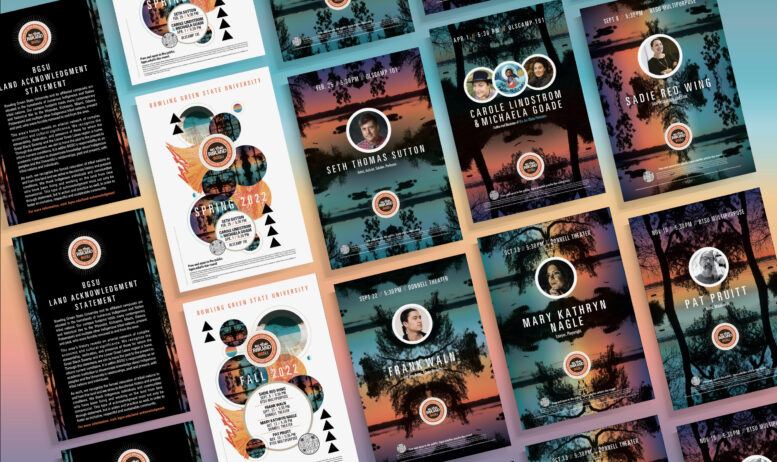
When the In the Round series, a celebration of the creativity and persistence of indigenous people, launched at BGSU in 2022, it offered a packed schedule of six speakers who came to campus. Plus one illustrator Michaela Goade beamed in from her island home in Alaska.
The organizers Heidi Nees, from the Department of Theatre and Film, and Jennifer Stucker, from the School of Art, envisioned this as a one-year program. Halfway through that series, they decided: “We can’t just do this once,” Stucker said.
Last month Nees and Stucker updated the Bowling Green Kiwanis about the program and what’s in store for the coming academic year.
Nees said that In the Round grew out of the university’s formulation of a land acknowledgement statement. The statement, similar to those created by other institutions, recognizes the native people’s who lived on the land before European colonization.
Nees and Stucker, who were on the committee that formulated the statement, decided they should go further. “Something that was very important to us and something that is very important in conversations around land acknowledgment nationally speaking, is that there needs to be action beyond the statement,” Nees said. “So Jenn and I came up with the idea of a guest speaker series to go beyond statement.”
In the next three years they invited seven more speakers.
The idea was to represent all the arts taught at BGSU — creative writing, theater, dance, music, visual arts, film, and design as well as history, education, law, and archeology.
The series has shared its programming with the community, including presentations at the Wood County District Public Library, free books for local students, and podcasts through the Institute for the Study of Culture & Society.
The 2025-2026 version of In the Round further embeds the series in the community.
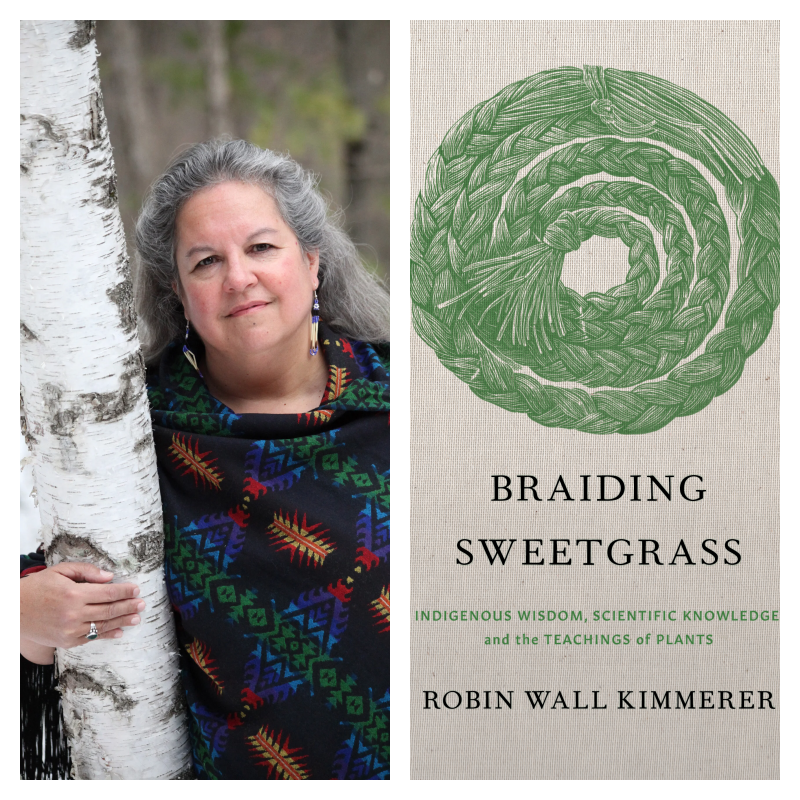
The entire year will be devoted to botanist and writer Robin Wall Kimmerer’s book “Braiding Sweetgrass: Indigenous Wisdom, Scientific Knowledge, and the Teachings of Plants.” According to the publisher, Milkweed, Kimmerer, a member of the Citizen Potawatomi Nation, “shows how other living beings—asters and goldenrod, strawberries and squash, salamanders, algae, and sweetgrass—offer us gifts and lessons, even if we’ve forgotten how to hear their voices.”
The book, published in 2013, has remained near the top of the New York Times Best Sellers list and was chosen by readers as one of the “100 Best Books of the 21st Century.”
Kimmerer will speak on campus on Friday, March 27 at 5 p.m. She will also speak at the Wood County District Public Library.
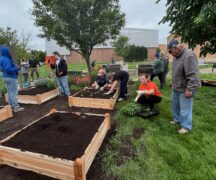
Leading up to Kimmerer’s visit, In the Round is offering a number of campus and community projects.
Nees said that about 30 BGSU courses will use the book which is being provided to students for free. Nees and Stucker are also reaching out to student organizations to encourage them to incorporate the book in their activities. Stucker is teaching a community engagement practicum called Roots centered on the book.
In November, which is Indigenous History Month, the Wankelman Gallery in the Fine Arts Center will host an exhibit focused on native plants in Northwest Ohio.
Faculty members will lead six common read projects in the community. Each session will focus on one chapter from “Braiding Sweetgrass.” The book lends itself to this treatment, Nees noted. The book is a collection of interconnected essays, each of which stand on its own.
“I think if you read six, you’re going to want to read the whole book,” Nees said.
They are still working on arrangements with the sessions planned for local parks, and possibly one in Perrysburg. Further details will be publicized.
Nees credited Marge Meserve with proposing bringing Kimmerer to BG several years ago. At the time, Nees responded: “I don’t know. That would be big. … and here we are.”
Marge and Lee Meserve, a member of Kiwanis who hosted the July talk, have been strong supporters of In the Round. The Meserves provided the financial support to get free books to kids when Traci Sorell visited in March 2024.
“Lee and Marge helped make that happen, that we were able to distribute those books,” Nees said.
Lee Meserve told of “one little guy” who when handed the book, asked incredulously: “Is this mine? Can I really keep this book?” To which Meserve responded “Yes, indeed.”
“And at that same visit, at Crim Elementary,” Nees recalled, “there was a child who took like a dime out of his pocket because he thought he needed to pay for it. And we said, ‘no, this is a gift.’”
Stucker, who in collaboration with her students, creates the award-winning graphics for In the Round, designed a book plate so youngsters can write their names in them.
The school work is intended to address the lack of state standards for teaching about indigenous people, especially, after 1900, Nees said.
Stucker emphasized that “we are not trying to be the educators. We want the native individuals to represent and tell their stories. We’re just really providing that framework as best we can.”