By JAN McLAUGHLIN
BG Independent News
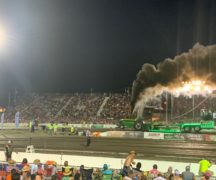
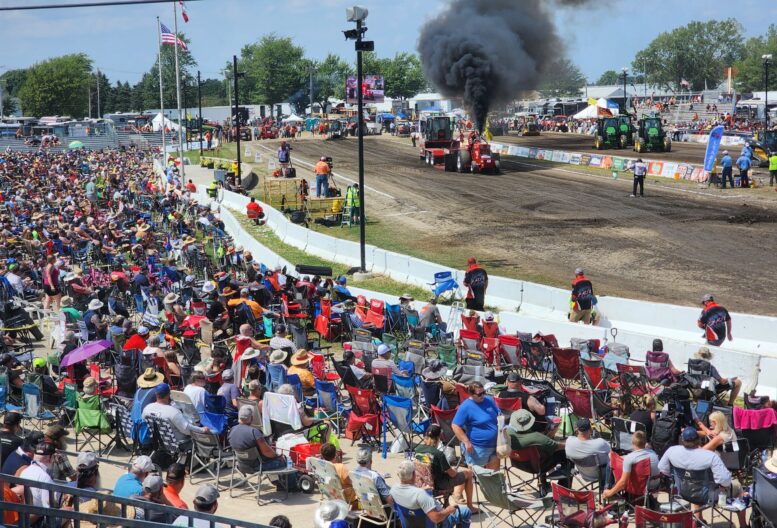
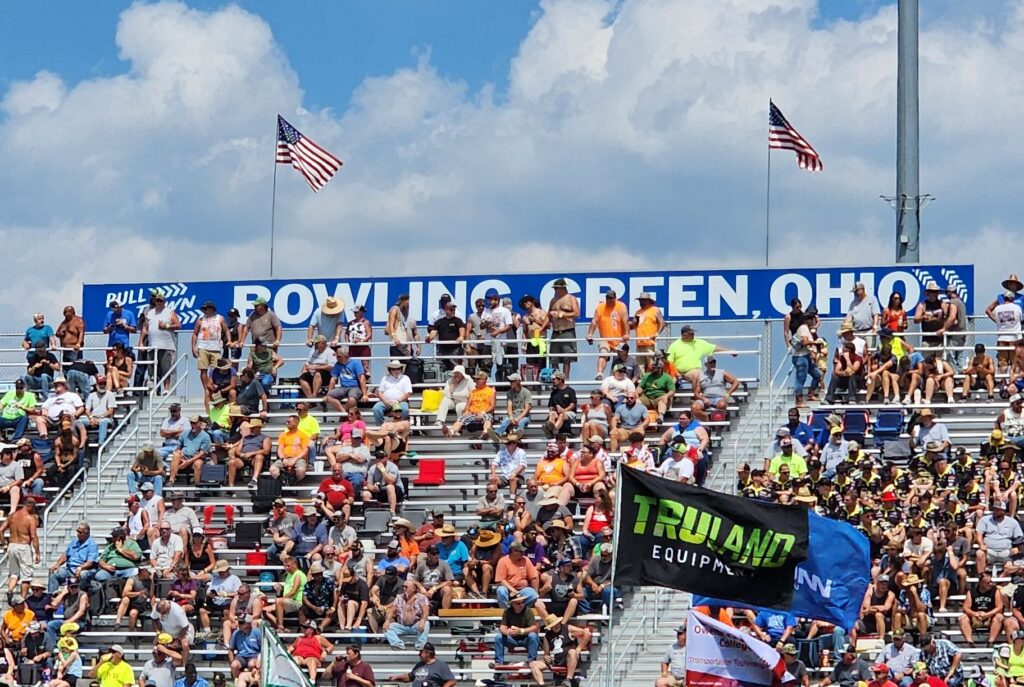
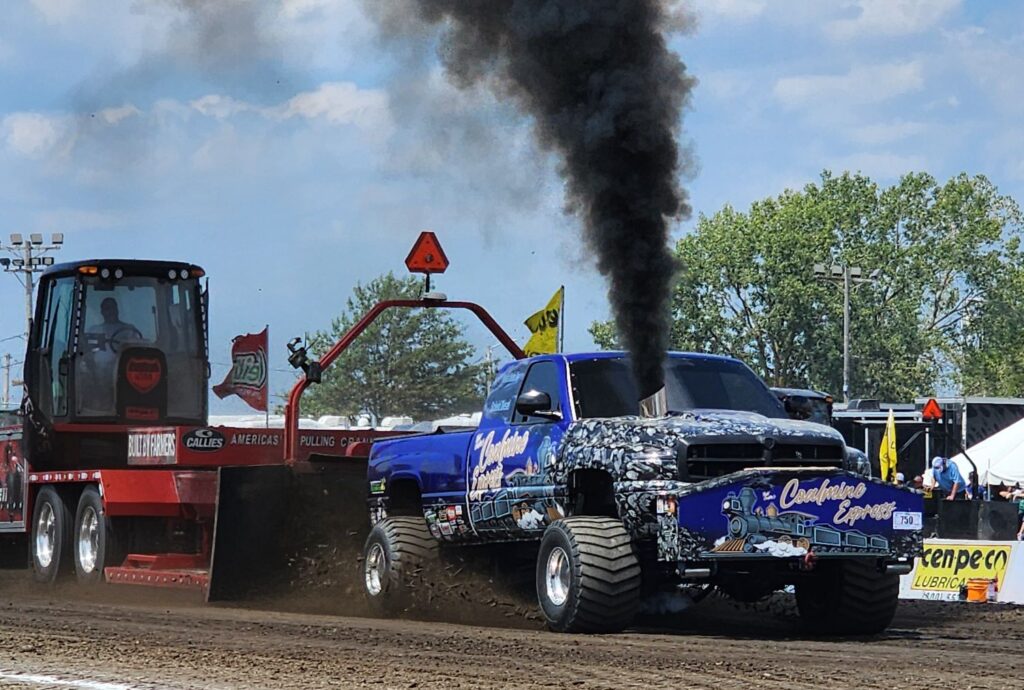
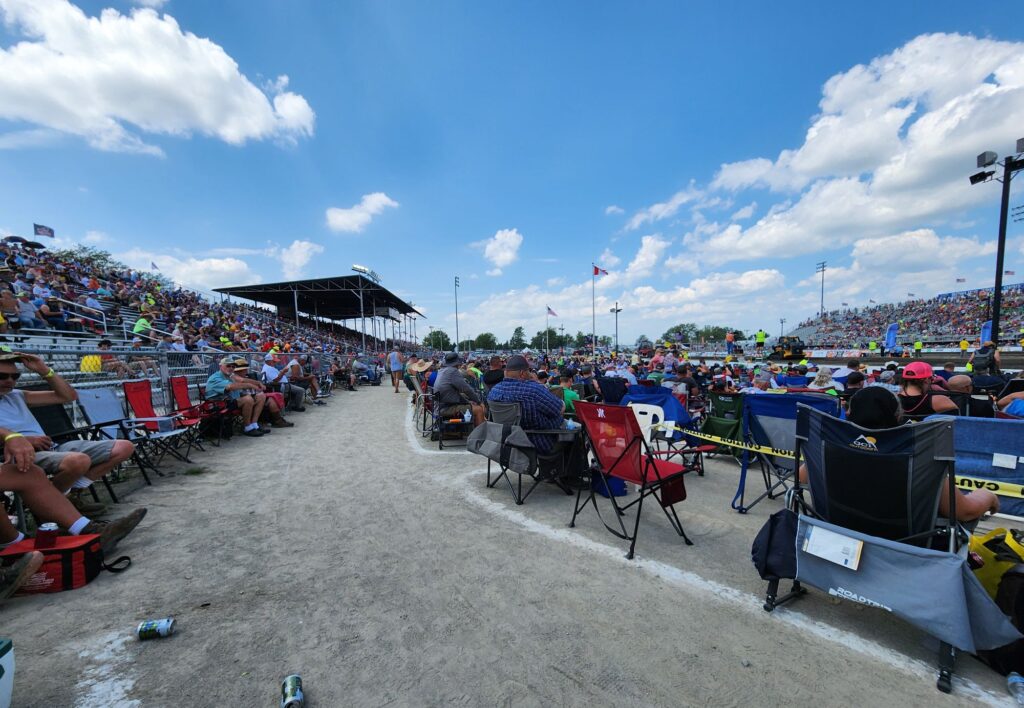
The metal bleachers were sizzling in the sun. The roars of the engines were deafening. The billowing smoke blackened the sky.
And the fans couldn’t get enough of it.
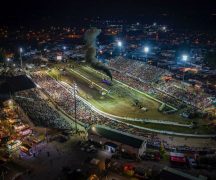
An estimated 65,000 fans are in Bowling Green this weekend for the annual National Tractor Pulling Championships.
“We are proud to be Pulltown USA,” a man said over the loudspeakers, “celebrating what makes Ohio great, what makes America great. The oldest profession – farming.”
Though the tractor pull may have its roots in farming, in its 58th year, it bears little resemblance to that now.
Before it became a national event, the Wood County Tractor Pullers in 1962 held the first speed pull at the Wood County Fairgrounds. A special long flat bottom sled was designed for men lined up on both sides of the track to step on as it went by. The tractor that pulled the sled the farthest was declared the winner.
Many problems occurred with this first type of pulling, specifically men leaving the track during the event and the tractors going too fast for men to step on.
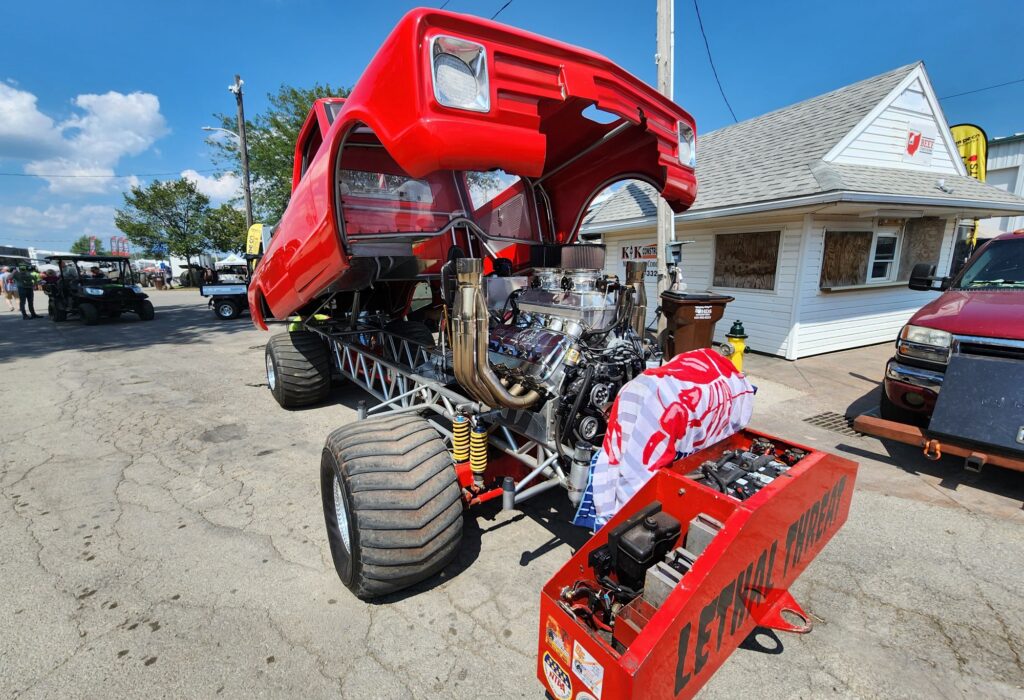
Since then, the pull has become a science – and big business with over $250,000 awarded in prizes.
Today it brings pullers and fans from around the world. On Friday afternoon, one of the pullers came from the Netherlands, with a contingency of fans from his homeland.
And though many residents of Bowling Green moan about the roar of the engines for three days, the tractor pull fills hotel rooms, empties beer coolers, and raises a lot of money for Make-a-Wish.
The insufferable heat, the noise, and the traffic can’t keep fans away.
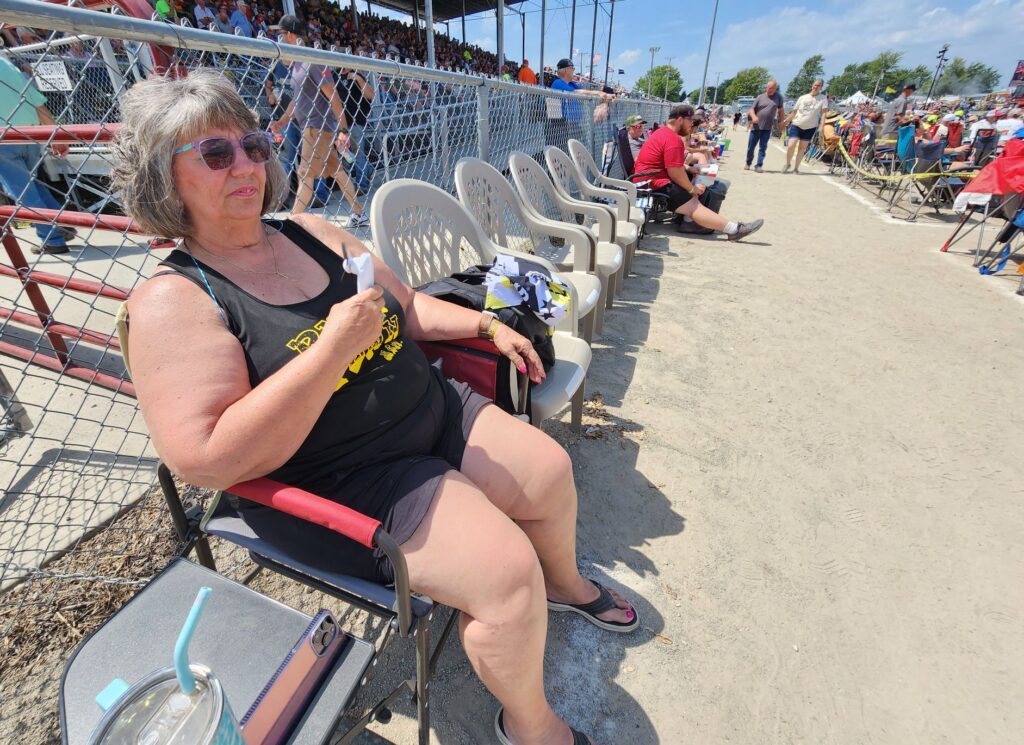
Take Sheryl Rathge, from Napoleon, who was cooling herself with a battery-operated fan stuck in her cleavage.
“I’ve been here for about 32 years,” she said, explaining that her husband is one of the tractor pull’s “blue shirts,” with his job being in charge of the track.
“I grew to love the sport because of him,” Rathge said. “Everyone is so friendly.”
Like many others, she and her husband have been camping on the fairgrounds all week in preparation for the pulls.
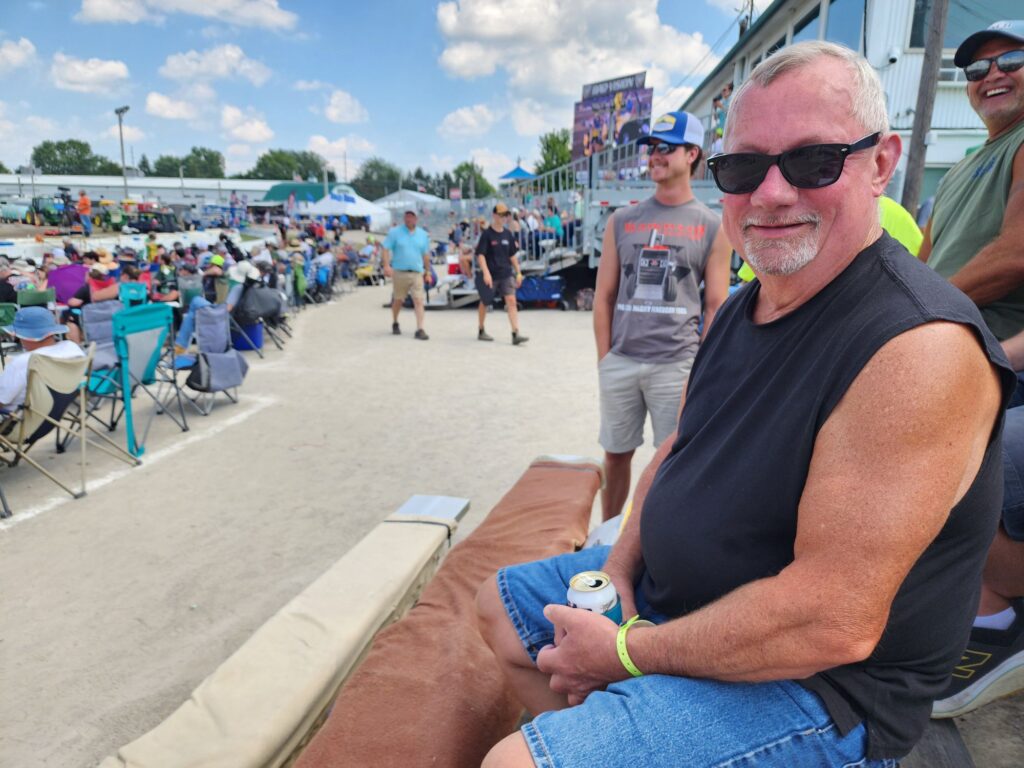
Or there’s Mike Knam, from Alliance, who used to compete in the pulls and won in the prostock category in 1987. He reluctantly had to give up the hobby in 1995.
“It just got too expensive,” Knam said. “It was either that or buy my house a second time.”
Back when he competed, he would sink $100,000 or so in his tractor. “Today they are about $400,000.”
Knam misses being out on the track, going for a full pull. “Sure do,” he said.
But it’s good enough now to watch from the stands, sitting with friends he’s collected over the years.
“You meet a lot of nice people. It’s a lot of fun,” Knam said.
Sitting nearby was Bill Woronka, from Canton, with his beer wrapped in a koozie. He’s been coming to the tractor pull since 1987. He enjoys the competition, but keeps coming back for pals he’s made at the pulls.
“I come to bond with my buddies,” from as far away as California and Toronto, Woronka said.
Up in the air-conditioned media room operated by the Tractor Pullers Association, Jeff Hobbs, the crew leader for dealing with media, took time to answer a few questions in the cool refuge.
“It’s hard on the workers,” Hobbs said of the heat that peaked at 89 degrees on Friday afternoon. “And the bleachers have to be like a frying pan,” he said, adding that after consuming enough beer, some of the fans don’t feel a lot of pain.
The national competition has been getting bigger every year, Hobbs said.
“It’s growing all the time. We’re about busting at the seams,” he said.
It has become a year-round effort to pull off the massive event. To accommodate the fans, 2,200 campsites are rented out on the county fairgrounds.
“They’re packed,” Hobbs said. In fact, fans who dally will find the campsites all taken by April.
While the competition means big money for the winners, it also means a lot of money going to the non-profit Make-a-Wish Foundation. Over the years, the event has netted more than $2 million from the pull.
“We’d like to see that number get bigger and bigger each year,” he said. “The thing runs like a well-oiled machine.”
“This is the Rose Bowl, the Daytona 500, the World Series, the Super Bowl – and it’s in Bowling Green,” Hobbs said.
Of course, the investments by pullers has also mushroomed. Tractors in the mini category are powered down the track with 3,000 horsepower. “I’m a gearhead, and they’re nuts,” Hobbs said with a grin.
“This is not a poor man’s sport,” he said, adding “some are shoestring operations.”
Hobbs said anyone who meets the qualifications can compete.
“Come and run it,” he said. “We don’t care if you built it in the backyard, or in a multi-million dollar tool shop.”
And when engines break down, a community of pullers often come to the rescue to put them back together again. “They want to beat them on the track,” Hobbs said.