By JAN McLAUGHLIN
BG Independent News
Local government leaders are not panicking about the federal government shutdown, for now. But give them a couple weeks, and it may be a different story.
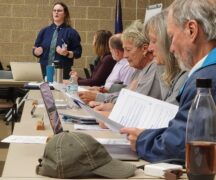
Wood County and the City of Bowling Green officials are watching and waiting to see what’s next.
“I’m not aware of any immediate impact,” Wood County Administrator Carri Stanley said. But officials are tracking the impact on Wood County Job and Family Services, the county office receiving the largest share of federal dollars. “We’re going to be watching that the next couple days.”
As for federal grants, Stanley said the county received all its American Rescue Plan Act funds in advance. But other grants that are funded as reimbursements could be at risk.
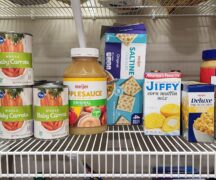
Wood County Job and Family Services Director Dave Wigent said the first funding to be hit at his agency will be Supplemental Nutrition Assistance Program (SNAP). But the pain could be postponed with the help of state funding.
“Traditionally, they have some reserves,” he said, predicting that SNAP could continue for at least 60 days.
“If this goes a few weeks, I think we’ll be OK. But if it goes for three months, the state reserves might dry up,” Wigent said.
The Wood County Health Department is also seeing no reason for alarm.
“As of now, we don’t anticipate any major disruption of services,” Wood County Health Commissioner Ben Robison said this morning.
The health department has received notice from the state that the Women, Infants and Children (WIC) nutrition program would be the first to lose funding – but that the state has contingency plans to keep that fully funded for now.
The community health center at the health department has not been warned about any immediate impacts, Robison said.
“We have not received any notices about funding changes that would affect our services to the community,” he said. “Our medical, dental, and behavioral health services continue to accept new patients.”
At the Bowling Green city building, officials are being watchful for potential impacts on federally funded local programs. If the shutdown is over within two weeks, then all should be all right, said Finance Director Dana Pinkert and Director of Administrative Services/Community Development Administrator Martha Woelke.
The programs most likely to be affected are the city’s housing and transit programs.
“If it goes a long time, it would likely impact our Community Development Block Grants and BG Transit funds,” Woelke said. “It’s all conjecture at this point. We don’t know what might happen. We don’t know what they will want to cut.”
The city could weather a two-week federal shutdown, but longer than that and “it will be a different conversation,” Pinkert said.
This is the first shutdown in nearly seven years, and unlike the last, this one gives President Trump broad authority to determine what federal operations keep running.
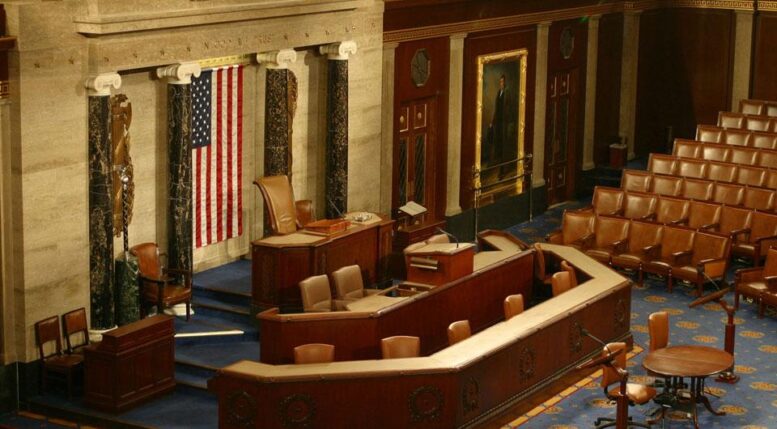
This morning, on the first day of the shutdown, Congressman Bob Latta (R-Bowling Green) released the following statement announcing that he has contacted the Office of Chief Administrative Officer to have his pay withheld for the length of the government shutdown.
“Government shutdowns are costly and unproductive, and members of Congress should not be collecting paychecks while other federal workers go without. That’s why I have directed CAO to withhold my paycheck,” Latta said in his statement. “However, I believe that withholding pay for members of Congress should not be a voluntary action, rather the standard should be that all Representatives and Senators automatically forgo pay whenever the government is shut down. I urge my colleagues to join me in supporting a constitutional amendment to prevent members of Congress from receiving pay during a government shutdown.”
“Congress must work together to find a solution so the government can reopen, and we can fulfill our responsibilities to the American people,” Latta wrote.
According to the Associated Press, the first Trump administration worked to blunt the impact of what became the country’s longest partial shutdown in 2018 and 2019. But on Tuesday, Trump threatened the possibility of increasing the pain that comes with a shutdown.
“We can do things during the shutdown that are irreversible, that are bad for them and irreversible by them,” Trump said of Democrats. “Like cutting vast numbers of people out, cutting things that they like, cutting programs that they like.”
Each federal agency develops its own shutdown plan. The plans outline which workers would stay on the job during a shutdown and which would be furloughed.
Trump’s budget office threatened the mass firing of federal workers in a shutdown. An office memo said those programs that didn’t get funding through Trump’s bill this summer would bear the brunt of a shutdown, according to AP.
Agencies should consider issuing reduction-in-force notices for those programs whose funding expires, that don’t have alternative funding sources and are “not consistent with the President’s priorities,” the memo said.
According to AP, that would be a much more aggressive step than in previous shutdowns, when furloughed federal workers returned to their jobs once the shutdown was over. A reduction in force would not only lay off employees but eliminate their positions, which would trigger another massive upheaval in a federal workforce that’s already faced major rounds of cuts due to efforts from the Department of Government Efficiency and elsewhere in Trump’s administration.
Following are some projections of what the shutdown means for Ohio:
- A shutdown would force more than 2 million federal employees and 1.3 million active-duty servicemembers nationwide to work without pay, while some agencies have already been told to prepare for permanent layoffs. In Ohio, that means military servicemembers and more than 56,000 federal workers are facing missed paychecks because of the shutdown.
- Social Security and Medicare benefit checks would keep going out, but seniors and people with disabilities would see halted benefit verifications, delayed card replacements, and longer wait times for essential help.
- Programs like SNAP, which help nearly 7 million women and children put food on the table, would run out of funding within days. An estimated 1.5 million Ohioans rely on SNAP every month.
- The Small Business Administration would stop processing new loans, creating turmoil for entrepreneurs and local businesses.
- FEMA’s capacity to respond to hurricanes, wildfires, and floods would be constrained.
- TSA agents and air traffic controllers would work without pay, risking staffing shortages, flight delays, and longer lines at airports.
The National Association of Counties also sent out information to county governments about the programs that will be affected first:
- SNAP will not be able to access new funds. However, counties will have access to any carryover funding from previous years – that may carry the program through October.
- Pauses in critical services of the Farm Service Agency, Natural Resources Conservation Service, Food and Nutrition Service, U.S. Forest Service, and Rural Development will impact service delivery for county governments and their residents.
- USDA Rural Development new loans, grants and guarantees will be suspended, and most state and field staff will be furloughed. Counties should expect immediate delays in USDA RD-backed projects awaiting approval, technical support or financial closing.
- At the Food and Drug Administration, routine inspections, guidance, staff training and technical assistance that would normally support local health inspectors will be curtailed.
- The WIC supplemental nutrition programs will receive no new funds during a shutdown. Federal contingency funds will sustain benefit delivery only for a few days. After that, states will need to rely on their own funding streams to keep the program running.
- The Medicaid Disproportionate Share Hospital program, for hospitals that serve large proportions of vulnerable patients, will lose $8 billion unless Congress acts. The program is scheduled to be cut by another $8 billion each of the next two years as well.
- Temporary Assistance for Needy Families funding expired when the shutdown began. States may use unspent funds – depending on each state’s financial situation.
- Child Welfare Services (Title IV-B), supports programs with the goal of keeping families together, and preventing child abuse, neglect, and exploitation. No more federal funding will be made available, but states may use their own dollars if they are able.
- The U.S. Environmental Protection Agency will see funding halted for its Clean Water/Drinking Water State Revolving Fund programs and brownfield grants. Most inspections of hazardous waste management sites and chemical facilities will be stopped.