By JAN McLAUGHLIN
BG Independent News
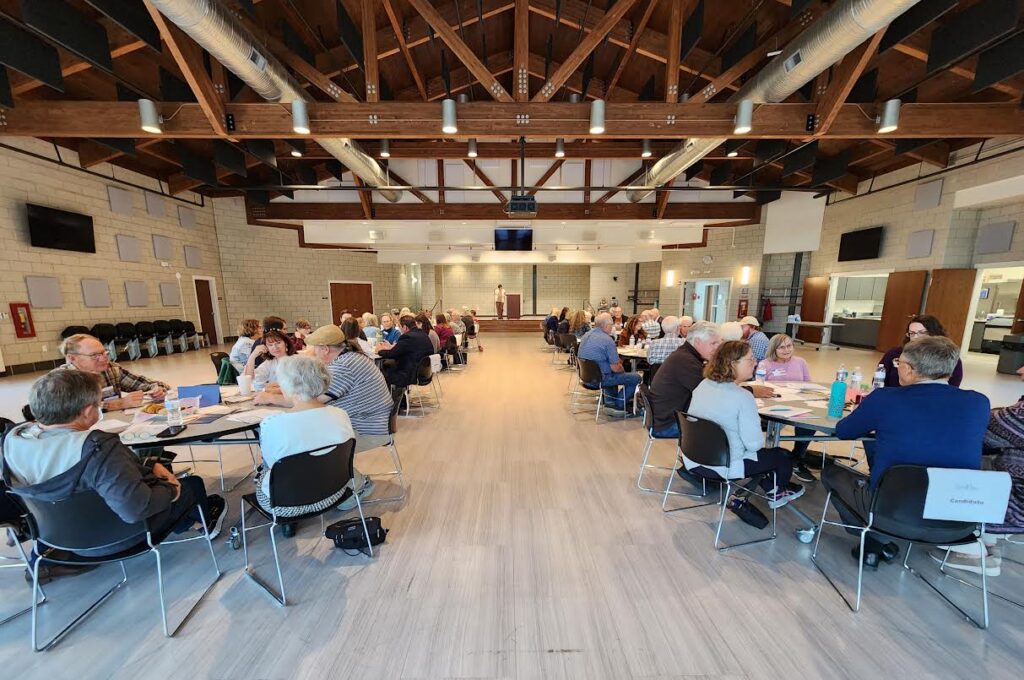
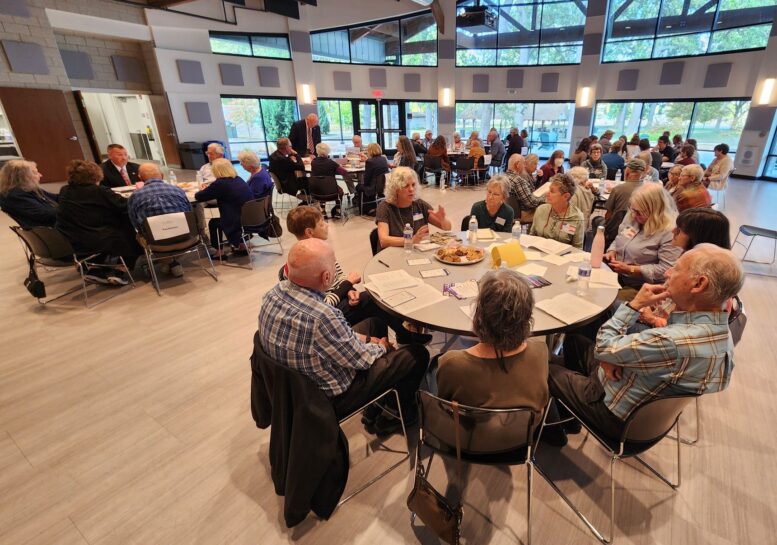
Cozying up at round tables with plates of cookies, local voters had a chance to chat with their candidates on Sunday afternoon.
For the third year in a row, rather than the candidates being distanced from the voters and answering questions submitted on cards, the “Face2Face Meet the Candidates” forum allowed for personal interaction between those on the ballot and those wanting to get to know them.
Participating were candidates for Bowling Green City Council and Bowling Green Board of Education.
The format, organized by the League of Women Voters of BG, gave each table of six or so citizens 10 minutes with each candidate, as they moved from one group to the next.
The three candidates running for two at-large seats on City Council are:
- Katelyn Elliott
- Mark Hollenbaugh
- Greg Robinette
The two candidates running for one Fourth Ward City Council seat are:
- Audrey Baker (who was not present)
- William Herald
Running unopposed this election are:
- Jordan Musgrave for First Ward
- Joel O’Dorisio for Second Ward
- Kathleen Dennis for Third Ward
The three candidates running for two seats on the Bowling Green City Schools Board of Education are:
- Steve Bateson
- Norm Geer
- Ryan Myers
(Full stories on each contested candidate will appear in BG Independent News later this week.)
Following are some of the questions and answers covered between the contested candidates and voters at Sunday’s event.

Norm Geer came equipped with architectural plans for the new high school, just in case citizens were curious. He was asked about how Bowling Green City Schools could meet the 5-star ranking of Perrysburg Schools – the one Wood County district BG is behind in the state report card scores. Geer said BG for two years in a row has earned a 4.5 rating, which is a great achievement. Student performance continues to improve, he said.
Geer was also asked about the damage that vouchers are causing public schools. He agreed the siphoning of funding to private schools is harmful, and expressed concerns about state legislative actions hurting public education.
“They are taking away funding, telling us what to teach and how to teach it,” he said. “It’s an assault on public schools.”
When asked why he is running again for the board, Geer said, “I believe in public education.”
“We’re not done yet. We’re still working on getting this high school built. We are committed to be the best.”
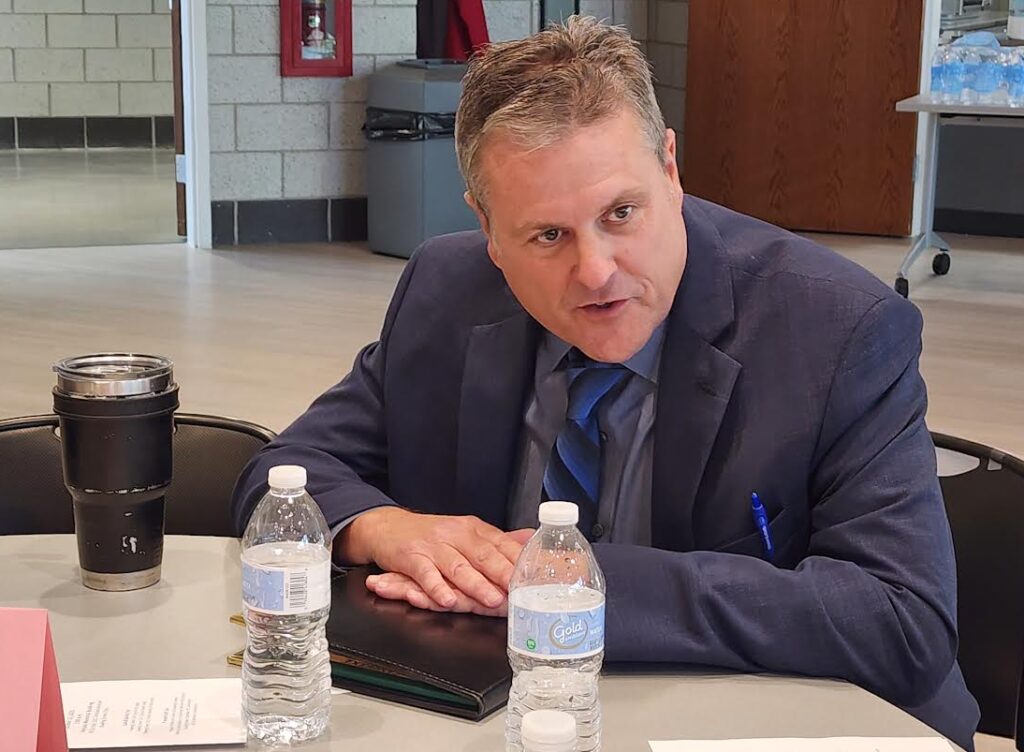
Steve Bateson was asked about the school district’s aging elementary buildings. While he agreed the three elementaries need improvements, Bateson said district residents currently can’t afford any additional district debt.
“I don’t think this district can step into a new bond issue,” he said.
The school district is due to pay off two bonds in 2033 and 2034, which could be a better time for the district to take on new debt, he said.
Bateson suggested that the district do more to address early literacy by dedicating one of the elementary buildings to K-2 students working on reading. There they would “learn to read, then read to learn.”
Currently, the district has uneven classroom sizes, he said. This K-2 school would even out those numbers.
If improvements to the aging elementary buildings are needed to create better learning environments, Bateson suggested updates be made until the district is ready to take on building new elementaries.
Bateson was asked who the school board should turn to for public health directives on issues like vaccines and pandemic policies. He said the Wood County Health Department would be the authority for such directives. He also said BG School’s cautious approach during the Covid pandemic cost the district many student enrollments.
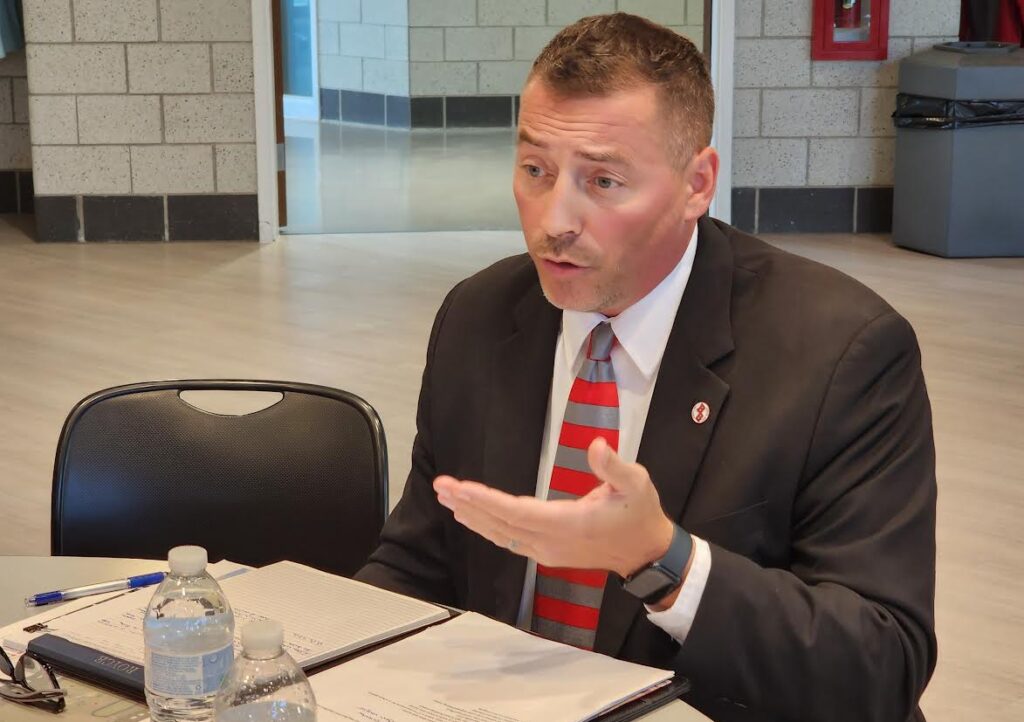
Ryan Myers was asked how the district could compete against private schools aided by vouchers. He suggested “staying on the path we’re on.”
Myers explained the positive changes in the district over the last few years, including bringing salaries up so good teachers and staff could be retained. He mentioned the academic progress, with the district improving from a 3 to 4.5 rating on the state report card.
Myers noted the hiring of Superintendent Ted Haselman, who is very engaged in the community, and Treasurer Matt Feasel, who has brought a new level of fiscal transparency to operations. The new high school is being built, and a new focus is being placed on maintaining existing school buildings. The curriculum director is working on more improvements from students, and the amount of communication with the community has been greatly expanded.
“There’s a lot of positive things going on in the district,” Myers said.
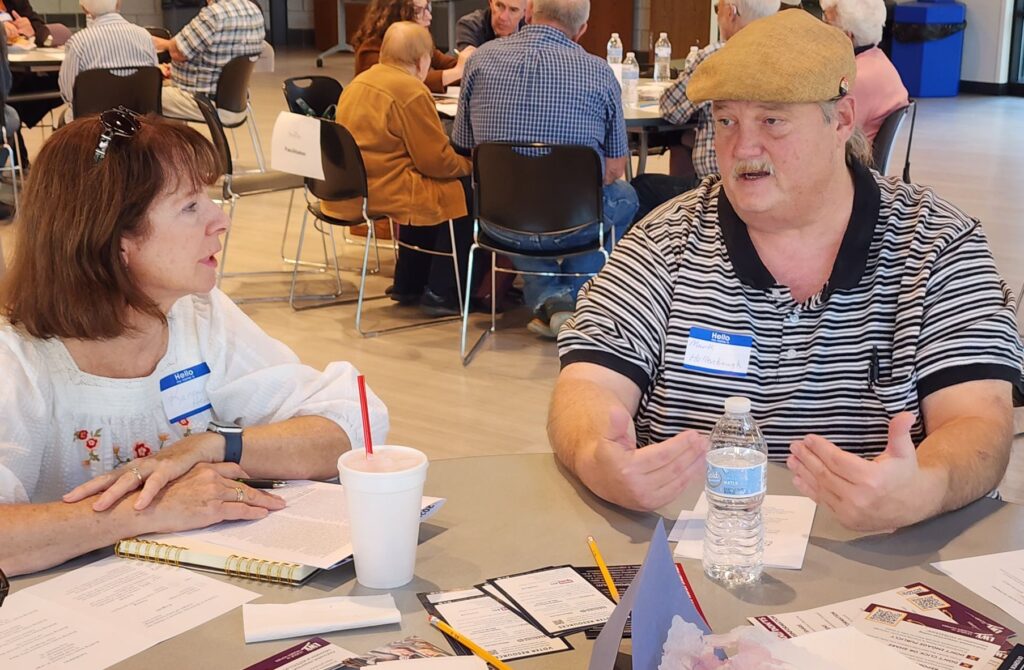
When asked about the most pressing issues in Bowling Green, Mark Hollenbaugh said housing quality and affordability would be at the top.
Through the rental registration program, city officials finally know how many rental housing units (7,285) there are in Bowling Green – with rentals making up 60% of the city’s housing. Before, there were apartments in basements and attics, and “no one even knew they were there – even the fire department,” Hollenbaugh said.
Now the city is moving a step further, by setting a priority for next year of performing some independent random audits of the self-inspections submitted by local landlords.
Efforts are also being made to bring “affordable” housing to the city, but city government has limited tools to provide incentives, Hollenbaugh said.
Another priority is the city’s climate action and resiliency plan, which Hollenbaugh views as best implemented in slow, affordable steps.
Hollenbaugh was also asked about greater transparency by City Council. A couple citizens, who attend council meetings, said items are often voted on with no public discussion and no information on who is involved in property transactions. Hollenbaugh committed to trying to make those actions more transparent.
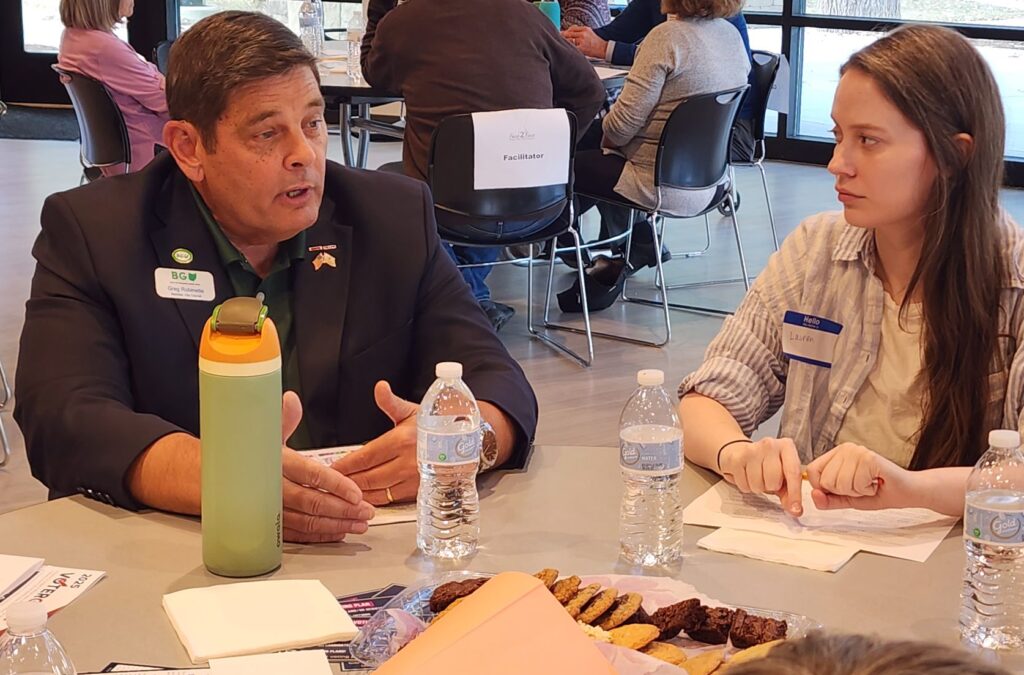
Greg Robinette said he sees the city’s biggest priority for next year as moving forward on the two new fire stations, then later the renovations to the police station. As a member of the city’s budget committee, he is focused on adequately funding those critical services.
Robinette also talked about the importance of reviewing the city’s zoning update every year – especially regarding housing, to see if changes are warranted.
“We should be getting into the routine of reviewing that every year,” he said.
Robinette pointed out the nearly doubled number of housing starts last year as a good sign. When asked by a citizen about the lack of affordable housing in Bowling Green, he said city council cannot control the marketplace, inflation or interest rates.
“We’ve taken the steps we can,” he said.
Robinette also noted that the definition of “affordable housing” varies greatly in the community.
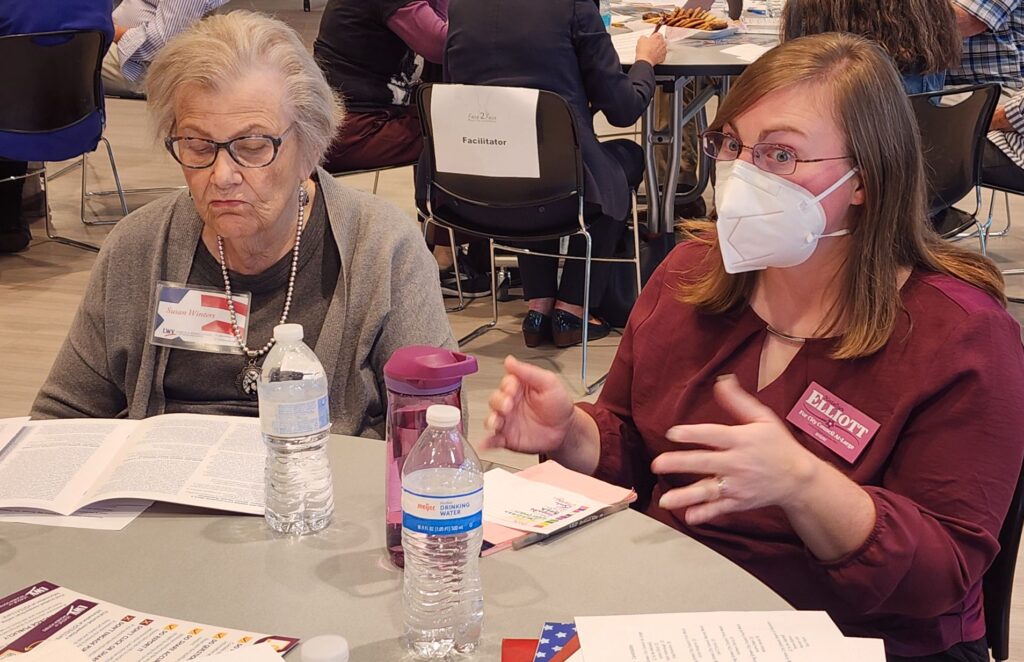
Katelyn Elliott said her priorities include the planting of more trees, improvements on playgrounds, and the planning of more parks in the city. She also wants to make sure the city’s new climate action and resiliency plan does not just sit on a shelf.
Elliott expressed concerns about the lack of crosswalks in the community, and would like to see safety improvements for pedestrians, especially children.
She supports the upcoming fire levy, believing in the value of quick response times in the community.
Elliott also talked about her successful efforts to get more city information shared with the public. She was one of a group of citizens who pushed for draft legislation to be posted online prior to it being introduced at City Council meetings. It’s important that such information be available to all city residents, she said.
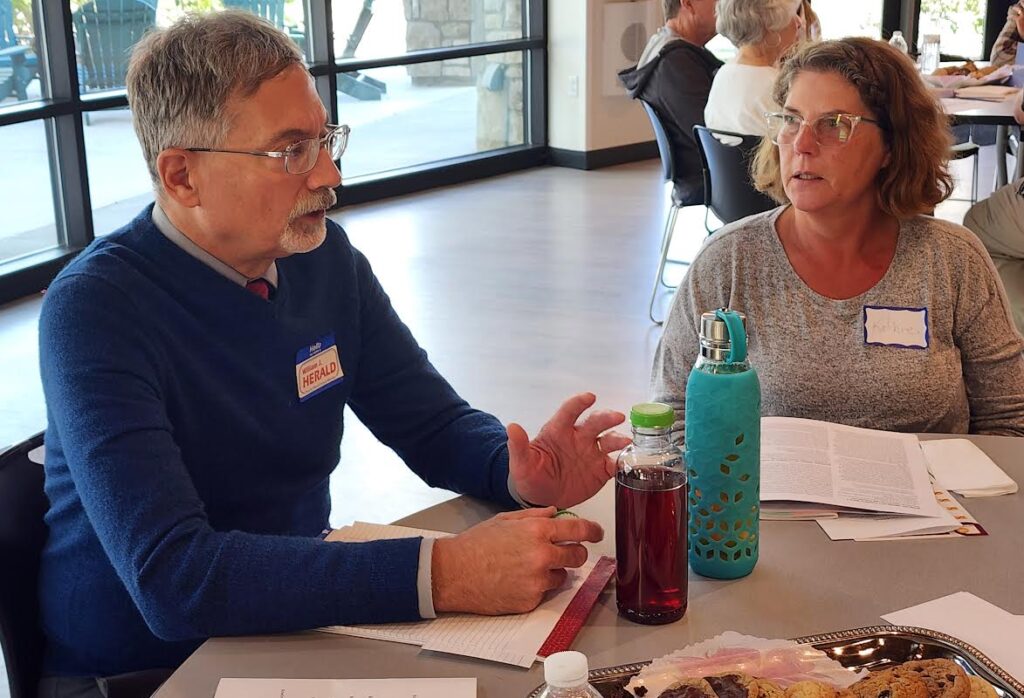
Bill Herald said he views his role on City Council as being a “public servant.” He talked about his desire to continue working as a liaison between citizens and their government.
His goals for next year would be improvements to streets, sidewalks, drainage and sustainability. He also sees a need to focus on planning and housing – with efforts being made to look for gaps and “loopholes” in the updated zoning code.
Herald voiced his concerns about the need for more housing options in Bowling Green, but said his efforts to restart a housing commission were not supported by City Council.
The “Face2Face Meet the Candidates” event was presented by the League of Women Voters of Bowling Green, American Association of University Women BG Branch, Bowling Green Chamber of Commerce, and BGSU Retirees Association.