By CLAIRE SANT
BG Independent News
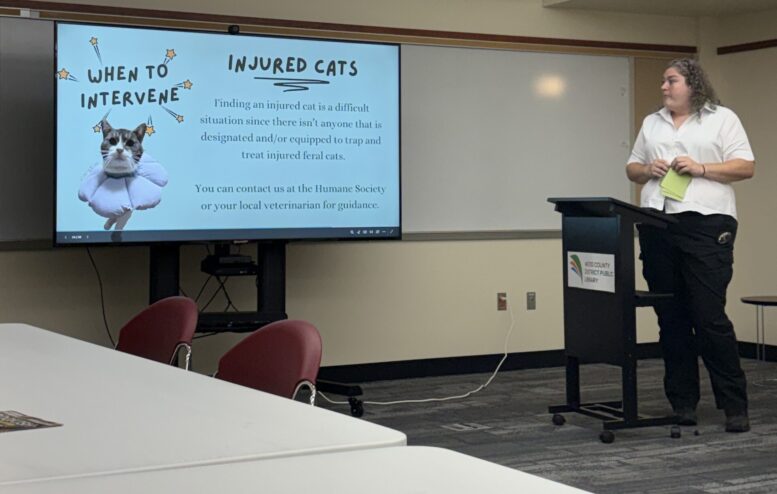
In a nod to Bowling Green’s feline citizens, the Wood County Humane Society hosted an informative session on Wednesday evening about “community cats,” and how residents can address common misconceptions.
“Community cats” is an umbrella term for stray and feral cats, the ones who call the outdoors home. Unlike house pets, these felines are not socialized to people and typically prefer to keep their distance.
“Understanding the difference between these terms helps us address the community issues surrounding these cats more effectively,” said Lindsay Crites, a humane agent at the Wood County Humane Society.
The Wood County Humane Society responds to animal cruelty calls, provides temporary safety for animals that belong to victims of domestic violence among other services.
Crites informed residents of the Trap, Neuter and Release (TNR) program, and guidance for what to do if these whiskered wanderers end up in your yard.
Instead of catching and euthanizing cats, the TNR program encourages residents to humanely trap them, cover the cost of spaying or neutering, and then return them to their original neighborhood.
This program stabilizes the population of cats, reducing litters of kittens and mating behaviors such as fighting and spraying.
“The goal is to reduce the population, not to exterminate them completely,” Crites said. “That’s also a bit of a controversial topic because there’s a lot of people who prefer for them not to be there at all.”
Common frustrations like cats rummaging through trash bins, leaving paw prints on car hoods or digging in gardens – were also addressed. Pamphlets from the session suggested using bungee cords to secure trash cans and adding certain fragrances to gardens and yards to gently deter feline visitors.
As for feeding them? It’s not a straightforward “yes” or “no,” but there are safe feeding practices that can be adopted.
“Safe feeding practices would be to feed at consistent times and move the food after a certain period of time,” Crites said. “This is going to help reduce the chance of wildlife coming into your yard.”
Feral cats are natural scavengers, capable of finding food on their own. Feeding cats that haven’t been through the TNR program can unintentionally encourage overpopulation. However, if the cats have been through the program, feeding them presents no issue.
Cats that have been spayed or neutered can be identified by a tipped left ear, a small sign that they’ve been part of the process.
The Wood County Humane Society provides humane traps for a $20 refundable deposit and recommends taking trapped cats to veterinary clinics equipped to perform the procedures.
For additional information on TNR programs or how to get involved, visit the following websites: