By JULIE CARLE
BG Independent News
For Alan Locher, host of the soap-opera-focused YouTube show “The Locher Room,” soap operas are as relevant today as they were when they started nearly 90 years ago.
Soap operas have been around since the 1930s—first on radio and transitioning to television in the 1950s.
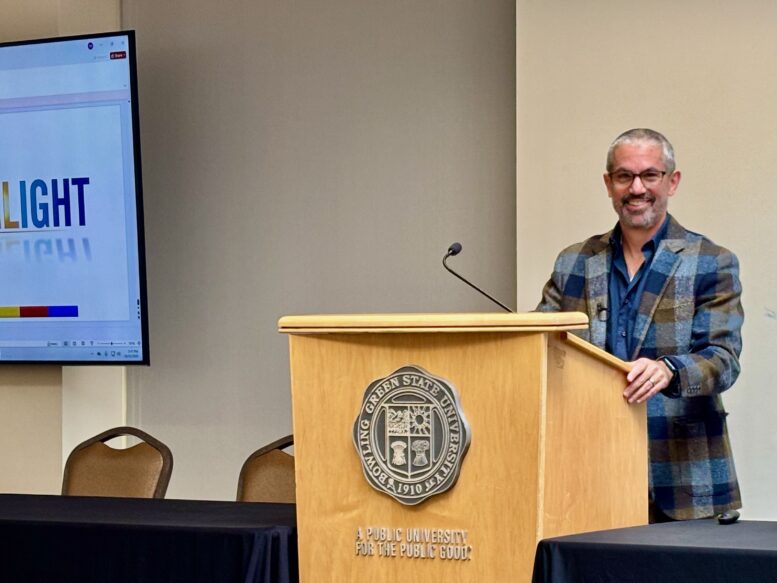
“Soaps have been my “Guiding Light,” he said, referencing his most-watched soap opera from when he was growing up. “They were the soundtrack of my childhood.”
He turned his fandom and love of the soaps into a career, first as a public relations professional for Procter & Gamble’s soap operas, and now as host of his own soap opera talk show on YouTube that he started during the pandemic “to cheer people up.”
As the keynote speaker for the recent Bowling Green State University Soap Opera Conference, Locher said he was hooked by the characters and their stories that “were woven into the fabric of life.”
From Guiding Light’s characters Beth Raines’ temporary blindness in 1984 to Reva Shayne’s battle with breast cancer in 2006, the stories reflected real life to soap opera fans like Locher. The stories often tackled social issues that primetime shows avoided.
The appeal of soaps was that fans felt connected from the comfort of their living rooms to the soap opera community, the characters and the actors who played them.
“I started as a fan, and now I know our connection to the shows, but it surprised me to see the devotion that is still out there,” Locher said.
Many conference attendees referenced watching soap operas from an early age.
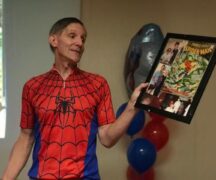
Bob Heist, a teacher from California, made the trip to Bowling Green because of his longtime connection to soap operas. He admitted being bullied as a child, but found solace, acceptance and connection with the characters of his favorite soap operas.
Dr. Angela Nelson, director of BGSU’s School of Cultural and Critical Studies, grew up watching the soaps with her grandmother and great-grandmother.
“My great-grandmother called them her stories,” Nelson said, making them feel a little more personal to young Angela.
“When we’re talking about soap operas or stories, as my Big Mama would say, we’re basically talking about family,” she said. “So, at this conference, we’re talking about celebrating family this weekend.”
She compared soap operas to television’s more modern situation comedies, a genre she has studied as an academic. In soaps and sitcoms, the storylines “start with the nuclear family,” though that definition of family has changed over time.
In sitcoms, “We have disruption, but we resolve that disruption very quickly. In soap operas, the disruptions go on and on. You could miss it (the show) for a month and come back and not have missed much,” Nelson said. “With the soap opera, we take kind of a longer walk and maybe in some ways it’s more related to reality because the things don’t resolve right away. Sibling strife and parental strife, that’s real. There’s a little bit of touchstone to our reality.”
Soap operas have evolved over time, representing the change in family compositions. They shows aren’t afraid to address family situations like unemployment, when a son or daughter comes out about sexual identities or preferences, or a new family of a different race moving into the neighborhood.
The 1988 Guiding Light episode where character Hank Elliott shared that he was gay was a pivotal moment for young Locher. “When Hank Elliott was an openly gay character on the soap opera, I saw a version of myself on the screen,” Locher said. “It mattered.”
All the topics presented during the conference, whether research presentations or Zoom conversations with current and former soap opera professionals, embraced “different kinds of families, social identities and situations,” Nelson said. “The conference theme is a celebration of family in all its evolving forms.”
Weddings, the common and beloved family events, have always been a connecting point for fans. The Luke and Laura wedding on “General Hospital” in November 1981 is still listed as one of the most-watched shows, with 30 million viewers tuned in to be part of the event.
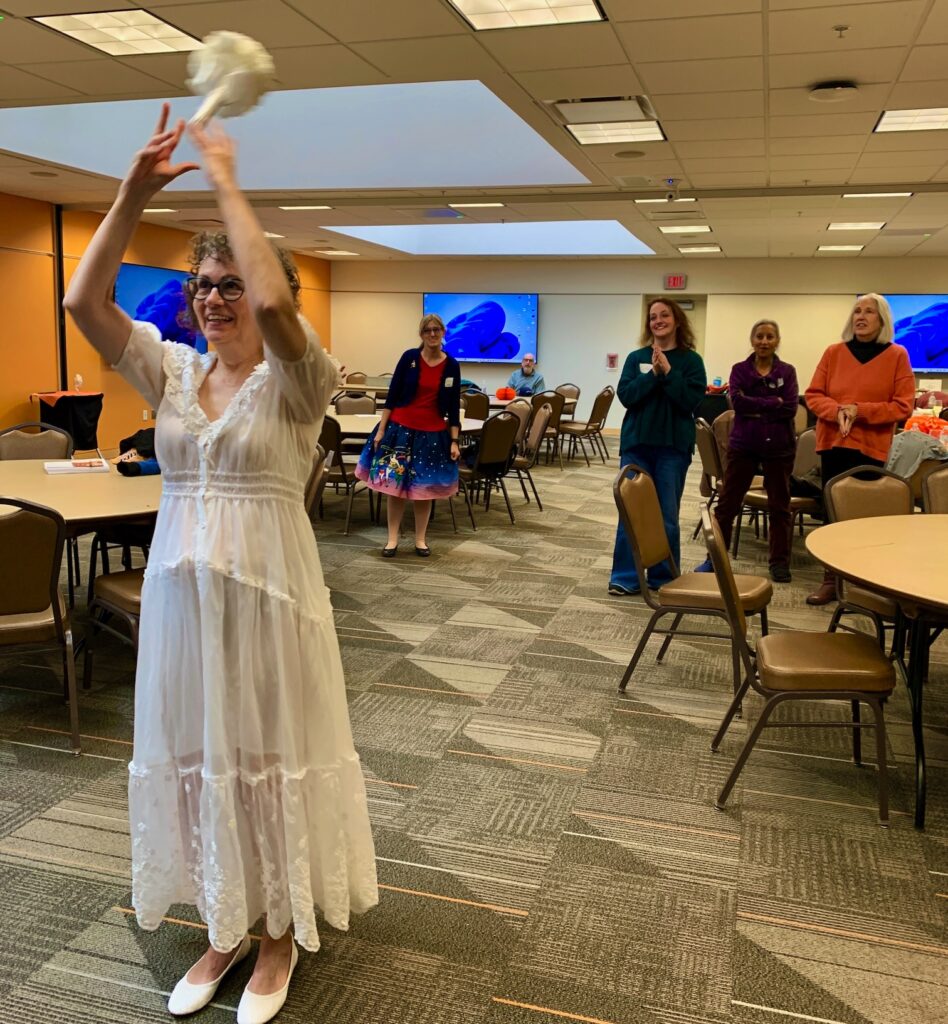
Elisa Smith, one of the research presenters during the conference, capitalized on the wedding theme. Her talk, “Something Old, Something New, Something Out of the Blue: The Impact of Soap Opera Weddings on Pop Culture,” addressed the fans’ obsessions with soap opera weddings. She wrapped up her presentation by throwing a wedding bouquet into the audience.
Soap operas and BGSU
BGSU, known for its Department of Popular Culture and the Browne Popular Culture Library, was the ideal site for the Soap Opera Conference.
“Soap operas are a unique example of what popular culture stands for and the culture of everyday life,” said Dr. Chuck Coletta, a BGSU popular culture teaching professor and conference co-organizer with Dr. Matt Donahue. “We wanted to feature soap operas in this conference because it’s an important and worthwhile genre that we should respect and study as we would any other aspect of pop culture.”
An added bonus is that the pop culture library has an extensive collection of soap opera scripts.
Dana Nemeth, BPCL research archivist, said the majority of the scripts in the library’s collection were donated by Procter & Gamble in 1990.
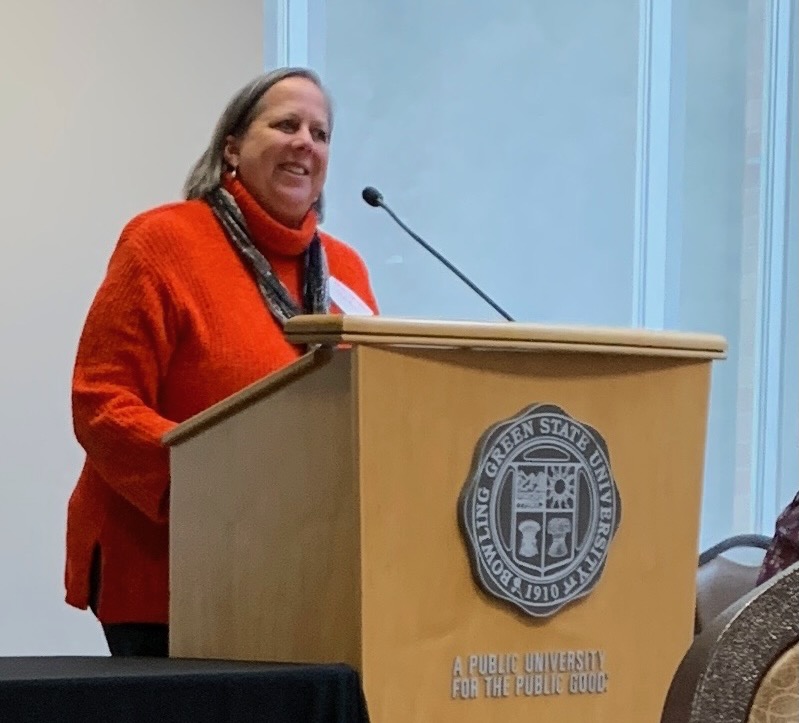
BGSU was “one of the two institutions selected because of its reputation, the strength of its existing collections, and the scripts’ potential use by faculty, students and visiting scholars,” Nemeth said.
P&G was the sponsor and producer for four soap operas—Another World, The Edge of Night, Guiding Light and Search for Tomorrow. The collection covers “the history of the corporation’s programming from the golden age of television from the 1950s through the 1980s.”
Included in the collection are the radio and TV soap opera scripts from “Guiding Light,” which started as a radio serial in 1936 and still holds the record as the longest-running serial drama in history at 72 years, Nemeth said.
“Search for Tomorrow,” the first successful serial created specifically for television, was on the air for 35 years, from 1951-1986, though the library’s collection includes the time period from 1956-1986.
“Edge of Night” was created as the daytime version of the Perry Mason television series. The show, which ran from 1957-1980, emphasized crime and courtroom drama 1957-1980.
“Another World,” which aired from 1964-1999, was the first soap opera to expand into a one-hour format, and even expanded to a 90-minute show for one year. The library’s “Another World” holdings cover 1964-1979.
BPCL Librarian Stephanie Hunker detailed the history and content of 20th-century soap opera fan magazines, explaining their role in fan culture before the internet.
Before the internet and social media, soap opera fan magazines were the primary channel for fans to learn personal details about their favorite television stars, she said. “They used a consistent and effective formula of behind-the-scenes access, actor profiles, and fan-centric content,” she said.
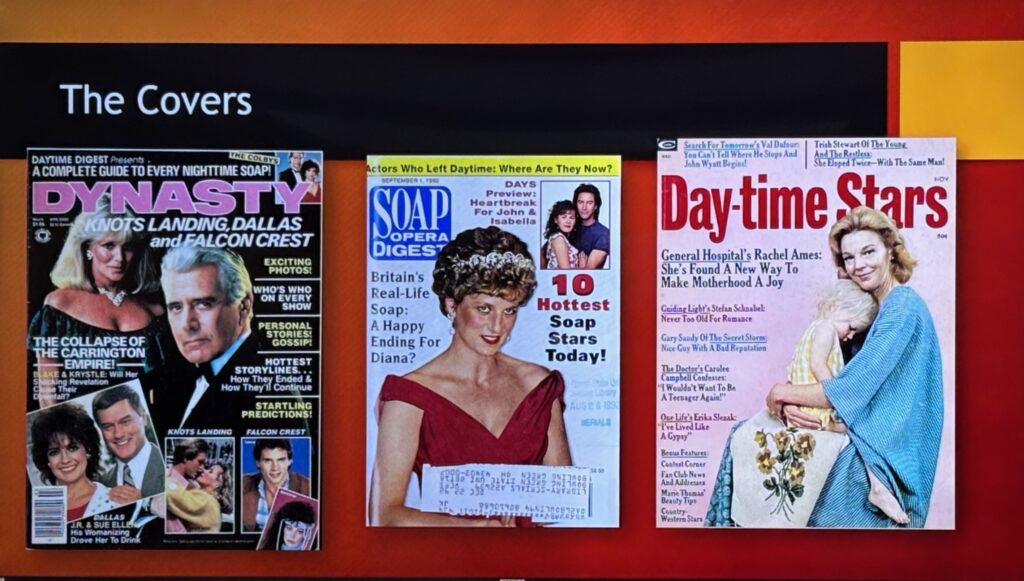
As older, well-established movie fan magazines dwindled, titles changed and new subject matter was created to support expanding interest in daytime television, namely soap operas. “Who’s Who in Daytime TV” was the first annual contemporary soap opera magazine published in 1967.
The BPCL has approximately 24 titles of soap opera fan magazines.
Tyne Lowe, manuscript archivist, analyzed the newspaper comic strip “Mary Worth,” using archival materials to explore its complex identity as a “soap opera comic” that navigated the cultural tensions between highbrow and lowbrow entertainment.
Head Librarian Sasha Kim connected the historical forms of soap operas to the present-day rise of South Korean Webtoons as a modern, digital evolution of serialized storytelling designed for mobile consumption. Webtoons use a vertical scrolling format and short, weekly episodes catering to “snack culture, meaning that people consume their popular culture in snack-size bites, things that they can do on the run,” she said.
According to Nemeth, the soap opera collection has been accessed by graduate students, scholars from the Smithsonian, a writer of books about soap operas and quite a few fans, including one person who maintains a website devoted to “Another World.”
In addition to the research presentations, some of the conference highlights were Zoom conversations with former actress Constance Cashion from the primetime soap, “Knot’s Landing;” Claudia Lamb, who was the child actress in “Mary Hartman, Mary Hartman;” Kin Shriner, best known for playing Scott Baldwin on “General Hospital;” and author Tom Lisanti and actress/writer Louise Shaffer of “Ryan’s Hope.”
“Soaps, which portray the culture of everyday life, have been throughlines of our lives, they were a guiding light,” Locher said.