From OWENS COMMUNITY COLLEGE
According to Feeding America, more than 1.8 million people living in Ohio experience food insecurity, which is when a household cannot access enough food due to lack of money and other resources.
Owens Community College students aren’t immune to this – in a fall 2024 student financial wellness survey, 52% of students identified as food insecure. That’s more than half of students who come to class ready to learn but ill-equipped to do so because of hunger or lack of nutrition.
When Krista Kiessling started a community garden at Owens in 2011 and the food pantry that followed, she didn’t have those metrics or numbers, but she knew the need existed. And she was determined to do something about it.
“At the time we only had anecdotal evidence that the students needed it, but we very quickly learned that we were filling a pretty significant need,” said Kiessling, the director of the Owens Center for Campus and Community Connections. “From there, the food pantry developed into the whole basic needs resource center. College students are poor. They’re doing everything they can to try to be here and focus on school, so they can’t work as many hours as they want. Groceries are one of the things that suffers, and the access to healthy food. They can’t focus when they’re in class and hungry.”
The Harvest Food Pantry was the first food pantry at a community college in Ohio. It provides free food resources, including non-perishable food items, as well as meat, dairy, and produce, when available.
Campus and Community Connections also operates a career closet and free stores, which allow students to acquire clothing items for interviews, job fairs, or class presentations.
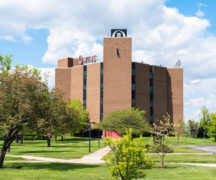
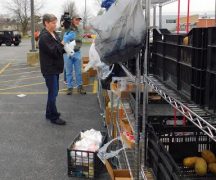
The pantry is located in the Campus and Community Connections office in College Hall 151 on the Perrysburg Township campus. Students on the Findlay-area campus can stop in to the Student Services office or email connections@owens.edu. There are also food carts located throughout both campuses, which allow anyone to grab a food item with no questions.
The food pantry is available when the Campus and Community Connections office is open. Individuals do not need to make an appointment, allowing them to visit the pantry when they’re able, rather than moving their life around to make a set time. There are no financial or need-based requirements, and the information taken from individuals using the pantry is minimal and needed to track usage.
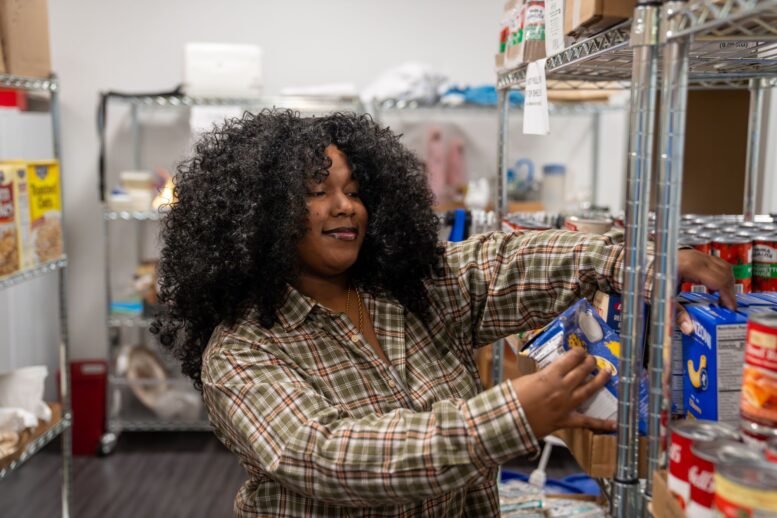
Student Tamia Hayes, a general arts student from Toledo, works in the pantry. She routinely sees the need many of her fellow students and community members face and how the Harvest Food Pantry can help.
“We welcome people with warm faces. Seeing everyone gather in here, having conversations, and welcoming other students makes people feel comfortable,” Hayes said. “It can be nerve-wracking for people to come in and say, ‘I need help,’ so taking that first step for them is important.”
“This place has a significant importance,” Hayes continued. “There are students who could have dropped out if they didn’t know about this resource, not just the food pantry but all the resources we provide.”
Campus and Community Connections aims to remove barriers between individuals and their basic needs. As Kiessling said, “We’re not going to make someone come in here and prove their poverty.”
“It fills a significant need, but hunger isn’t what I would say is the number one need; it’s the culture of it and setting the precedent that we do care and we’re willing to do something about it,” Kiessling said. “If we know you’re hungry, we know you’re probably struggling with other things. I hope we do multiple things that remove the stigma. Making the mobile carts available to everybody, no one is standing by those carts and asking if they need it. We’re making it available when you need it. The idea is no one has to feel ashamed when they go to a mobile cart or come in here.”
While other pantries limit their clients and residents of certain zip codes or the number of times someone can visit the pantry in a certain timeframe, the Harvest Food Pantry does neither. In fact, there are no restrictions on who can use the pantry.
Kiessling said people were concerned at first that allowing anyone and everyone to use the pantry would create abuse of the system, but she’ seen three instances that she’s questioned in 15 years. When she’s dug into the details of suspected misuse, there have been legitimate answers, such as the man who took extra items to help his home-bound neighbor or the woman who was dropping items off with multiple families before she arrived home.
“They always ask, ‘How much can I take?’ We don’t answer that with anything numeric. It’s, ‘How much do you need? How much do you need to keep your butt in your seat in class so you can finish what you came here to do?'” Kiessling said. “If we have a shortage of things and need to pull back because we don’t have enough, we’ll deal with that, but we’ve never had that issue. I want to err on the side of compassion.”
Since July 2025, the pantry has served nearly 1,300 people and volunteers have stocked the shelves with seven and a half tons of food. In addition to food, students can find various other resources at the Campus and Community Connections office, including technology, clothing, household items, as well as introductions to other support services on campus.
On this Giving Tuesday, Dec. 2, the Owens Community College Foundation has identified the Harvest Food Pantry and Garden as the recipient of the money raised. People can donate at owens.edu/foundation/annualgiving-form.
For more information on the Center for Campus and Community Connections, visit owens.edu/connection.