By JAN McLAUGHLIN
BG Independent News
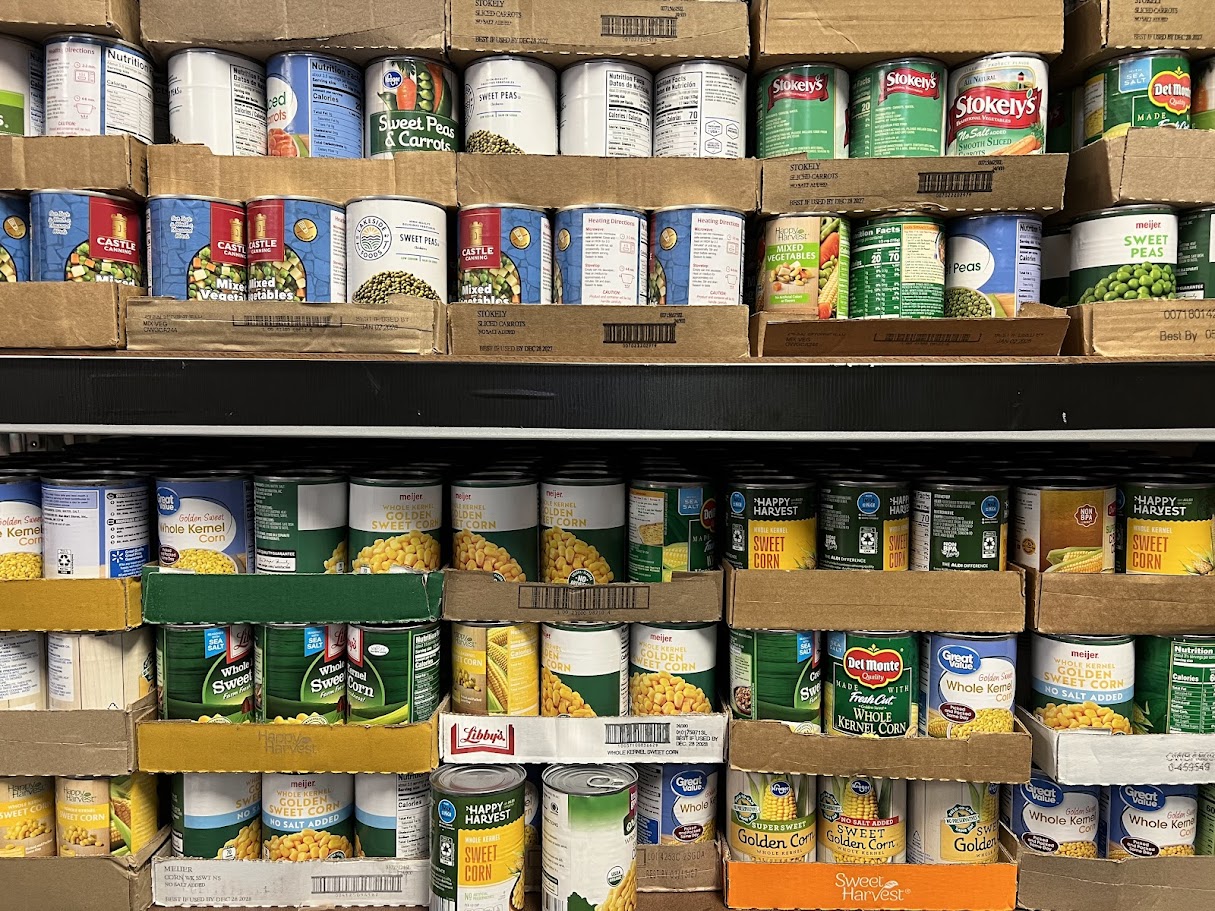
Many shoppers ticking off items on their Christmas lists this year are experiencing sticker shock for traditional holiday trappings.
The cost of a Tonka truck for Tommy has jumped up from $30 last year to $40 this year. Most toys sold in the U.S. are imported, with the majority coming from China. Major toy companies have announced price increases, including Mattel, the manufacturer of Barbie and Hasbro, which produces many of the best-selling action figures.
Buying a sweater for Susie will also likely cost more. Although clothing retailers absorbed much of the tariffs earlier in the year, they’ve started passing higher import costs on to customers.
Decorating for the holidays is also more expensive, with most items like lights, wreaths and artificial Christmas trees being made overseas, with the majority imported from China.
And the festive holiday feast will cost more, due to a combination of tariffs on imported foods and U.S. farm labor shortages.
The tariffs have put some local business owners in difficult positions. As their prices for goods go up, how much can they swallow themselves before passing it on to consumers?
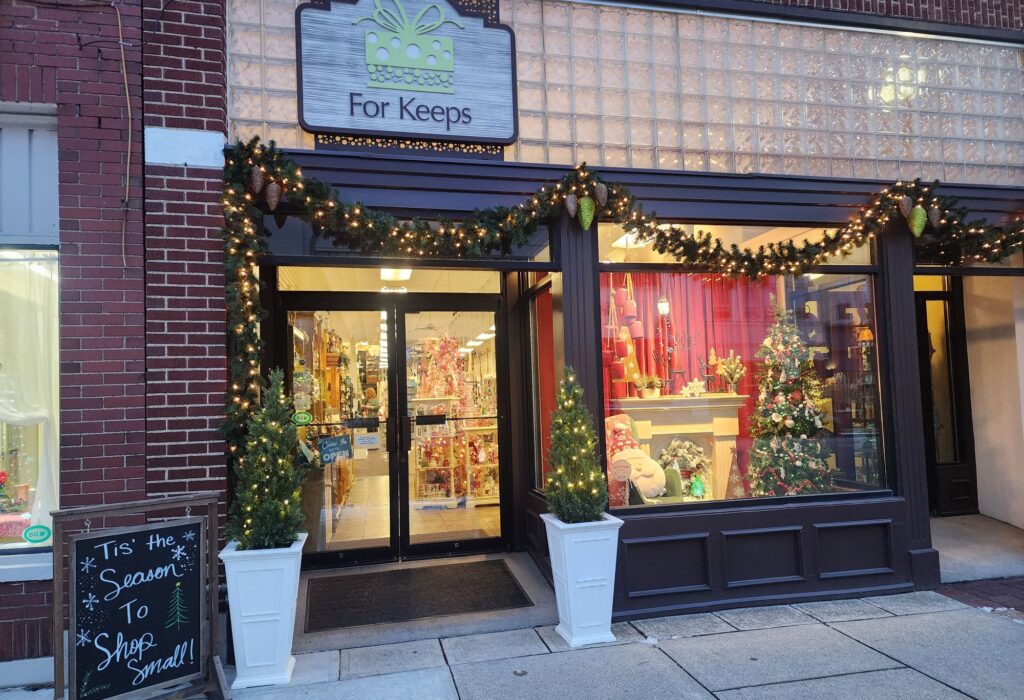
For Keeps shop in downtown Bowling Green sees 40% of its annual sales between Thanksgiving and Christmas every year, said owner Amy Craft Ahrens. And many holiday decor and gift items – like the Santas and snowmen, glitter lanterns and Christmas jewelry – come from Canada.
The store has been receiving frequent emails from vendors that due to the constantly changing tariff rates have been opaque.
“You just get a giant bill that you weren’t prepared for,” Craft Ahrens said.
If Craft Ahrens can find similar items made in the U.S., she snaps them up. But the pickings are slim. Orders with vendors in China were canceled, when those tariffs soared to 140%. But items from other countries are in demand by her customers.
“If we were to cancel all items with tariffs, we would have nothing,” she said.
It’s not just the tariffs, but also the yo-yo effect of Trump’s tariffs.
“We plan for six to 12 months out,” Craft Ahrens said. “There’s no way to plan now.”
Unlike big box stores or Amazon, For Keeps has relatively small profit margins. “We may buy six of these items, when they buy 60,000,” she said.
Craft Ahrens hasn’t heard many complaints from customers – most who are aware of the reasons for the higher prices. She was apprehensive about sending out the store’s annual holiday catalog. While some retailers didn’t include costs of items in their catalogs this year, Craft Ahrens stuck with her policy of listing prices.
“We felt people needed to know,” she said.
A couple shops to the south on Main Street, Ben’s is also seeing prices increase and supply chain issues affecting that store’s inventory. One Canadian company which had done business with Ben’s for years had to close after it lost so much business with U.S. stores, Craft Ahrens said.
“We probably bought from them for 20 years,” she said. “I know they all have to be feeling it.”
“We would all like to see the tariffs go away. You can only eat it for so long before you have to pass it on to customers.”
Ben’s and For Keeps have made it through tough times before, and Craft Ahrens is confident they will survive the turmoil created by the tariffs.
“I wouldn’t be a retailer if I didn’t have an optimistic view that we’re going to get through it,” she said.
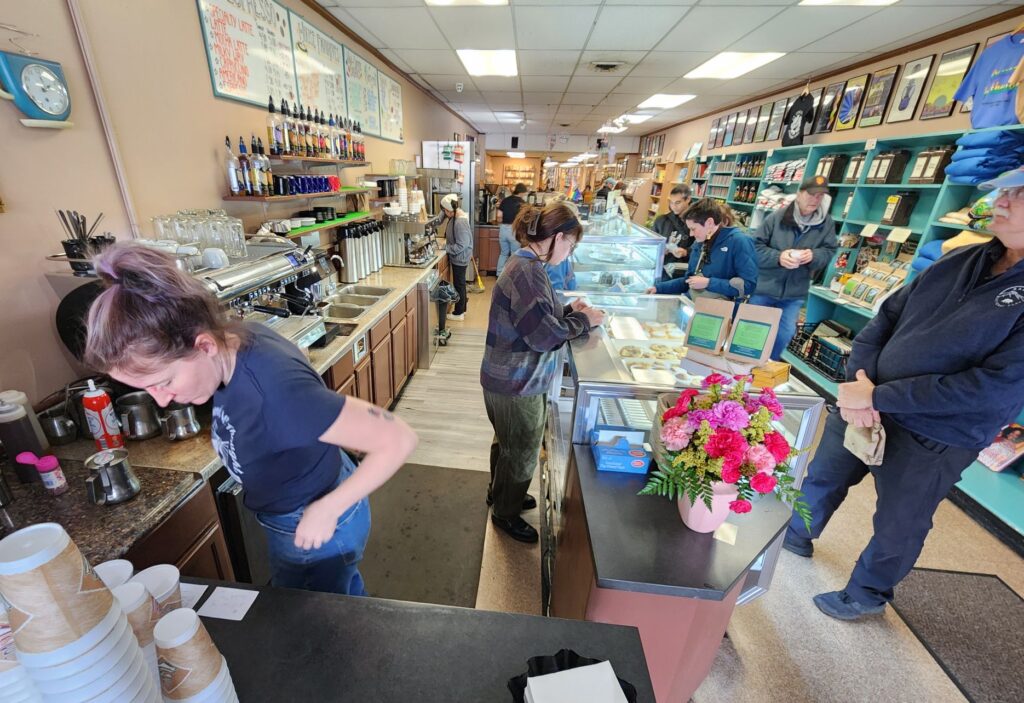
A little further down Main Street, Kelly Wicks at Grounds for Thought has seen coffee prices soar over the last two years due to poor harvests, climate change, worldwide demand and unknowns in the market.
When tariffs got tossed into the mix – for a product that can’t be produced nationally – Wicks said prices jumped up between 10% to 50%. The 53% tariff placed on coffee from Brazil led to that contract being canceled, he said.
Grounds for Thought’s largest imports come from Colombia and Nicaragua, where Wicks has strong relationships with the farms. In mid-October, Trump threatened 100% tariffs on items from Nicaragua.
“It’s chaos. This throws it into complete uncertainty,” Wicks said. “Nobody has any idea what’s happening.”
Normally, the coffee shop can absorb cost adjustments, he said. But the tariffs are coming at the same time that other prices for items like pastries and doughnuts are also increasing.
Grounds for Thought’s coffee prices are still considerably less than those at national franchises.
“There’s no big corporate profiteering here,” Wicks said. And customers seem to understand the need as prices inch up. “Everybody knows what’s going on.”
In the past month, Wicks has also been keeping an eye on another reason for worry, with Trump hinting at plans for a military buildup off the coast of Venezuela, with preparations for U.S. ground troops in Colombia, which has an already fragile economy.
After 35 years in the coffee business, Wicks is confident Grounds will survive.
“We’ve seen a lot of ups and downs. We are not panicking,” he said. “We’re going to get through the holidays. We have a dedicated fan base. We’re thankful for the business we have.”
And Wicks still holds out hope that the U.S. Supreme Court will rule the tariffs are illegal.
“No businesses like uncertainty. We just need to get clarity,” he said.
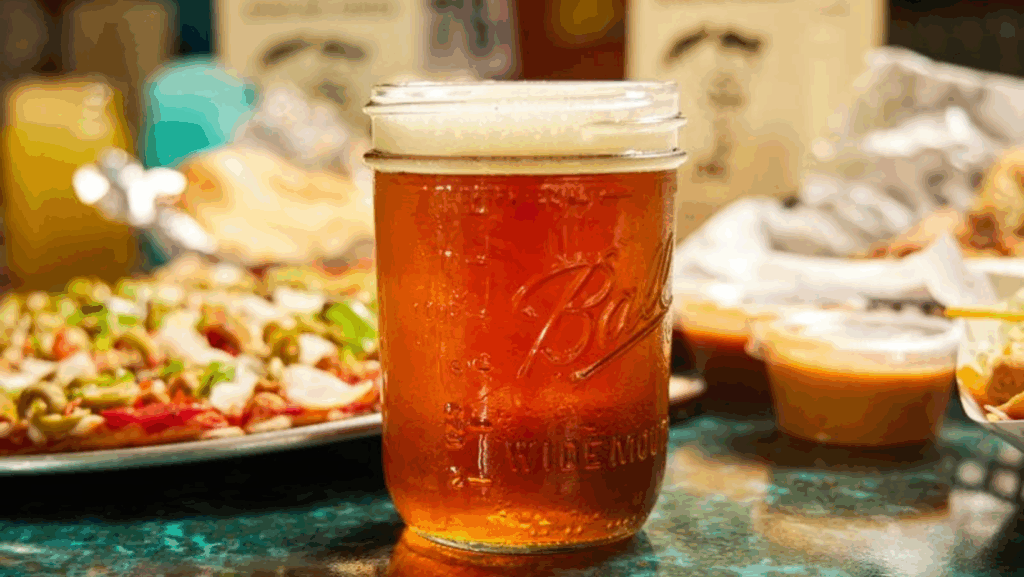
Over on North Grove Street, Brewing Green and Jac & Do’s Pizza are feeling the toll of tariffs.
“We’ve definitely seen it on the brewing side,” said Tyler Householder, owner of both businesses.
Making beer requires large quantities of barley, wheat and oats. Poorer crop yields in the Great Plains due to drought conditions has required breweries to rely on grain from Europe, Householder said.
Further complicating grain purchases is the fact that the barley needed for Householder’s brewing is only grown in Europe in an area smaller than the Netherlands.
The tariffs put on European imports have so far been eaten by suppliers, with some of it being passed on to brewers. The next chain in the link are the customers – who Householder is trying to shield as long as possible.
“We haven’t passed on that cost to the consumer. We haven’t yet,” he said.
On the pizza side of his business, flour prices have been “yoyoing.” A 50-pound bag of flour has gone from between $16 and $18 to as high as $22.
Tomatoes got pretty expensive this year. “What people see at Kroger, we see it, too,” Householder said.
And meat costs are also spiking. Pepperoni has jumped from $3.70 to $5.28 a pound. And brisket – a customer favorite pizza topping – is “insanely expensive,” he said.
“We haven’t passed on costs on anything yet,” Householder said. “But you don’t stay in business much if you give it away for free.”
“If I marked all my stuff up 5 to 10%, we would be priced out of the market. We’ve looked at taking stuff off the menu,” like the brisket pizza – but Householder knows customers who come in specifically for that item.
Like other business owners, Householder is looking to the Supreme Court to intervene.
“I’m hoping we get some relief from the idiocy,” he said.
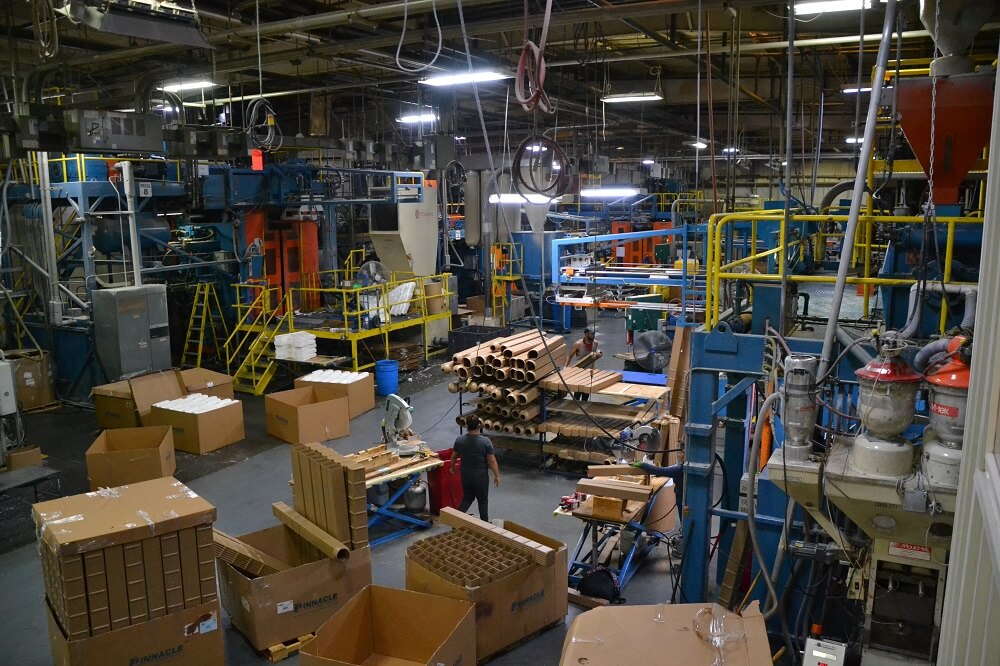
One manufacturer in Bowling Green reported the tariffs were not harming – and in some cases were helping its business.
Pinnacle Plastics, on Napoleon Road in Bowling Green, does custom blow molding of plastic products used for hospital bed parts and wastewater diversion systems. The plant employs about 120 workers.
Since the business’ products are petroleum based, it already relies on supplies from the Texas area, according to Brian Hoffbauer, director of engineering at the BG plant.
A customer that produces toys and furniture items for children, who had previously switched from Pinnacle Plastics to a China-based manufacturer, came back to Pinnacle when the tariffs went online.
“We don’t really have to import anything. That sealed the deal,” Hoffbauer said, adding that the costs would be far greater if Pinnacle had to import components. “We brought that back.”
“It’s a pretty high volume job,” with three shifts a day, five days a week, he said.
Across the nation
Since the Trump administration started imposing steep tariffs on goods from the rest of the world, the Treasury Department has been taking in about $30 billion a month in customs duties. On paper, American companies pay those bills when their products enter the country.
But figuring who ultimately absorbs the costs is more complicated. Data released in late October showed that goods prices are adding to overall inflation after pulling it down last year.
Companies had passed along about 37% of new tariffs to consumers, forced 9% onto their suppliers and absorbed 51% through August, according to Goldman Sachs. That is a big hit to shoppers’ wallets, enough to reverse inflation’s fall.
The tariffs are much higher and more widespread than in 2018, making them too difficult for consumers to digest all at once.
Trump’s tariffs have faced numerous legal challenges because of the way they were introduced.
Instead of getting Congressional approval for the tariffs, the Trump administration used the 1977 International Emergency Economic Powers Act. Declaring an emergency under the law meant Trump could issue immediate orders and bypass the established process.
In August, a U.S. appeals court ruled that most of Trump’s tariffs were illegal, but left them in place. The White House asked the US Supreme Court to overturn that decision, and it began hearing arguments in the case on Nov. 5. A final outcome is not expected for several months.