By JAN McLAUGHLIN
BG Independent News
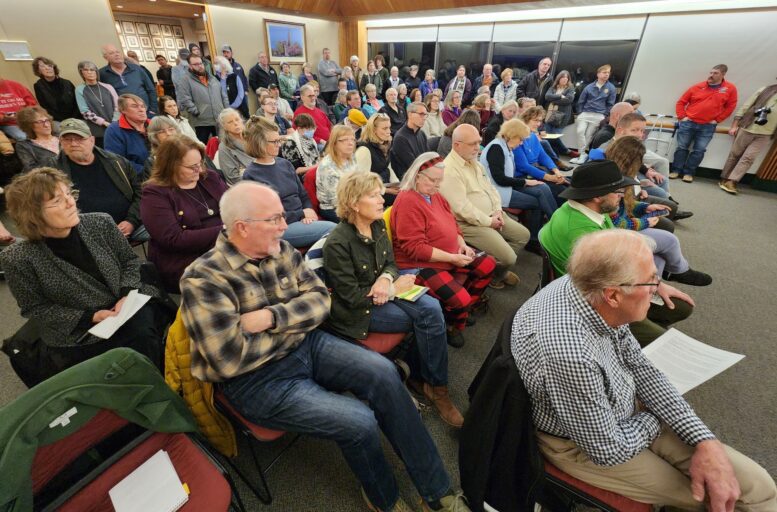
Resigned to the fact that the massive Meta data center in Middleton Township can’t be stopped, an estimated 150 residents showed up Tuesday evening to find out how to keep the next one from moving into their neighborhoods.
“You guys are our firewall,” one resident said to the county officials.
But the answers they got at the meeting were not comforting.
For more than 2.5 hours, frustrated citizens demanded that the Wood County Planning Commission do more to protect them, while planning commission members explained that under Ohio Revised Code, their power is limited.
The crowd poured out into the hallway, and cell phones put on speaker were used to relay comments from the hearing room to those in the hallways. There were times when the citizens yelled over each other, and times when the planning commission came off as condescending to the residents.
The residents made a request that sounded reasonable – that a moratorium be placed on any new data centers in Wood County. But unlike some other states, Ohio law does not give counties the authority to issue moratoriums for a specific land use.
In Ohio, when county planning commissions receive requests for zoning changes from townships, they make recommendations to the township trustees to approve or reject the request. The final decision rests with the township trustees.
And in most cases, the county planning commission is only made aware of the desired zoning – but is not privy to the proposed project. In the case of the rezoning for the Meta data center under construction, the planning commission voted to recommend the property be rezoned by the township.
But that answer was unsatisfactory to many in the crowd, who were baffled as to why more information isn’t required before decisions are made.
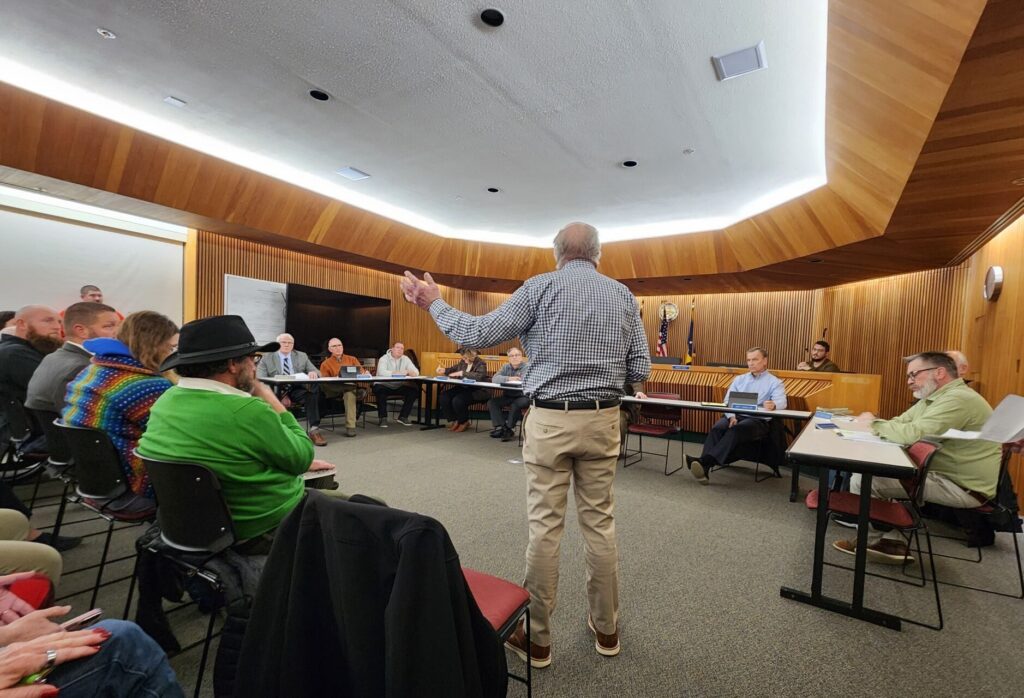
Mark Patton, who lives on Devil’s Hole Road, a mile from the data center, said those packing the meeting room were there out of anger and fear. People are being pushed out of their homes, he said. And while some are walking away with hefty checks – others are being left behind with devalued homes and dreams dashed.
“We can’t leave. We can’t sell our properties,” Patton said.
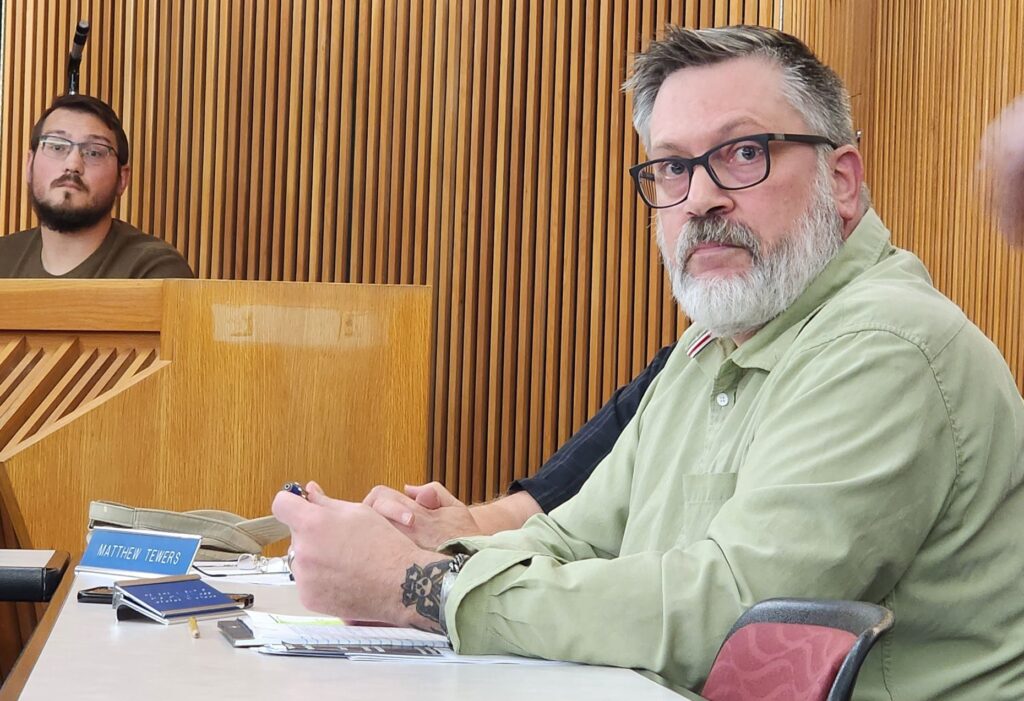
Wood County Commissioner Craig LaHote, who serves on the planning commission, said the residents were talking to the wrong people.
“We can be sympathetic,” he said. “But we have no authority.”
LaHote suggested that the citizens direct their concerns to their state legislators, and ask that changes be made in the Ohio Revised Code provisions for county planning commissions.
That did not sit well with residents, who accused the commission of shifting the responsibility on the citizens – who don’t share all the connections that county officials have with legislators.
County Planning Director Dave Steiner said state law does allow residents to put a referendum on the ballot to reject a zoning change – but it must be done within 30 days after the zoning was approved.
However, in the case of the Middleton Township data center, non-disclosure agreements required by the company kept the Meta name secret even after construction had begun on the site.
“It was a hush-hush project,” said Wood County Engineer John Musteric, who is chairman of the county planning commission.
That delay robbed the residents of circulating a referendum petition.
And it raised questions about why the county planning commission and the Middleton Township Trustees weren’t aware of the end user.
John Aleksander, a resident of Dunbridge Road, asked the planning commission if the size of the rezoning request shouldn’t have raised some red flags about the potential of a data center being built on the property.
“I think that’s the largest one,” ever requested for rezoning, Steiner acknowledged.
“And it didn’t raise any concerns?” Aleksander asked.
But the rezoning requests came in piecemeal – not for all the acreage at once, LaHote said.
“If it’s 1,000 acres, it’s probably a data center,” Steiner said later in the meeting. “If it’s 50-100 acres, we don’t know.”
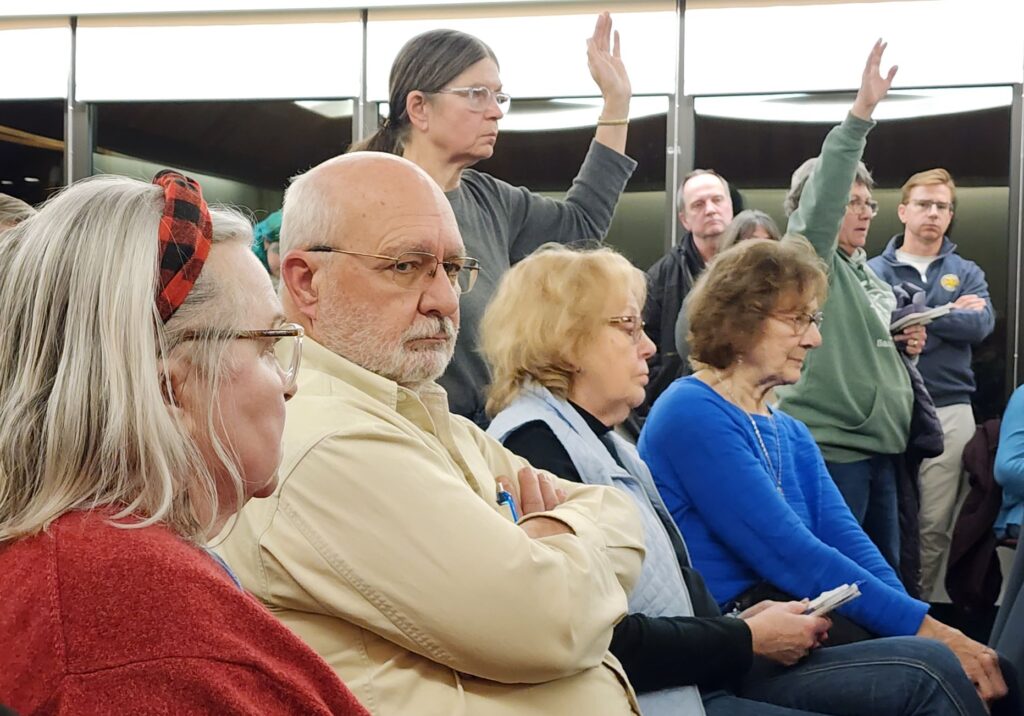
The residents shared an array of concerns about the data center and AI.
One woman talked about the loss of property values and the inability to go outside on quiet nights and listen to the frogs and insects. There were concerns about the depletion of resources to operate the facility.
“Data centers can suck up all the resources,” Joe DeMare, of Bowling Green, said.
And there were worries about where the wastewater from the site will be discharged.
“I’m really concerned about what’s going to be dumped out there,” a resident said. “We need help. We need your help in making sure we’re safe.”
Citizens also talked about health issues associated with big data centers.
“Nobody wants these built,” one citizen said. “You are servants of the people. How do we get a say in this? How do we get them to stop?”
“We’re all begging you to listen,” another woman said. “We’re begging you guys not to do this.”
Some residents were angry.
“I bet none of you live within a mile of the data center,” a neighbor of the site said. All the planning commission members acknowledged they don’t live near the site.
“I feel like we’ve all been hoodwinked,” a man said. “Why hold a meeting if you can’t do anything?”
“Do you want us to lie to you?” Musteric shot back.
LaHote explained that the planning commission meeting Tuesday evening had one agenda item – rezoning for a housing development. But since the crowd showed up on the data center issue, the commission listened to them for more than two hours.
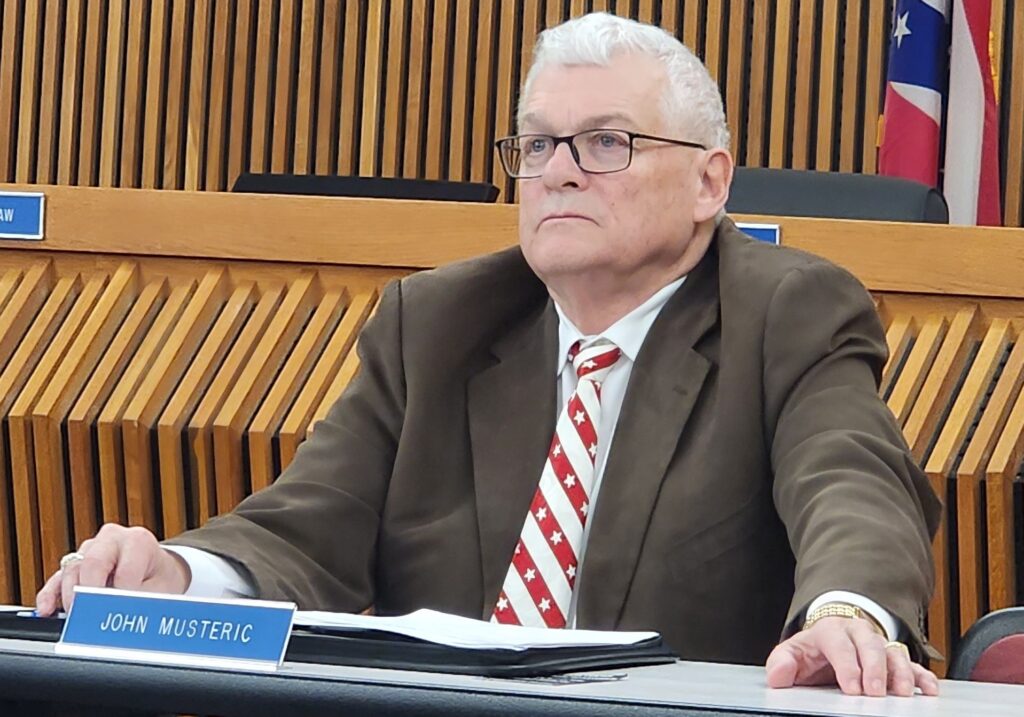
But some in the audience weren’t pleased with the treatment from the commission, accusing Musteric of being condescending.
The citizens stressed that more transparency in the process should be required. Many officials in the region only knew of the Meta plan as “Project Accordion” for many months before it was officially announced.
Many officials signed non-disclosure agreements with the developer – though no one on the planning commission reportedly signed such an agreement.
“Secrecy is not unusual for a data center,” LaHote said.
That was not helpful for neighbors.
“If we don’t know about it, how are we going to try to protect ourselves?” one person asked.
LaHote also pointed out that selling land to Meta was not an easy decision for some. But to a farmer struggling to make a living on 100 acres, the big pay-off could be too tempting to ignore, he said.
Some of the more productive dialogue seemed to occur a couple hours into the meeting – when citizens suggested that the county officials and citizens should work together against a common problem – data centers.
“They are picking off communities one by one,” a citizen pointed out.
Brittney Klockowski, a Weston Village Council member, asked if a new zoning level could be created for high-tech businesses. “It’s a different beast,” she said.
Steiner said the 19 townships in Wood County have different zoning language, and trustees can introduce recommended changes in the language to the county planning commission.
DeMare suggested that the planning commission correspond with each township in the county to ask the trustees to adopt a one-year moratorium on data centers.
And another person suggested the planning commission ask the county commissioners to send a letter to the county association of Ohio, asking for that group to lobby the state legislature to support a moratorium.