
By JAN McLAUGHLIN
BG Independent News
Despite recent changes in the federal guidelines for childhood vaccines, the Wood County Health Department will continue to offer all the vaccines previously recommended by the CDC.
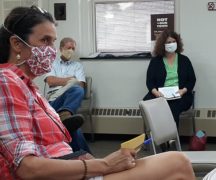
Director of nursing at the health department, Rachel Aeschliman reported on the commitment to provide immunizations for children at Thursday evening’s Wood County Board of Health meeting.
“We’re really saying our services will remain the same,” Aeschliman said. “People in the community can know, we’ll continue to provide them to the community.”
And as always, she added, the staff at the health department is very willing to answer questions that parents may have.
“Our goal at the health department is pretty simple – people can have choices to make good decisions,” Aeschliman said.
In conversations with other local healthcare providers, a consensus was reached that all the childhood vaccines should be made available, she said.
Many parents face challenges with the costs and transportation to doctors’ appointments, and turn to the health department as a solution.
“They look to the health department to be able to fill that role,” she said.
The new federal vaccine guidelines differ from the recommendations that the vast majority of those credentialed in the medical community still support.
Traditionally, the recommendations were made by age groups. But the new guidelines are based on risk levels, according to Aeschliman.
“When we look at that across the board, the message to the public is confusing,” she said. “We are happy to take calls to talk with people. Vaccines are safe and effective.”
Research has shown immunizations work and are necessary for children who are new to the world.
“We want them to grow up healthy and happy,” Aeschliman said.
The American Academy of Pediatrics continues to recommend the vaccine schedule previously supported by the CDC, prior to Robert F. Kennedy Jr. taking over as health and human services secretary.
According to the AAP, “There is robust evidence to support the safety, effectiveness and necessity of U.S. vaccine recommendations. Some public figures have falsely implied that the number of recommended vaccines for children in the United States could be linked to chronic health conditions or autism and have called for re-testing proven immunizations. Others have claimed that the U.S. childhood vaccine schedule is unsafe or unnecessary because the United States recommends more routine vaccines than some countries, like Denmark. The truth is that while vaccine guidance is largely similar across developed countries, it may differ by country due to different disease threats, population demographics, health systems, costs, government structures, vaccine availability, and programs for vaccine delivery.”
A 2024 CDC report stated, “Among children born [in the United States] during 1994–2023, routine childhood vaccinations will have prevented approximately 508 million lifetime cases of illness, 32 million hospitalizations, and 1,129,000 deaths, resulting in direct savings of $540 billion and societal savings of $2.7 trillion.”
How often and how many vaccines children in the U.S. receive at certain ages is based on the times when vaccines will work best with children’s immune systems and when they are most vulnerable to certain diseases, according to AAP. Sometimes this means children will receive multiple shots in a short period of time. There is no medical reason to delay or skip recommended immunizations.
Vaccine recommendations are largely based on a population’s risk of exposure to a disease and how that disease impacts health. For example, the United States does not recommend routine immunization for tuberculosis, typhoid, yellow fever, malaria, meningococcal disease (for infants), or dengue, while these are routinely recommended in other countries.
According to the AAP, “U.S. vaccine recommendations are designed to prepare children’s bodies to resist contagious diseases as early and fully as possible. This keeps kids healthy and active instead of missing out while they’re sick. Spreading rumors designed to make parents doubt the importance of on-time vaccination can lead to more parents delaying or skipping shots for their children. It is difficult to predict which children will get seriously ill from a vaccine-preventable disease, so choosing to skip or delay some vaccines is risky.”
The Wood County Health Department’s focus remains ensuring parents have access to trusted information, respectful dialogue and the resources they need to make the choice that feels right for their families.
The department also offers the Vaccines for Children program (VFC), a federally funded initiative that provides vaccines at no cost to eligible children who are uninsured, underinsured, Medicaid-eligible, or American Indian/Alaska Native. The VFC program helps make sure that financial barriers do not prevent families from accessing vaccines for their children. “We welcome families that have not been able to get vaccines at their provider or are without health insurance,” she said.
Families can call 419-354-9049 to make an appointment with a Wood County Health Department public health nurse or to ask questions about immunizations.