By JULIE CARLE
BG Independent News
A broken clock ticks again—not as a timepiece, but as a glowing deep-sea diver lamp. Across the room, a hollowed-out console television has become a plush cat bed, and a bird feeder hangs where a floor lamp once stood.
Most people don’t think twice about the items they toss out—an old lamp, a broken clock, a piece of worn furniture. But those “in-between” objects, not quite recyclable and not quite donation-worthy, make up a huge portion of what ends up in landfills each year.
David Nunn, a retired environmental engineer from Perrysburg, chose to continue his quest toward helping the environment by diving headfirst into Ohio’s waste stream.
“During my transition to full retirement, I concluded that I didn’t want to completely retire. I wanted to do something else that would be community-based and remain committed to sustainability.. I wanted it to hopefully give something to my kids, my grandkids, to see what we’re trying to do. And I wanted it to be related to my environmental work,” he said during a recent interview.
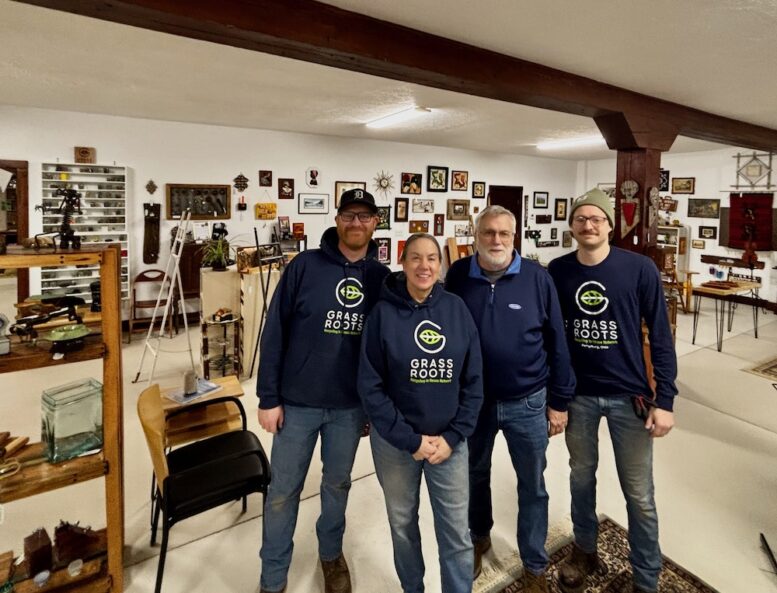
As a middleman who collects discarded materials and helps them find new uses and homes, Nunn established Grass Roots Recycling to Reuse Network, a new business at 22544 N. Dixie Highway, about halfway between Bowling Green and Perrysburg.
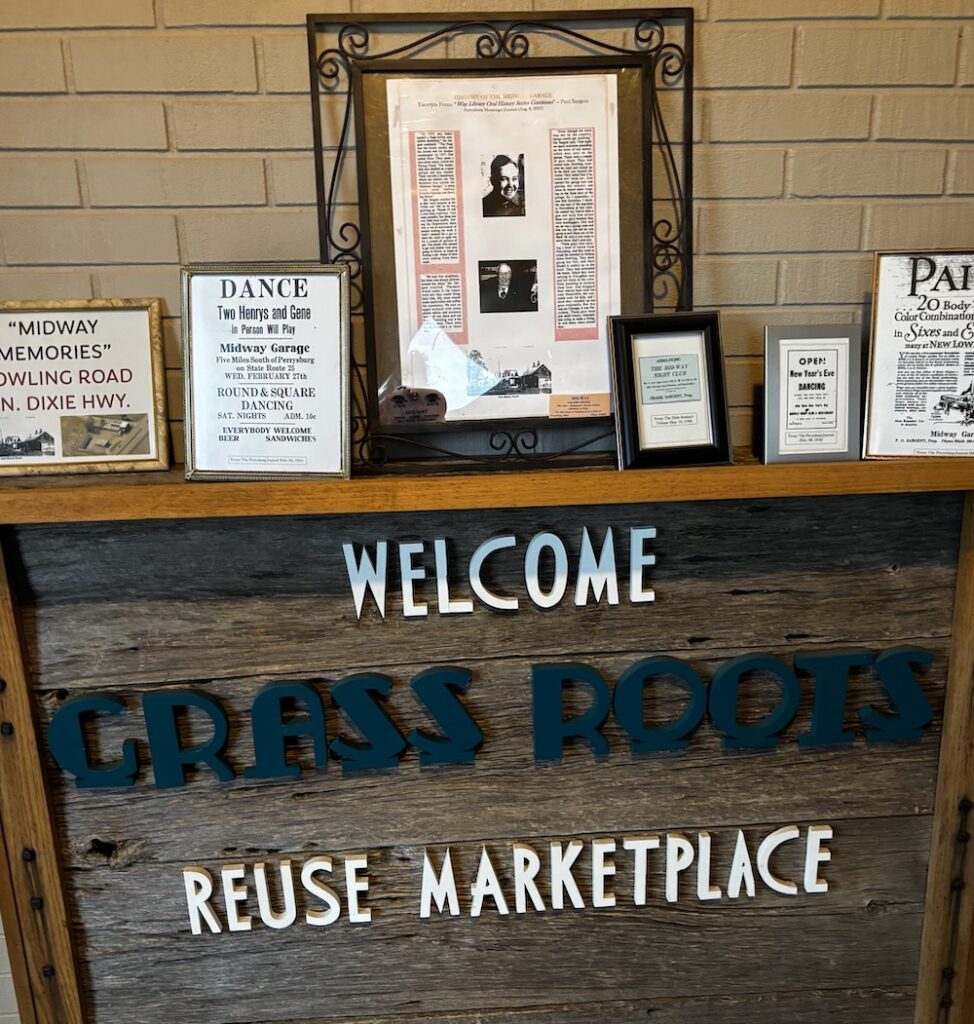
Inside the building that was once Midway Garage, Nunn has set up a playground for creatives, a home for unwanted materials ready for a second life, and an experience for shoppers interested in buying distinctive, high-quality goods.
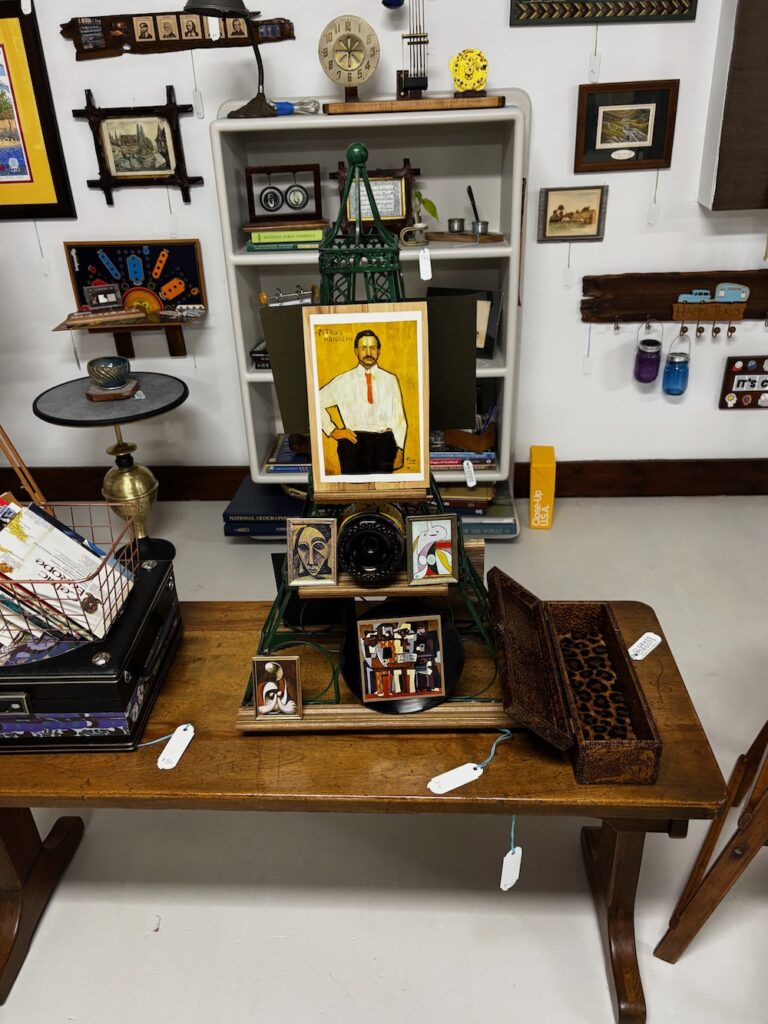
The business is an amalgamation of goods and ideas with the ultimate goal of creating a community of environmentally conscious individuals – those who choose not to send items to the landfill and those who are learning to see those discards as a possibility.
He also noticed a gap in the recycling system. Many items don’t belong in curbside recycling, yet they’re not suitable for traditional donation centers either. As a result, they often end up in the trash.
“In that space between what you put at the curb and what you give to Goodwill, we’re probably throwing out in Ohio 125,000 truckloads a year,” he said.
Nunn’s shop aims to rescue those materials and give them another life.
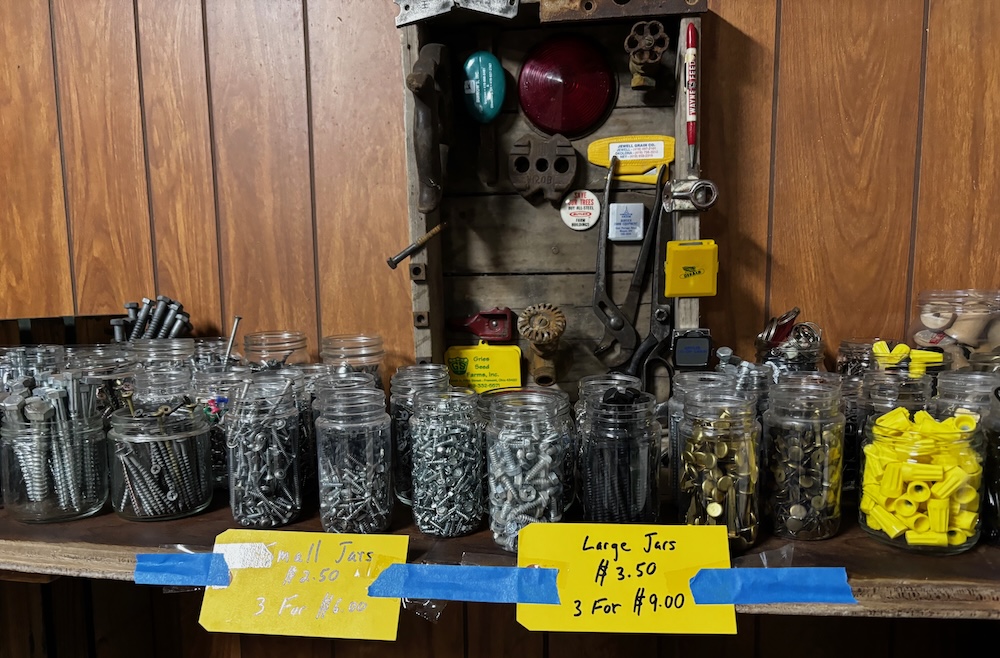
The main building and an adjacent building are filled with century-old barn wood, donated odds and ends such as Mason jars, nuts, bolts, screws, and beads are carefully curated and beautifully displayed for makers to see, touch and imagine its next life.
From barns to workbenches
One of the shop’s most valuable resources comes from an unlikely place: old farm barns.
Through connections with the Black Swamp Conservancy, where Nunn serves as board president, he had the opportunity to dismantle several century-old barns that were scheduled for demolition.
The wood inside them was remarkable, he said.
Many were built more than 120 years ago using slow-growth hardwoods from the historic Great Black Swamp forest. The dense grain and durability of that timber make it far superior to most modern lumber.
When the barns were taken down, the wood was salvaged instead of discarded.
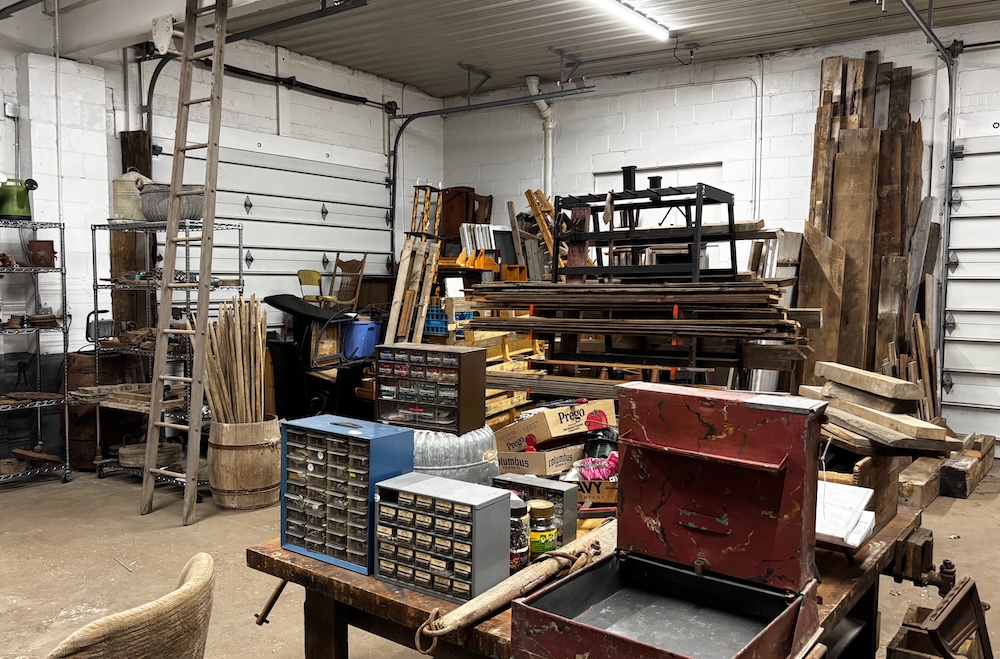
Today, those beams and boards fill the shop, ready for transformation into furniture, décor, and art.
“Materials just need to be valued for what they were,” Nunn said. “They were farmed and mined and processed and manufactured and utilized some way. We shouldn’t just landfill them.”
A workshop for makers
The shop isn’t just a store—it’s a community workspace and creative network, said Rachel Petropoulus, a team member who has worked in the sustainability sector for more than 20 years. She is helping with the shop’s concept, making connections and handling some of the marketing and graphic work, “trying to get the word out of who we are and what we’re trying to do,” she said. “There’s such a plethora of ideas between Pinterest and social media that we’ll try and glean from those and others.”
Local artists and hobbyists regularly stop in to browse donated materials, from vintage sewing machines and old hardware to scrap metal and glass.
Some makers receive materials for free and return later with finished products to sell on consignment. Others simply experiment with new ideas.
The results are eclectic and inventive, Petropoulus said
Nunn hopes the space lowers barriers for people who enjoy creating but lack resources.
“We’ll give them wood, we’ll give them what they need,” he said. “All they have to do is make something and bring it back.”
As the business grows, Petropoulus said they hope to offer classes and workshops for the makers.
Building a reuse network
The shop is also part of a growing regional effort to reduce waste through collaboration.
Rather than competing with existing reuse organizations, Nunn works closely with them. Partnerships include Habitat for Humanity’s ReStore, Scrap for Art, and a local pickup service that rescues unwanted household items before they reach the landfill.
If the shop can’t use something, it often gets passed along to another organization that can. Or, inside the shop, Nunn has a “free table” set up with donated items available to anyone who might use them.
The goal is simple: find a home for as many materials as possible, Nunn said.
Beyond its environmental mission, the shop has become something else entirely—a gathering space.
Visitors wander through displays, examine handmade pieces, and share ideas about projects they might try themselves. Many say they didn’t expect the space to feel so welcoming..
“Everyone who comes in goes, ‘This is not what I expected,’” Nunn said.
The shop attracts a diverse crowd, from retirees with woodworking skills to younger visitors interested in sustainability and Do-It-Yourself creativity.
Nunn’s hope is for the space to help rebuild a sense of connection that has been fading in many communities.
“We have to stop isolating ourselves,” he said. “Stop thinking there’s a community that I’m in and another community that’s out.”
Just getting started
Although the shop is still new, its impact is already growing. More makers are joining the network, more materials are being donated, and more customers are discovering the possibilities of reuse.
And for Nunn, the project feels like only the beginning.
“We’re just getting started,” he said. “We are just scratching the surface of what this could be.”
The shop isn’t just about salvaging materials.
“It’s about changing how people see them. Every reclaimed board, every repaired object carries a story of where it came from and what it can become next,” he said. And if his vision succeeds, fewer of those stories will end in a landfill.
For David, that moment of curiosity is the real success of the project. If people leave seeing possibilities instead of waste, then the shop has already done its job.
After all, as he likes to remind visitors, every material deserves another chance at life.
Grass Root hours are Thursdays 3-6 p.m., Fridays 10 a.m. to 4 p.m. and Saturdays 10 a.m. to 2 p.m. or by appointment by texting 419-250-3226 or emailing info@grassrootsrecyclingtoreuse.com
Find more information about Grass Roots on their website at https://grassrootsrecyclingtoreuse.com/, Facebook page at https://www.facebook.com/grassrootsrecyclingtoreuse or Instagram account at https://www.instagram.com/grassrootsreusemarketplace.