By JAN McLAUGHLIN
BG Independent News
Wood County officials are hoping voters are not fooled by a petition to eliminate all property taxes in Ohio.
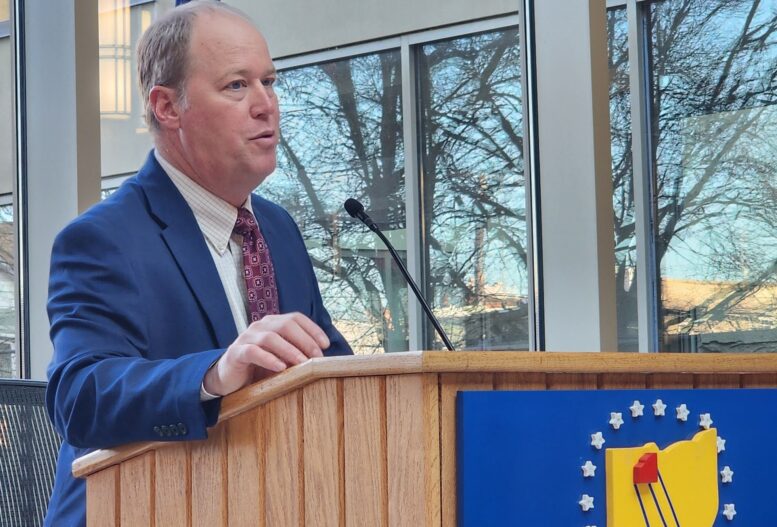
The grassroots effort to get a constitutional amendment on the November ballot to ban all property taxes would devastate services that Ohioans are accustomed to, according to Wood County Auditor Matt Oestreich, who was given the task of explaining the property tax issue during the annual State of the County address earlier this week.
While the prospect of no property taxes may appeal to many Ohioans, the loss of the revenue for emergency services, libraries, parks, veterans services and more may not be that attractive once those services are gutted.
Meanwhile, the state has no plan for coming to the rescue.
“Before you sign a petition or cast your ballot to end property taxes, just understand the impact,” Oestreich said.
Those in the state who frown on tax abatements for businesses, better get used to permanent tax breaks for utilities and companies, he said. They should realize that Ohio residents will be picking up the tab through increased income taxes and sales taxes.
“We understand that no taxes are popular,” Oestreich said. “While many voters value the services that they help fund, and that’s seen in the levies they support, it’s human nature to want to pay as little as possible.”
However, Oestreich guessed that few Ohioans realize that the amendment would eliminate property taxes for all businesses, including pipeline companies, Amazon and the Meta data center – not just for 10 or 15 years, but forever, he said.
“Local levies support our libraries, veterans, our seniors, as well as many services that we and our neighbors depend on in our worst moments.”
In Wood County, out of $250 million collected in property tax revenue annually, $24 million is used for public safety.
“These taxes support the ambulance responding to your dad having chest pains, protect children from abuse, fund the firefighters that cut you out of a wrecked car, provide a bike path for exercise, and help school teachers educate our kids,” Oestreich said.
While the group circulating the petitions is frustrated by property taxes, elimination of the taxes would have a devastating impact, Oestreich said. He suggested that tax reform and increasing government efficiencies would be a more reasonable response.
According to Oestreich, property taxes:
- Are more stable, predictable and more recession proof than income or sales taxes. They allow higher credit ratings to lower borrowing costs.
- Are considered a progressive tax. High value properties pay more. With income and sales taxes, lower income earners pay a larger percentage of their earnings.
- Give some local control and transparency, with every dollar staying local and taxpayers seeing how it is spent.
Utilities and businesses in Ohio already don’t pay income or sales taxes. This property tax ban would let them operate tax free, Oestreich said.
Last year, Wood County saw $250 million in property tax revenue. Of that total, $96 million came in property taxes collected from corporations and utilities.
“Eliminating property tax is a 100%, unlimited number of years business abated from property tax – $96 million will have to be made up from someone, and that is most likely the residents of Wood County,” Oestreich said.
The options, as presented so far, are grim.
Gov. Mike DeWine has said it would take a 20% sales tax to make up the revenue lost. In Wood County, it could be closer to a 15% sales tax, with the potential loss of exemptions for food, ag inputs, and professional services.
“Imagine your family is out to dinner and the check comes, and now the sales tax is as much as you are tipping the server. Or you buy a new $50,000 car and get hit with a $7,500 sales tax,” Oestreich said.
Such hikes in sales taxes would grossly affect Bowling Green’s robust Main Street and the larger retailers on U.S. 20. “Higher sales tax will kill this,” Oestreich said.
DeWine also predicted that income tax would have to increase from 2.75% to as much as 15% to replace the loss of property tax revenue. Cities already rely heavily on income tax, which is already susceptible to economic downturns, Oestreich said.
Another option for some services would be user fees – such as higher license plate fees, park entry fees, and private fire brigades to respond to emergencies.
“With sales, income and additional fees, the burden is still on the backs of our citizens and not on the businesses,” he said.
It’s also being predicted that the end to property taxes will mean the end to township governments as they are forced to annex into cities. Amendment supporters have also suggested that each county should consolidate its schools into one single district, Oestreich said.
“The idea of your township dissolving and all school districts in the county consolidating would be very unpopular, but this is what can happen when you lose local control and rely on decisions out of Columbus,” he said.
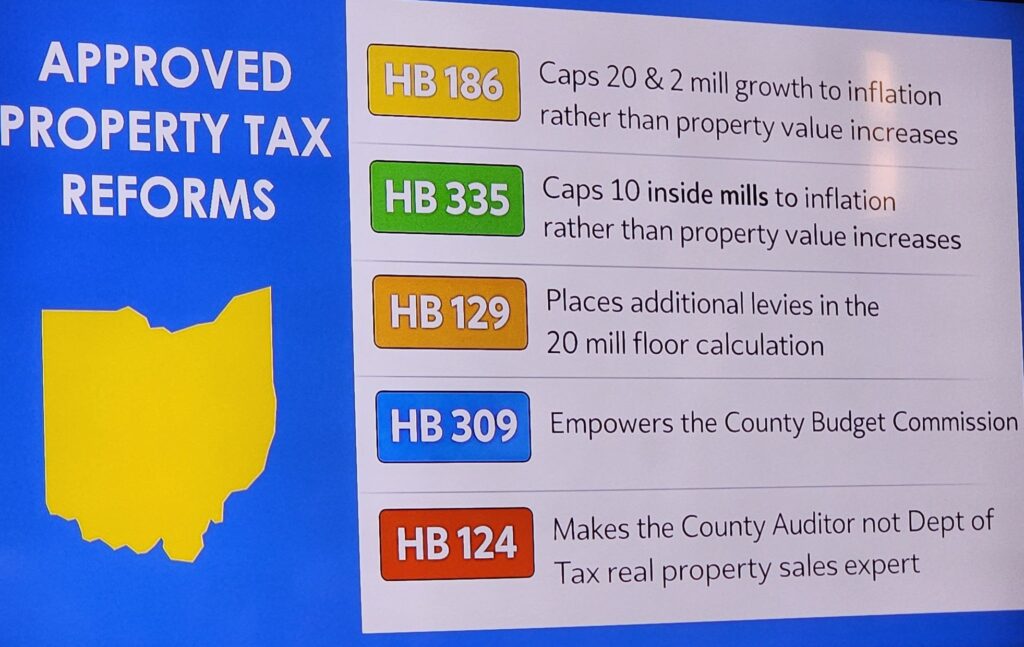
To prevent a full ban on property taxes, state legislators have passed five bills to reform property taxes in Ohio. But none of those do enough for the group promoting the ballot issue in November. The group collecting signatures across the state are seeking a constitutional amendment that lawmakers could not reverse.
Also during the State of the County address, Wood County Commissioner Craig LaHote said the county faces a “significant” budgetary concern from the possible elimination of property taxes.
“We recognize the challenges many residents face with rising tax bills, and we agree that additional reforms are needed,” LaHote said. “However, eliminating property tax with no plan to replace this foundational revenue stream would be devastating to the services local governments provide, including police, fire, EMS, parks, senior services, libraries and schools.
LaHote said the potential options of sales and income tax increases would shift the large share of property taxes currently paid by businesses and public utilities onto residents – which will actually lead to tax increases rather than reductions for state residents, LaHote said.
Property taxes from inside millage generated approximately $11.5 million last year, representing nearly 20% of the county’s general fund. These dollars support general government operations, like the sheriff’s office, jail, court system, prosecutor’s office, auditor, treasurer and recorder’s offices, the board of elections and more.
Another $4.5 million of property tax was generated for child and adult protective services from the county’s voter-approved Human Services levy.
Together, this $16 million does not include many other county government agencies that rely on voter-approved property tax levies – such as the Board of Developmental Disabilities, the Alcohol, Drug Addiction and Mental Health Services Board, and the Committee on Aging.
“We have been advised that we may be responsible for some of the mandatory services provided by these agencies, which could lead to some very tough choices if this amendment takes effect,” LaHote said.
“We encourage you to learn where your property tax dollars go, and the services they support, before forming an opinion on this important issue,” he said.