By TOM GERROW
BG Independent News
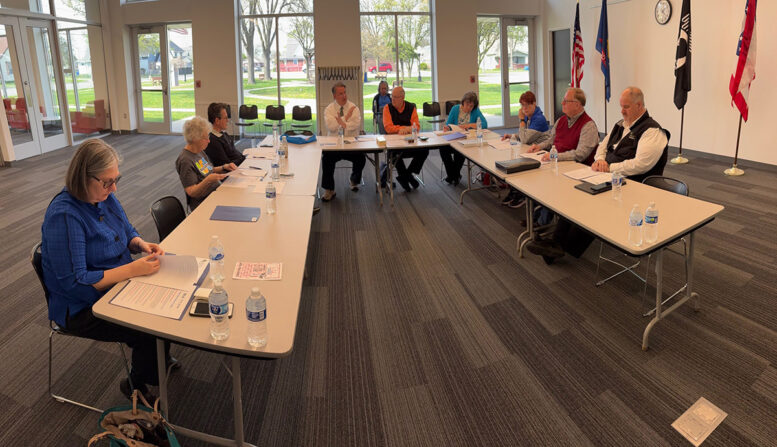
Meeting at the Walbridge Library on April 21, the Wood County District Public Library board of trustees took the next step toward renewing the local levy by requesting certification from the Wood County auditor. Once certified, the county commissioners will send the levy request to the county board of elections.
The legal language in the certification request used a template provided by the Ohio Library Council, which worked with the state auditor to make sure all the legal requirements were met. Care is needed, according to library director Michael Penrod, because failing to meet all the legislative requirements in the certification request can result in the levy being rescinded.
The board approved the certification request unanimously.
With groups advocating for a ballot initiative that would amend the state’s constitution to ban property taxes in Ohio, Penrod also shared information from the Ohio Library Council concerning public libraries and property taxes.
According to the OLC, 48 percent of library funding comes from the state through the Public Library Fund, while 52 percent of funding comes from local property taxes. Ohio has 251 public library systems, and 203 rely on a local property tax levy. Property taxes generate $24 billion annually statewide, of which libraries receive 2.5 percent of property tax revenue collected.
“Just as a reminder, the library does not receive sales tax, does not receive income tax, does not receive school district income taxes, casino revenue, marijuana taxes, lottery revenue, any of those,” Penrod said, adding that the library is receiving less from the state through the PLF this year than in fiscal year 2025.
Dolly Parton Imagination Library impacts early literacy skills
The WCDPL has been participating in the Dolly Parton Imagination Library for about six years. The program mails one free, age-appropriate book each month to children from birth through age five. A recent study by the Dollywood Foundation highlighted some of the impacts that the program has had.
Penrod noted the study showed the program significantly strengthens children’s early literacy skills, with participating children 15 times more likely to respond to and join in reading than those who are not enrolled, and four times more likely to demonstrate stronger emergent literacy skills, including six times more likely to have a stronger vocabulary and seven times more likely to have stronger phonological awareness.
“It is numbers to back up what we’ve known,” Penrod said. “It shows kids that read, succeed; kids that don’t, won’t.”
Other items discussed during the board meeting included:
- Work on the library elevator is nearing completion.
- Work on the library’s website is underway to ensure compliance with new ADA requirements.
- The library will be migrating to a new SEO technology platform, which enables patrons to share materials between libraries throughout the state, in 2027.
- Per state requirements, the library is developing a cybersecurity policy.
- Quarterly door count data, used to measure library visitation, is up significantly over the first quarter of 2025.