By JULIE CARLE
BG Independent News
The Black Swamp Players’ production of Lauren Gunderson’s “The Revolutionist” is set in 1793 Paris during the French Revolution’s Reign of Terror; however, its relevance resonates just as well in present-day Bowling Green.
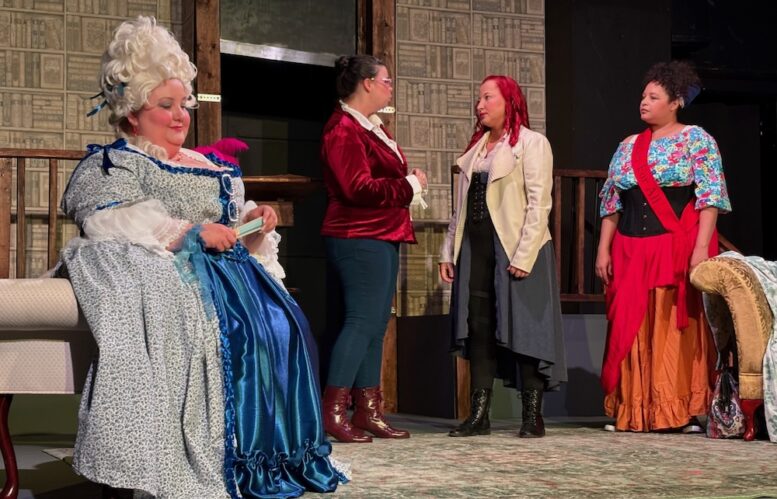
Based on historical facts, albeit embellished with many literary liberties, the show brings together four badass women—three who are actual historical figures and one fictional character who represents Black women and freedom.
Directed by Actors Collaborative Toledo co-founder Barbara Barkan, with stage manager Heath A. Diehl and producers Trevor Kaz, Emily Standinger and Gloria Wang, “The Revolutionists” opens tonight (Friday, April 24) at 7:30 p.m. in the BSP theater at 115 Oak St., Additional shows this weekend are Saturday, April 25 at 7:30 p.m. and Sunday, April 26 at 1:30p.m. The production continues next weekend, May 1 and 2 at 7:30 p.m., and closes with a Sunday matinee on May 3 at 1:30 p.m. General admission tickets are $20 and available online by clicking here.
Though in real life, the four women never met, the play brings them together (mostly) in the study of Olympe de Gouges (Rachel Hetrick), a playwright struggling to write a play about the French Revolution.
Assassin Charlotte Corday (Sam Meyer) is on a mission to end the life of Jean-Paul Marat for his role in the Reign of Terror, which she believes is ruining France. She comes to Olympe in search of a memorable line before she murders Marat in his bathtub.
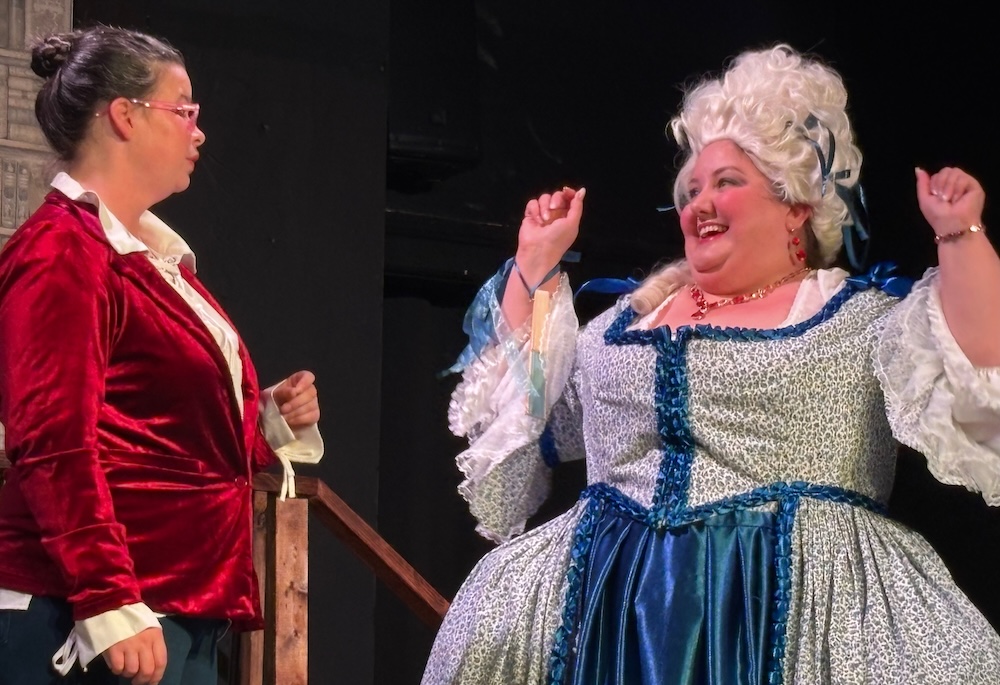
Marie Antoinette (Brandi Culbreath), former queen of France, is known for her excessive lifestyle, love of ribbons, self-centeredness and lack of familiarity with the common people. She arrives at Olympe’s home demanding that her story be rewritten to convince the people to love her again.
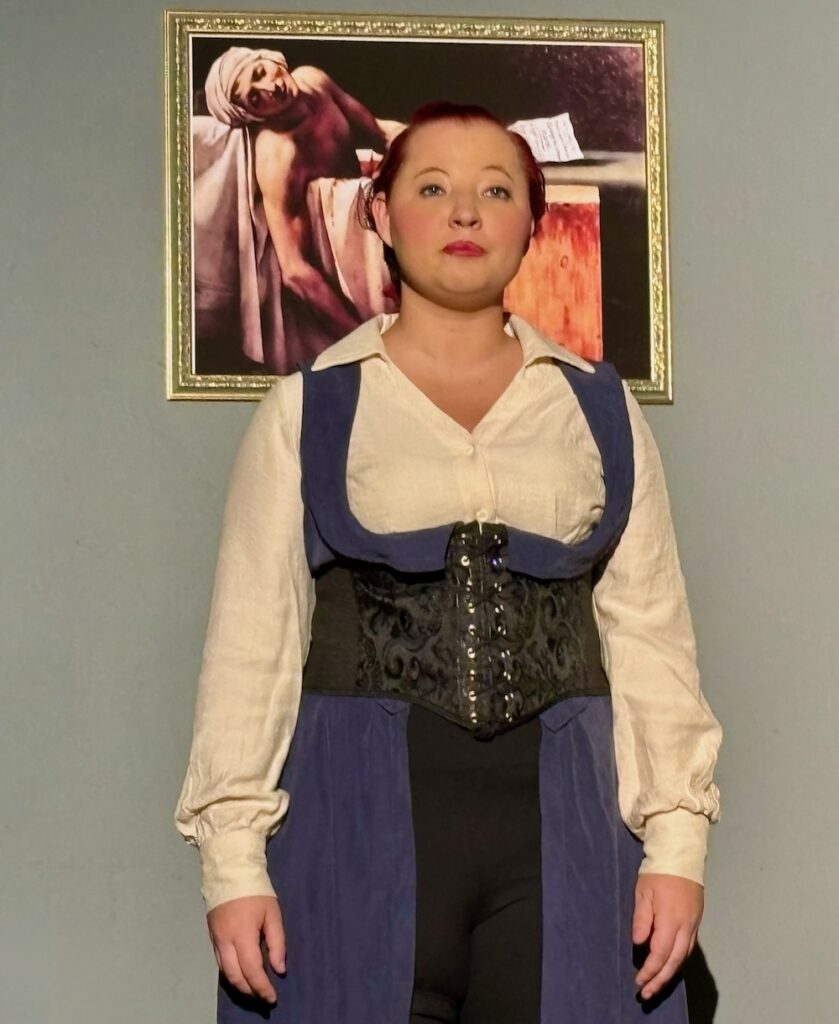
And Marianne Angelle (Emily Waters), the fictional character of the bunch, is an avid Haitian activist who wears her revolutionary message on her chest. She is there to challenge the other women to include the abolition of slavery in their fight for equality and freedom.
The cast, while small in numbers, fills the space with immense energy, so many laughs and a palpable, gut-belief in their revolutionary purpose. Throughout the scenes, they address ponderous and profound topics including the role of women in revolution, the power of theater and writing, and the necessity of justice.
At the heart of the storytelling is Olympe, who can’t decide what direction to go, and thus stalls the writing process. She’s paralyzed with fear about making the wrong choice and what it could mean for her. In a bold effort, she pivots from play writing to declaration writing. She takes her “Declaration of the Rights of Women and the Female Citizen” to the French National Assembly.
Upon returning to her study, feeling ignored, dejected and defeated, she tells her compatriots, “They booed me as I spoke,” exacerbating her concern about the future.
Meyer’s Charlotte is picture perfect as a young, determined and courageous activist. As she prepares to assassinate Marat, she stays true to her beliefs that she is avenging and reversing the violence that started with the massacres of 1792. After the murder, Charlotte is jailed and sent to the guillotine, but faces her ending with courage, and the last words, “I killed one man to save a hundred thousand.”
Culbreath’s bubbly, clueless, squeaky-voiced, “all-about-me” Marie-Antoinette is the comic relief throughout much of the play. She swears she “did not say that about the cake,” referencing the often-attributed statement, “Let them eat cake.”
Ribbon-obsessed and determined to right her image, Marie-Atoinette wants her story to be nothing more than to “Make me stay queen and not die.”
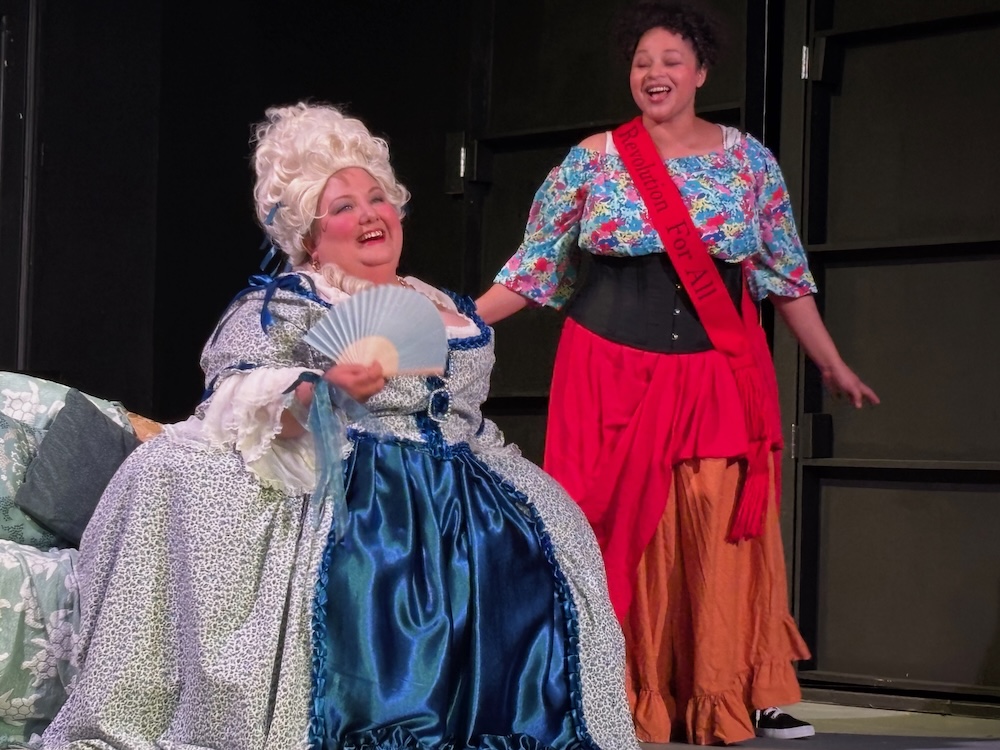
Marianne’s Haitian roots and love for family fuels her passion for freedom, equality and the drive to change the world for the better. Waters strikes the right combination of courage, wisdom and passion in her portrayal of Marianne. She is the voice that pushes Olympe to write their stories. When Olympe refuses to be witness to Charlotte’s execution, Marianne points out that conviction is necessary and sacrifice is often for the greater good.
While exasperated and impatient with Marie-Antoinette’s lack of empathy for others, Marianne and the former queen discover they share thoughts and feelings about family and love.
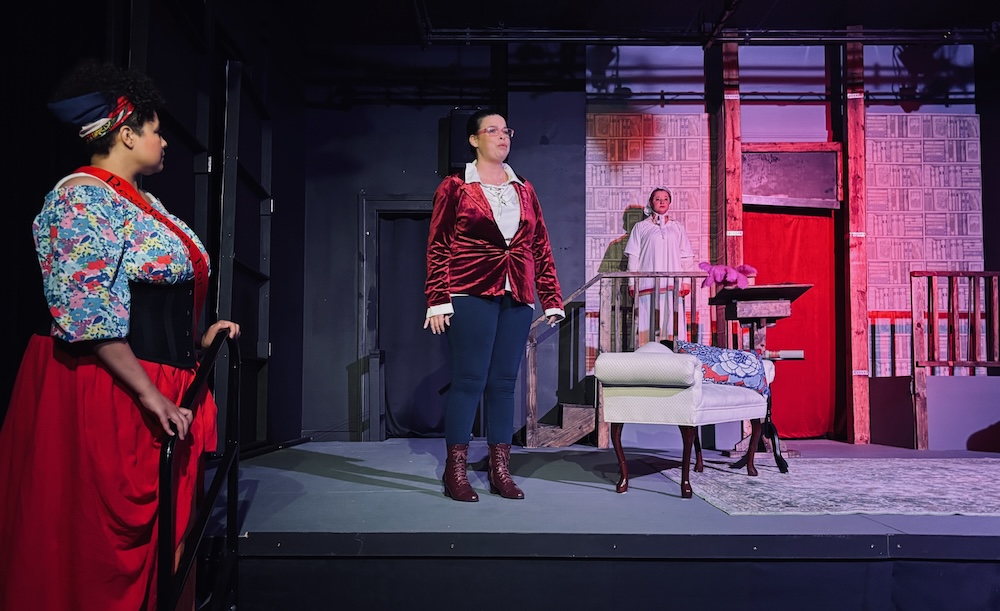
Together, the women go from strangers to compatriots and chosen sisters on a mission to change the world. The final scenes move from Olympe’s brightly lit study to a darkened guillotine that foreshadows the ending—their endings.
Deemed a comedy, there are still plenty of tragic moments that evoke tears and empathy for the battles they fight – for freedom, equality and recognition of their contributions. As the stage goes dark, there is a realization that their battles are not all that different than today’s.