By JULIE CARLE
BG Independent News
U.S. Route 6, the coast-to-coast highway that passes just south of Bowling Green, is the oldest, highest and longest transcontinental highway of its kind.
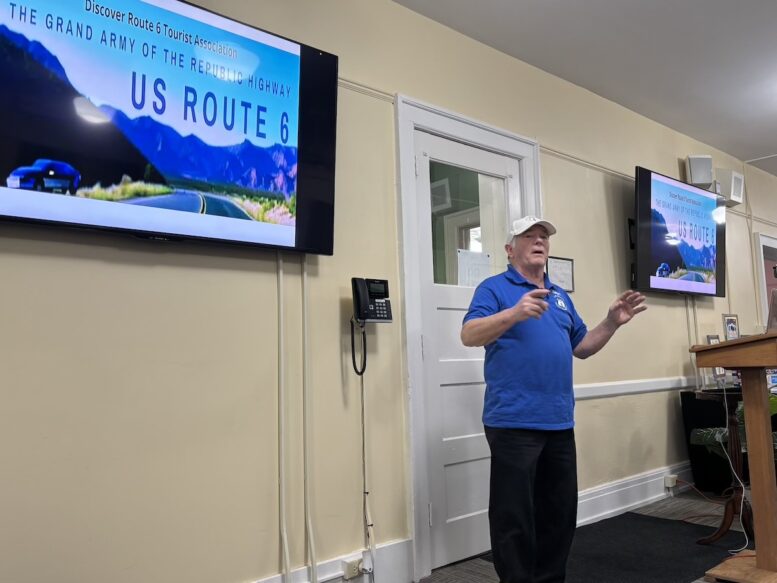
Though the highway is often confused with Route 66, U.S. Route 6 is “half the digits and twice the fun,” Gary Hunter, executive director of the Ohio U.S. Route 6 Tourist Association, said during a recent Wood County Museum America 250 talk.
Built in the 1930s, Historic U.S. Route 6 spans 3,652 miles across 14 states from Bishop, California, to Provincetown, Massachusetts.
Unlike other major coast-to-coast, east-to-west highways, Route 6 was created through a collaboration of 14 states rather than the federal government. That distinction, Hunter noted, makes it unique in American infrastructure history. In fact, because it was created by states rather than the federal government, its number is a single digit rather than double digits that end in zero, like Route 20, he added.
The road crosses the Continental Divide in Colorado at nearly 12,000 feet, earning its reputation as the highest transcontinental route.
Along the way, it has carried several names, including the “Grand Army of the Republic Highway,” honoring Civil War veterans.
A road meant for slowing down
The road’s distinction of being the longest, highest, and oldest transcontinental highway is only one part of the story.
The biggest reason people should consider traveling Route 6 is for the cultural experience.
Hunter’s central message focused not on speed, but on slowing down.
“Don’t just jump on the interstate to get somewhere,” he told the audience. “Experience the communities, the cultures, the businesses along the way.”
That philosophy stands in contrast to the fate of parts of Route 66, where bypassing interstates led to economic decline in many small towns, he said.
Hunter’s purpose as executive director of the Ohio U.S. Route 6 Tourist Association is to avoid the same fate as small towns across Route 66. Thus, his goal is to encourage travelers to explore the road’s historic path.
Though he has lived along Route 6 in Ohio for most of his life, he learned about the U.S. Tourist Association network after hosting April Gilbert, a runner who crossed the country along Route 6 in 2015 to raise money for a youth center.
When organizers told him no one in Ohio was promoting the route, Hunter stepped in.
“Here I am,” he said.
While there are many wonderful stops along the highway from California to Massachusetts, Hunter’s presentation focused mostly on the rich history and interesting stories along U.S. 6 in Ohio.
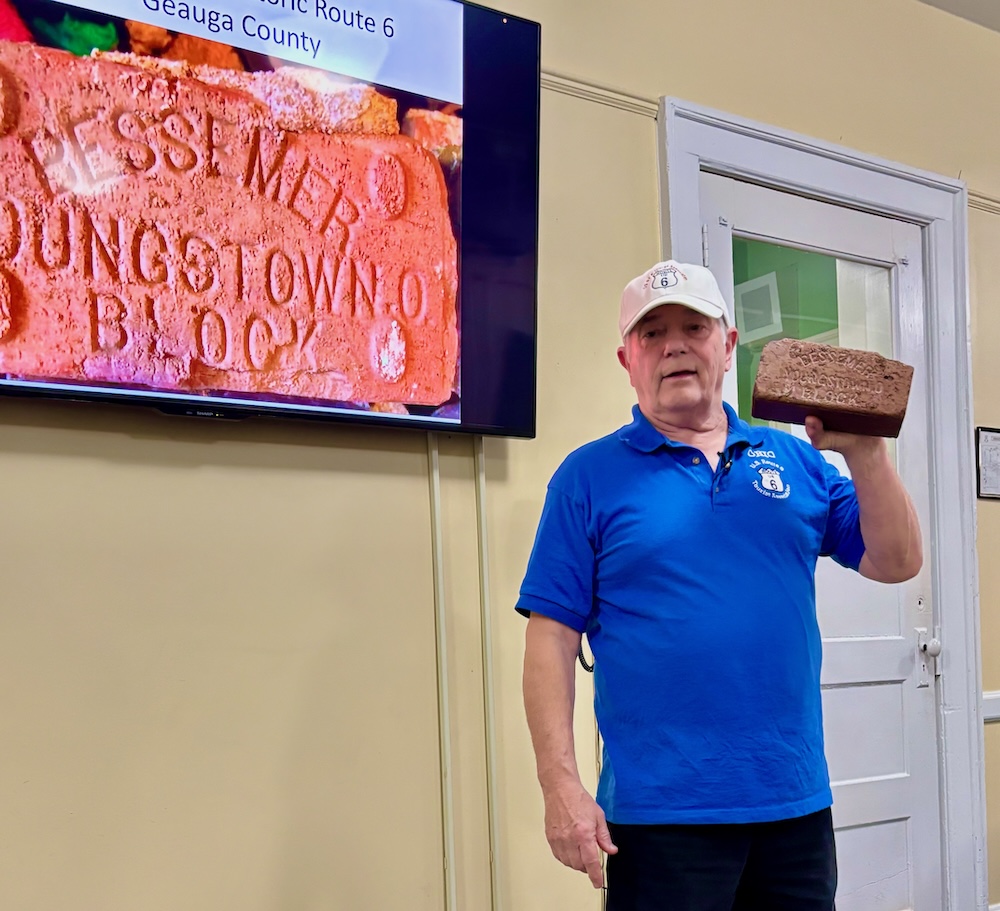
Outside of Chardon, Ohio, there was a culvert pipe buried 30 inches that would flood. As he was told by the Ohio Department of Transportation, plans were to put in a larger pipe. When the crew was digging up the road, they got to 24 inches and hit a red brick road, constructed of bricks from the Bessemer Block Company.
Getting the bricks out became too difficult and time-consuming, so a decision was made to put the pipe on top of the brick road and bury it. “That’s how it is today,” Hunter said.
The Wood County Museum, which sits directly south of Route 6 in Bowling Green, is a prime example of the fascinating history that can be found along the highway.
Hunter also mentioned the Historic Construction Equipment Association Museum. Although it is not directly on Route 6, the museum has cultural significance to the highway. He attended the association’s international meeting last year in Bowling Green and learned that some of the equipment on display at the museum was used in the construction of Route 6.
In Ohio, the highway also passes by cultural landmarks and attractions such as the world’s tallest Lady of Guadalupe statue in Windsor, Ohio, Sandusky’s Merry-Go-Round Museum, Lake Erie’s shoreline, and the Woolly Bear Festival in Vermillion.
There is a reviving Interest in the “forgotten highway,” he said. “States like California have recently reinstalled historic signage,” to remember and promote the highway to a renewed public curiosity.
“Modern travelers, endurance athletes and history enthusiasts are rediscovering the route, not just as a road, but as a journey through America’s past,” he said.
Traveling on historic highways like Route 6 offers a richer, more authentic experience of American communities.
“Stay on 6,” he said. “Enjoy the living connection to the people, places and stories that define Ohio and the nation.”