
By GEOFF HOWES
BG Historic Preservation Commission member
On July 26, 1921, Bowling Green’s first public swimming pool had its grand opening. About 150 people turned out to admire and swim in the Municipal Natatorium, which was created from J. E. Kelly’s quarry by bringing in sand to form a beach and a gradual drop-off at its south end.
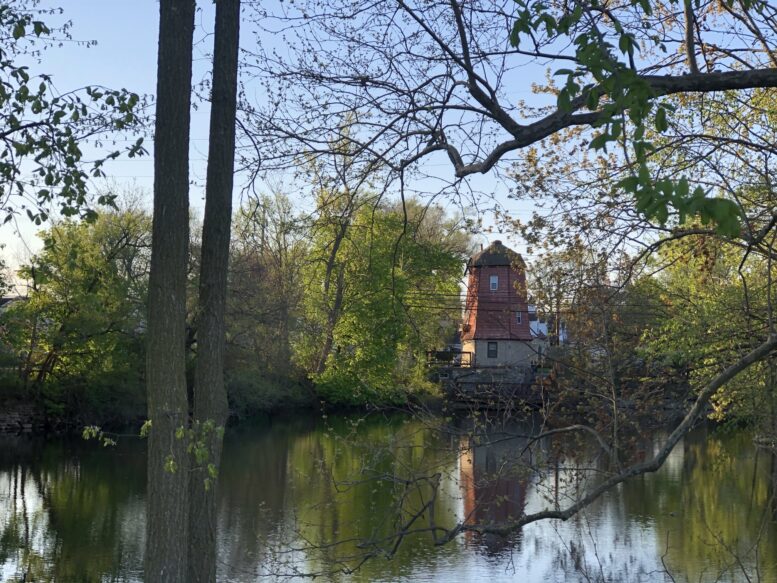
The quarry off Clough Street between Troup and South College, now called University Pond, is Bowling Green’s Historic “Building” of the Month for October. It can still be seen behind the iconic Urschel Windmill.
The Sentinel Tribune wrote about the grand opening event: “The crowd gathered early and enjoyed every minute. The cozy bathhouse was so filled at times by would-be bathers or those who had finished their frolic in the water that no more could enter it.”The Universal Band, made up of employees of the Universal Machine factory, “very kindly donated its services for the opening night and afforded some excellent music.”
The quarry was excavated in the 1880s to obtain limestone gravel for paving East Wooster Street. In time, springs flowing through limestone fissures filled the pit with water, and soon this and other quarries in the city were recognized as a drowning hazard, especially to children wanting to swim or fish.
In September 1904, 5-year-old Willis Brown drowned in the quarry that used to lie east of the railroad tracks and north of East Wooster. In June 1905, 12-year-old Arthur Ross drowned in Kelly’s quarry.
In August of that year, the City Council discussed filling the quarries, but no action was taken. Years later, the quarry near the railroad tracks and a smaller one at East Court and Thurstin were filled in, but the Kelly quarry was not.
In April of 1921, the Bowling Green Woman’s Club (now the Women’s Club) took steps to create a safe place to swim. They considered Kelly’s quarry “because of its regular dimensions, pleasant surroundings, and convenient location.” J. E. Kelly agreed to donate his quarry if it could be made safe for children. The club organized canvassers to solicit donations toward the estimated cost of $3,500 (over $65,000 today).
The contractor, engineer Carl Finch, met with the canvassers in June to explain the technical aspects of the project. The water would be pumped out and white sand deposited in the south end of the quarry to make a beach and a gradual slope to the middle of the pool, where the water would be 15 feet deep.
The city’s wards competed with each other to see who could raise the most money. Bowling Green’s leading citizens donated between $10 and $50, while the less affluent gave anywhere from 10 cents to $5. Children even sold lemonade for the cause.
By July 7, work had begun. A fence was put up around the pool, and a bathhouse was built above the beach. Construction took only about three weeks.
A 1926 postcard from the Dick & Joan Conrad Collection in the Wood County District Public Library shows the steeply sloped beach, the bathhouse, a concession stand, and dozens of youngsters swimming while adults sit and look on. A tall young man standing with his arms crossed is probably the lifeguard.
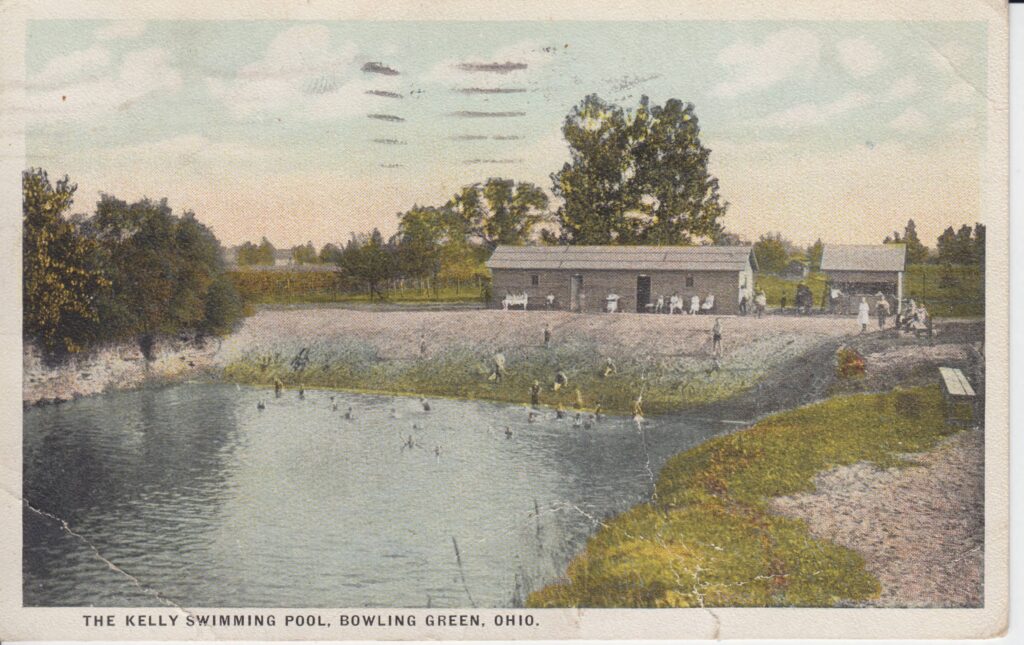
Kelly Swimming Pool (postcard, Courtesy of the Wood County District Public Library)
Starting in 1922, the Woman’s Club sponsored an annual swimming meet at the pool, including races for different age groups, lifesaving demonstrations, and novelty races. Some of these involved swimming while holding a lit candle or an umbrella, rowing a tub, and a duck race, with the winner receiving a live duck.
In March 1923, the Woman’s Club’s success was featured in the national magazine “Woman’s Home Companion,” in an article titled “Where Does Your Boy Swim?”
In 1924, the Woman’s Club leased the area east of the pool and made it into Recreation Park, with baseball and picnicking facilities and eventually a tourist camp. In 1927, the club was able to purchase the land between Troup Avenue, First Street (now Scott Hamilton Avenue), College Drive, and Clough.
In 1928, the Bowling Green Tennis Club constructed tennis courts in the park. During the 1920s and early 1930s the pool was often referred to as the Recreation Park Pool. It was often used by university groups. In the winter, folks skated on it.
In June 1933, a modern swimming pool was opened at City Park, and in 1938, the BGSU natatorium was completed. Use of the Kelly pool decreased, and the annual BG swimming meet was moved to City Park in 1933, in time for the city’s centennial celebration.
B. H. Urschel purchased the area owned by the Woman’s Club in 1935. Urschel owned Urschel Engineering, the product development branch of his Universal Machine Company (which had provided the band at the pool’s grand opening).
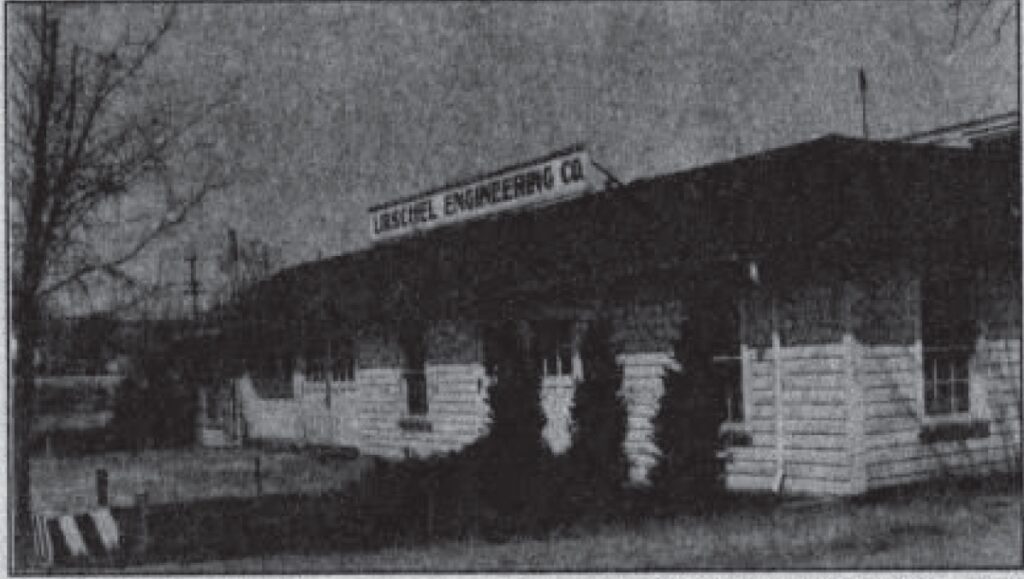
Urschel Engineering (in the old bathhouse, courtesy BGSU-CAC)
Urschel built a brick residence for his family just west of the quarry, and a two-story brick building containing four large apartments to the west of that. Both were in the neo-Colonial Georgian style. He moved his engineering business into the former bathhouse. In 1939, he built the windmill on the north edge of the quarry that will be November’s Historic Building of the Month.
The windmill site is interesting for another reason. Here, Clough Street makes one of the few curves to be found in Bowling Green neighborhoods. Originally, Clough ended at Troup Street. In 1928 and 1929, City Council first considered the feasibility of extending the street east to South College Drive, where growth and development was expected, but the north end of the quarry was in the way.
Finally, in 1938, B. H. Urschel agreed to donate land to the city if the city built sewers and a street that curved around the quarry.
In 1949, Bertie and Lilian Urschel, planning to retire to Florida, sold their house and the apartment building, along with what was now known as “Urschel Quarry” or “Urschel Pond,” to Bowling Green State University. The university converted the buildings into student housing.
Eventually, the residence became the University Guest House, and the apartment building housed the Social Philosophy and Policy Center. Dignitaries visiting BGSU, including visiting scholars, diplomats, heads of state, movie stars, and former presidents, stayed in the Guest House. It was closed in 2010 to save expenses, and the policy center moved to the University of Arizona in 2012. Since then, both buildings have been demolished.
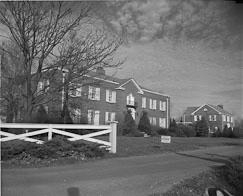
Guest House (right) and apartment building (left) on Urschel Drive (Courtesy of BGSU-CAC)
For some time after the university purchased it, during the 1950s and 1960s, the swimming pool and the park were popular among students, faculty, and staff, for swimming, skating, and club outings. Now, however, the quarry is fenced off, and the former Recreation Park is nicely kept but vacant and unused.
Would you like to nominate a historic building or site for recognition? You can do this through the City website at https://www.bgohio.org/FormCenter/Planning-13/Historic-BuildingSite-Nomination-Form-83.
You can learn more about the Historic Preservation Commission by attending their meetings (the fourth Tuesday of each month at 4 p.m.) or by visiting their webpage at – https://www.bgohio.org/436/Historic-Preservation-Commission.
