By JAN McLAUGHLIN
BG Independent News
Across the nation, the dream of homeownership is running up against the reality of low housing numbers and high housing costs.
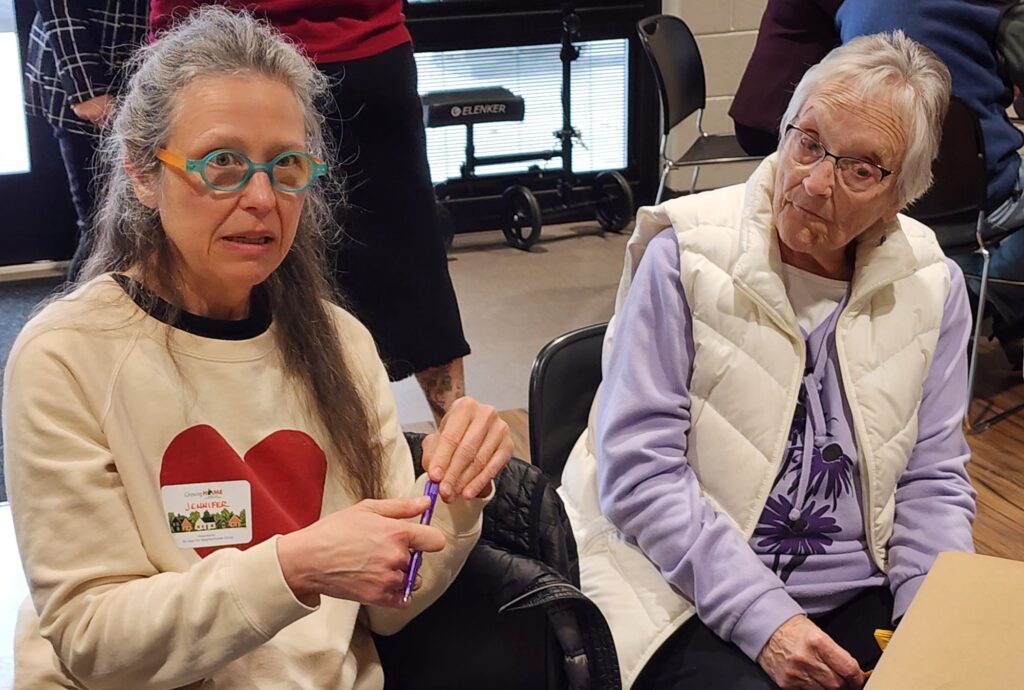
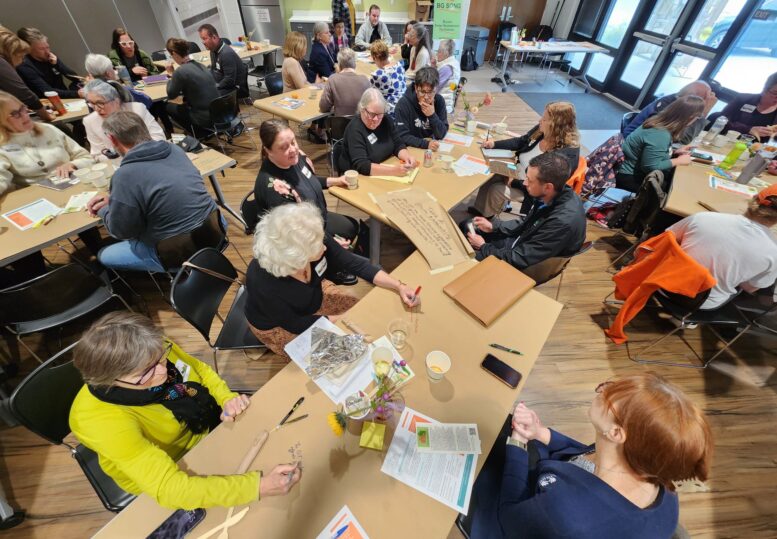
Last week, a group of 44 Bowling Green residents met to discuss options that would allow people of all ages and incomes to put down roots and build a life in the city. The “Growing Home” gathering, organized by BG Save Our Neighborhoods Group, included community leaders, housing professionals, and representatives from local businesses, banks, nonprofits, government and education.
Bowling Green lacks enough housing – especially housing considered “affordable” – for those who want to live in BG, said Kathleen Dennis, a member of BG SONG and a City Council member, as she set the stage for the discussion.
“We haven’t been building a lot of moderately priced homes,” she said.
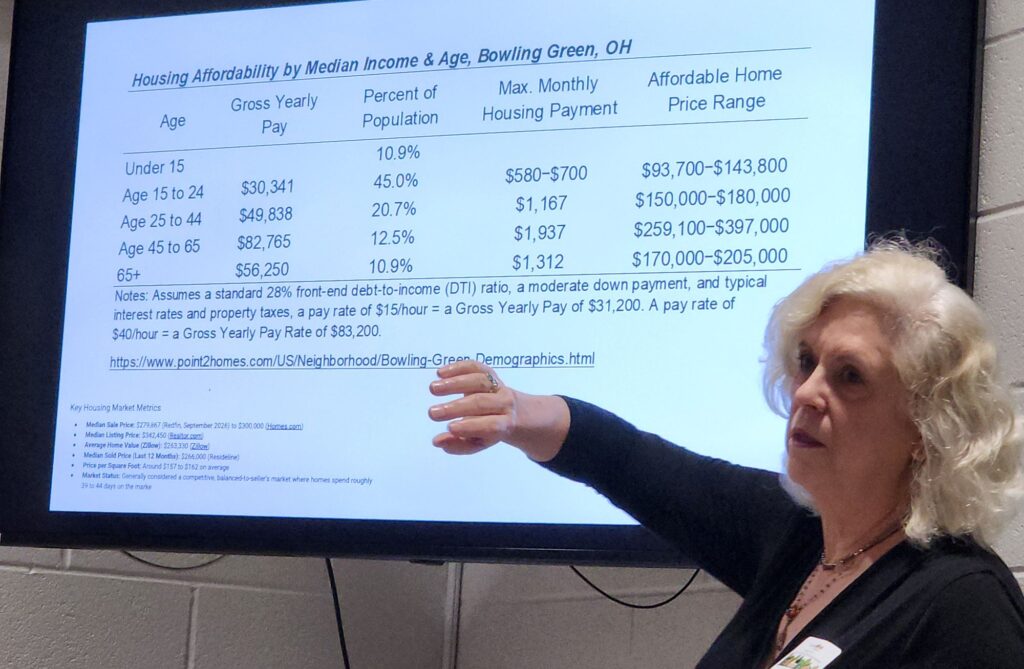
An estimated 39% of homeowners in Bowling Green meet the definition of “cost burdened,” with more than 30% of their household budgets being spent on housing. That contributes to mental health strain, and an inability to spend money in the community – affecting wider swaths of the community.
A needs assessment conducted recently by the Wood County Health Department showed that the top need for local residents is affordable housing, Dennis said.
City officials have worked to attract new housing, and just received a $1 million grant to put in water and sewer lines for 177 units of “workforce housing” on the north edge of Bowling Green.
Efforts to build “affordable” housing have proved to be difficult in the city. At the Toussaint Springs subdivision, construction materials and other expenses have led to home prices mushrooming to between $334,000 and $425,000 – which is $100,000 to $200,000 more than predicted.
Those prices are out of reach for many first-time homebuyers, who may work in Bowling Green, but can’t afford to live here.
“These are the people who make up the fiber of our community,” Dennis said. “These are the people we need to house.”
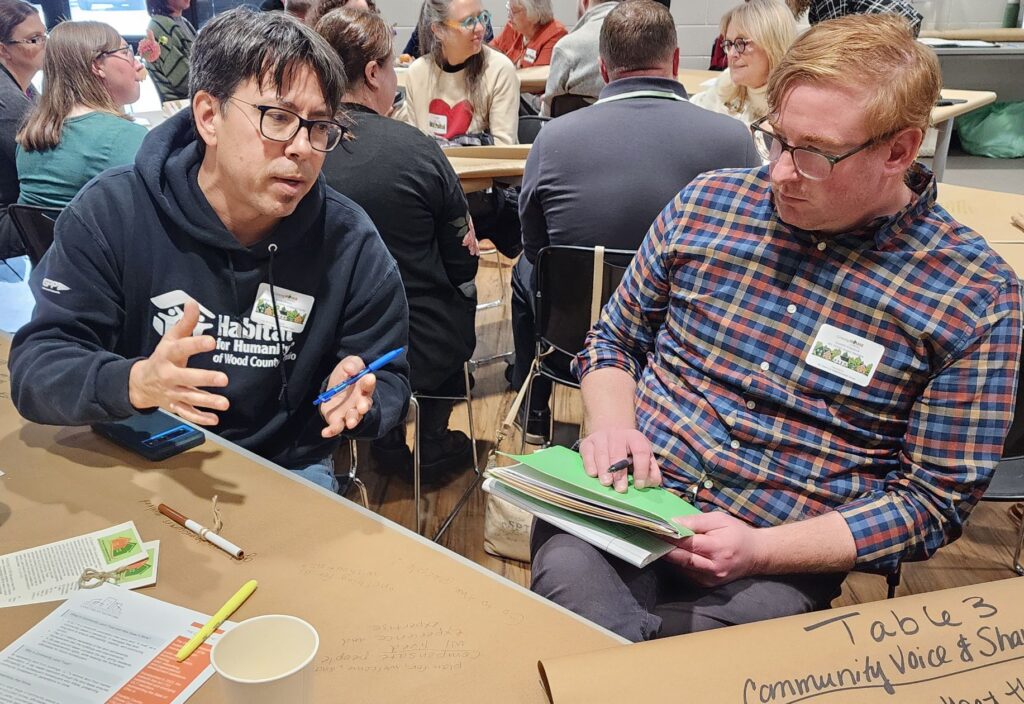
Much of the discussion focused on a type of housing program used throughout the nation to make housing affordable – community land trusts.
A community land trust is a nonprofit corporation that owns land “in trust” as a community asset in perpetuity. It manages that land long-term to ensure affordability, stability and community control.
The CLT retains ownership of the land permanently. Homeowners own the buildings and improvements. A 99-year ground lease connects the two, giving residents full homeownership rights, while keeping the home and land affordable for future homebuyers.
By separating land from buildings, CLTs remove land from market speculation. A cap resale restriction through the land lease ensures affordability for subsequent homebuyers who follow, preserving community investment for generations to come.
There are currently more than 300 community land trusts in the U.S. In Ohio, a CLT network includes programs in Defiance, Oberlin, Yellow Springs, Ottawa County, Franklin County, Toledo, Dayton, Cleveland and Cincinnati.
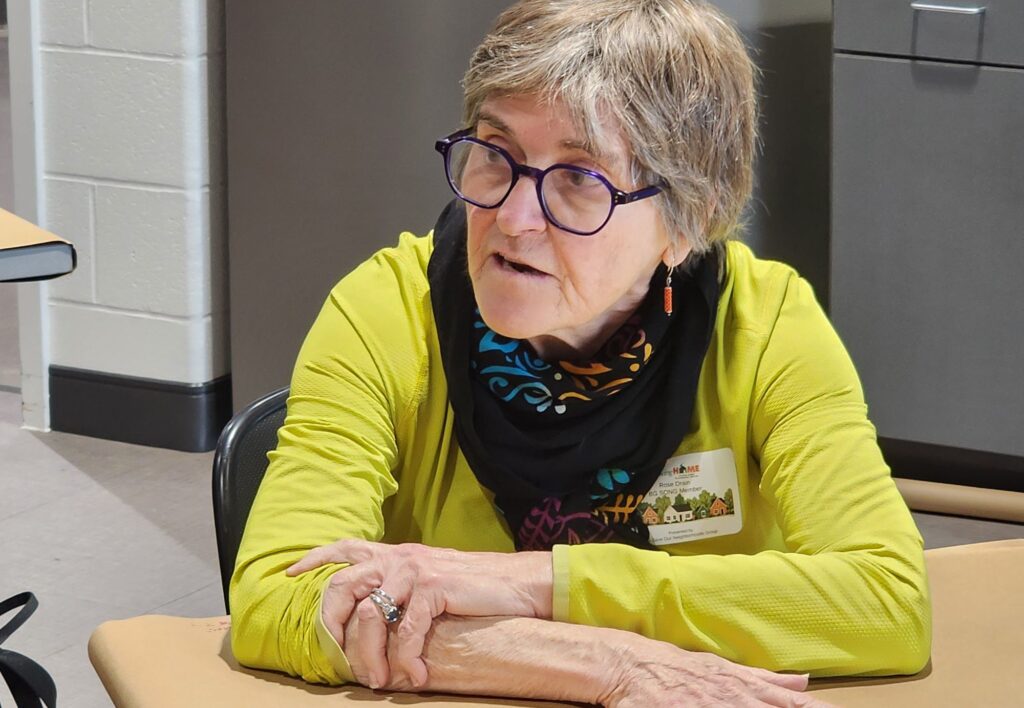
In September, BG SONG was awarded a $15,000 grant from the John Henry Eldred Jr. Foundation to support the formation of a Bowling Green area Community Land Trust.
“This is a very powerful model for us to identify land and put it in trusts to serve the community forever,” said Emily Seibel, representing the Yellow Springs Community Trust.
“They pay it forward to help the next homeowner – so it’s a continuum,” Seibel said.
Homeowners buying land trust homes still have to qualify for mortgages, explained Hope Paxson, president of the Ohio Community Land Trust Network.
So why would anyone buy a house on land they don’t own?
Because otherwise, they would likely never be able to be a homeowner, Paxson said. The cost to build a “traditional home” in Ohio is currently between $300,000 and $400,000, Seibel said.
“And just think how much it will cost to buy a home 10 years from now,” Paxson said.
And why would communities want to offer “subsidies” to help new homeowners buy houses at reduced rates?
“Because it’s a community investment – that’s what it really is,” Paxson said.
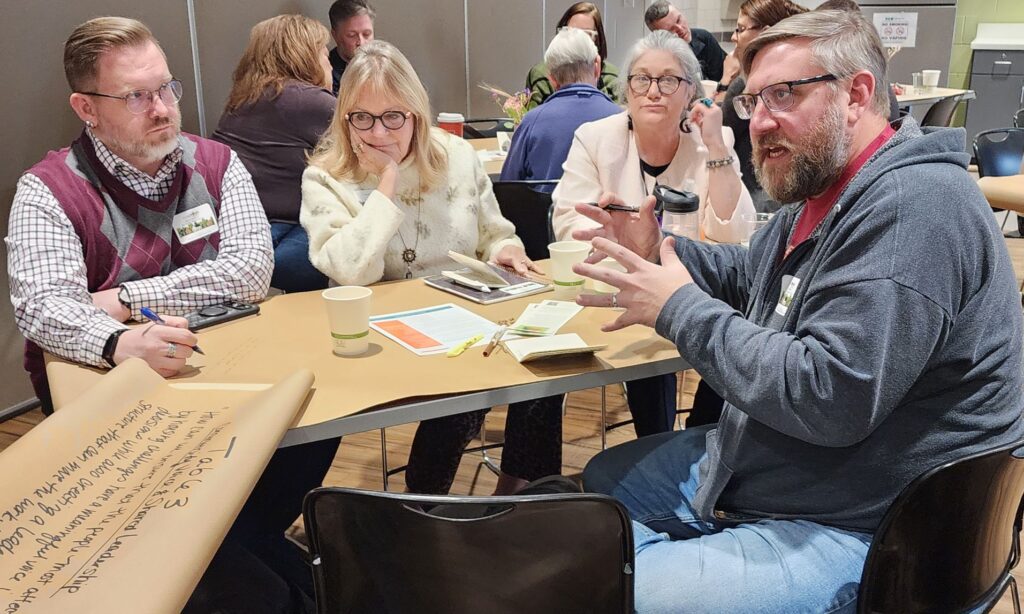
Community land trusts aren’t a silver bullet to the affordable housing crisis, but “it’s one tool in the toolbox,” she said.
Local attorney Elizabeth Geer-Fry talked about the stewardship offered to homeowners on land trust properties – before buying and during ownership. Many of the new homeowners are not just first-time homebuyers – but are first-generation homebuyers.
During three hours of discussion, the group meeting last week identified some steps needed to proceed with creating a community land trust, such as:
- Create an inventory of buildable land for housing in the city.
- Address the “elephant in the room,” that the two families who own much of the housing in Bowling Green need to be involved in the solution.
- Change the attitude that these people are our neighbors, but please, “not in my backyard.”
Planning will continue to create a community land trust program in Bowling Green. It was concluded that making more affordable housing possible will take cooperation and partnerships among local and regional nonprofits like Habitat for Humanity, faith-based organizations, Bowling Green State University, businesses, banks, government agencies and community members.