By LINDSAY-JO DOUGLAS
BG Independent News
Nationwide, 81% of women and 43% of men reported experiencing some form of sexual harassment and/or assault in their lifetime. It is statistically likely that everyone knowns someone who has experienced sexual violence. Because of this, The Cocoon is working to educate bystanders in how to help prevent sexual violence and how to support survivors if it has happened to them.
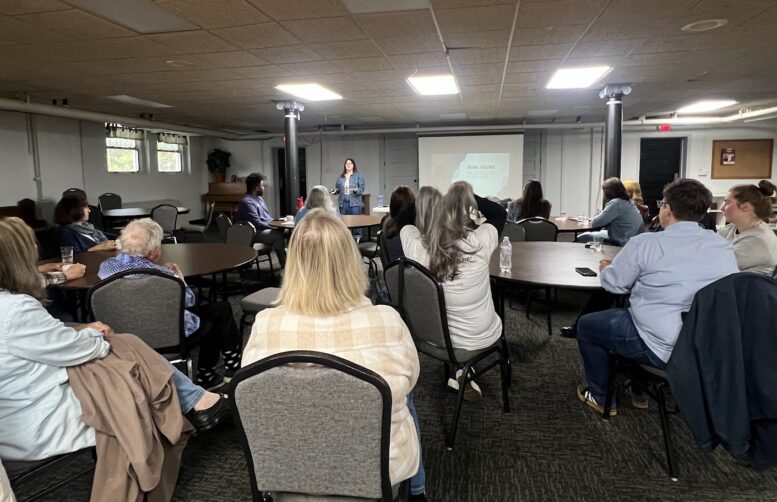
Piper Nelson, LSW, prevention educator for The Cocoon, began the bystander training by educating attendees on the services and resources The Cocoon offers, so they could properly refer to The Cocoon when necessary.
The Cocoon is Wood County’s only comprehensive domestic and sexual violence agency, which provides shelter and advocacy services to survivors of domestic violence, sexual assault, sexual harassment, sex trafficking, stalking, and adult survivors of childhood sexual abuse. The agency has a 24/7 hotline that can be reached at 419-373-1730 ext. 2 or https://thecocoon.org/. The Cocoon is also one of the few shelters in the nation that allows residents to bring their pets. All services are free of charge.
Next, Nelson defined sexual violence as “sexual activity when consent is not obtained or freely given to gain power and control over another individual.” She reminded everyone to use ‘FRIES’ when asking for consent, meaning that consent is “Freely given, Reversible, Informed, Enthusiastic, and Specific.” For example, someone cannot give informed consent if they are only asked to “fool around.”
Nelson also clarified the difference between sexual harassment, assault, rape, and abuse.
“Sexual harassment includes unwanted sexual advancements, comments, jokes, touches, etc. Sexual assault is usually specific to physical acts such as unwanted touching, kissing, groping, or other sexual behavior. Rape is the crime of forcing or compelling someone to have sex without their consent. Sexual abuse includes repeated acts of sexual assault.”
Nelson also taught attendees which signs may indicate physical sexual violence, which included changes in personal hygiene habits, though this may happen for a variety of reasons. Some emotional signs may include sleep disturbances, inexplicable mood changes, depression, or unexplained changes in behavior or personality. While these signs may also happen due to other factors, Nelson said the importance of bystander training is to make the space to ask the questions, “Are you ok?” “What can I do for you?” or “Is there anything you want to talk about?”
To safely intervene as a bystander, Nelson said to complete the following five steps:
- Notice an event or signs of sexual violence
- Recognize that action may need to be taken
- Decide to act
- If someone is concerned they are misinterpreting what they are seeing, they are encouraged to trust their gut. If something doesn’t seem right, it probably isn’t.
- Use the buddy system – ask someone else to help.
- Never put self in danger
- Figure out how to safely intervene
- Directly address the situation
- Create a distraction that can diffuse the situation
- Delegate action to friends, co-workers, supervisors, or police
- Take action
Nelson also reminded potential bystanders that they are not responsible for the final outcome of the situation. Bystanders should also not take it personally if a survivor does not respond as anticipated. If the survivor says nothing happened, it is encouraged to leave it at that. It is important that the survivor controls their own narrative.
Intervening in a high-intensity situation can be draining or triggering for some, so it is important to practice self-care after the event. People should first assess their immediate safety. They are then encouraged to be mindful of other triggers, share their feelings with a loved one or therapist, and take steps to prevent burnout.
After the training, Bowling Green Police Chief Justin White, who sits on The Cocoon’s board of directors and attended the event, said, “[As police chief], we want survivors to know they are supported – that we’ll take their cases seriously. We want to help them in any way we can.”
In efforts to fulfill its mission, The Cocoon offers bystander training to the community. If interested in learning more about bystander training, contact The Cocoon at https://thecocoon.org/contact/.