By JULIE CARLE
BG Independent News
This article is about suicide and Suicide Prevention Awareness Month. If you or someone you know needs support now, call or text 988, visit 988lifeline.org to chat online, or call the Wood County Crisis Line at 419-502-4573 (HOPE).
Dennis Gillan is on a mission to reverse current trends in suicides and reduce the stigma associated with getting help for mental health issues.
The founder and executive director of Half a Sorrow Foundation, who like so many people, has been “deeply touched by suicide.” After losing, not one, but two brothers to suicide, he spiraled into years of self-medicating with alcohol.
He found sobriety and in doing so, discovered purpose, first in working on a suicide prevention hotline in Chicago and then in starting the foundation.
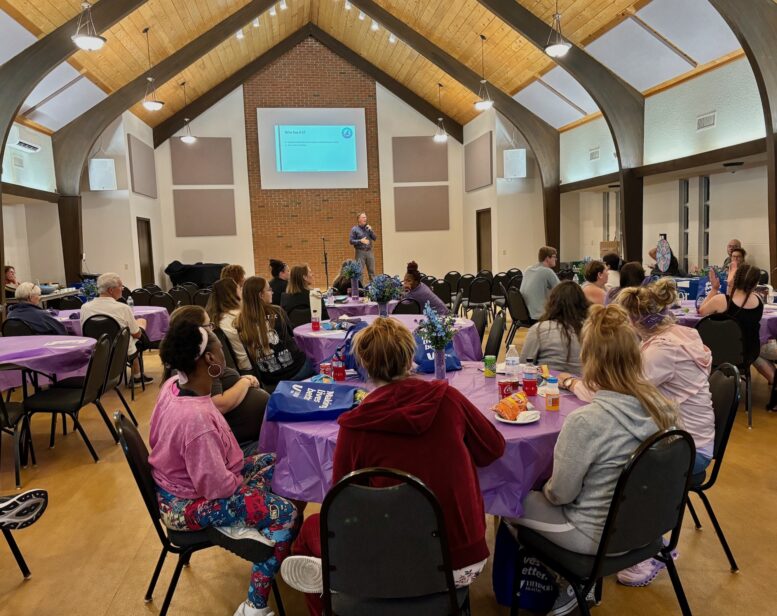
“We lose about 49,000 people a year to suicide. That’s one every 11 minutes,” he said at a recent Wood County Suicide Prevention Coalition event. “One is too many. Two will wreck you.”
While the numbers are staggering, personal loss transcends statistics, he emphasized.
In his foundation’s work, he helps workplaces, schools, organizations and communities deal with suicide risk, cope with loss, and foster connection through education and support.
“It’s a Tough Subject”—the name of his talk and a podcast he co-hosts—is based on the idea that talking about his brothers’ deaths and the stigma of mental health offers a therapeutic power.
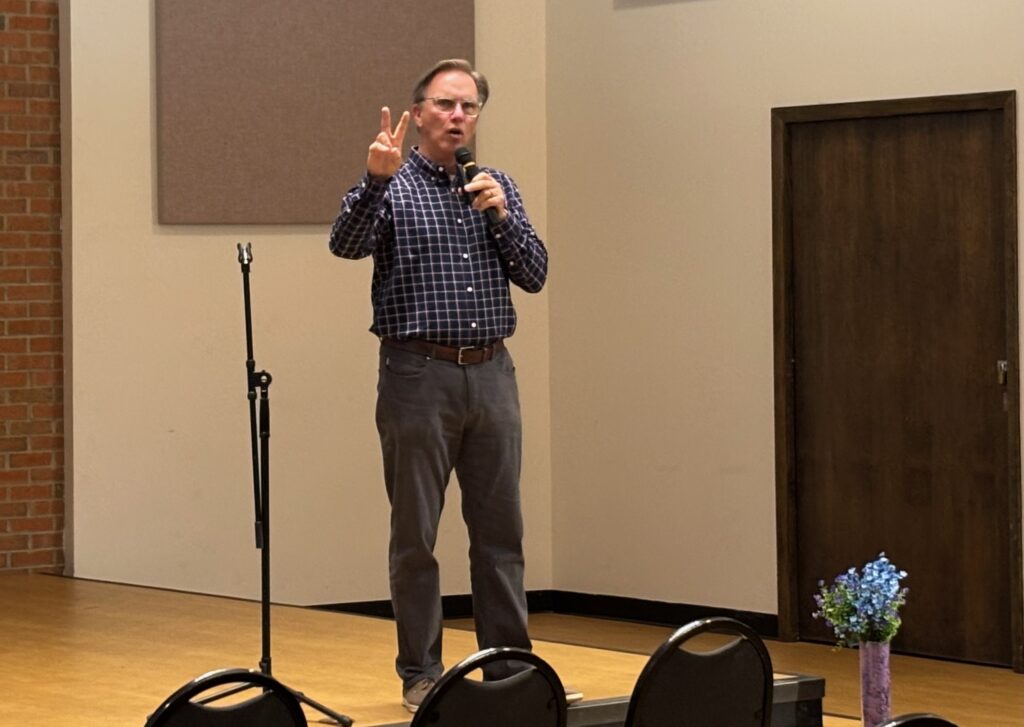
“Every time I talk about my brothers, I cut my sorrow in half, in half, in half, in half,” he said, referencing the name of his foundation. “Will I ever get to zero? No. There’ll always be a remainder, and that’s okay. That means I miss my brothers.”
Gillan named the foundation after the proverb: Shared joy is a double joy; shared sorrow is half a sorrow.” From that, he believed that sharing negative experiences with others, the pain becomes more manageable, provides emotional support and reduces the overall burden.
And so, he relayed the circumstances of his brothers’ deaths—the first when he was in college eight hours away from home, and the second when he was working four hours away. Both times his sister was the one who called him to come home.
When he returned to college after Mark died by suicide, “I just pretended it didn’t happen,” he said. “I could have gone to counseling, but I blew it off. Instead, I was going to self-medicate by drinking. It didn’t work.”
After he and his family buried Matthew, who was lost to suicide, Gillan headed back to Pennsylvania. During the four-hour car ride home, he had “a moment of clarity.” He realized he was depressed and that the alcohol, which is a depressant, was contributing to his depression.
“I decided to take a time out from drinking,” he said, noting that it had been 31 years, two months, and 10 days since he made that choice. With counseling and a new focus to speak about suicide prevention and mental health, “It was a great decision for me, and it worked out very well,” he said
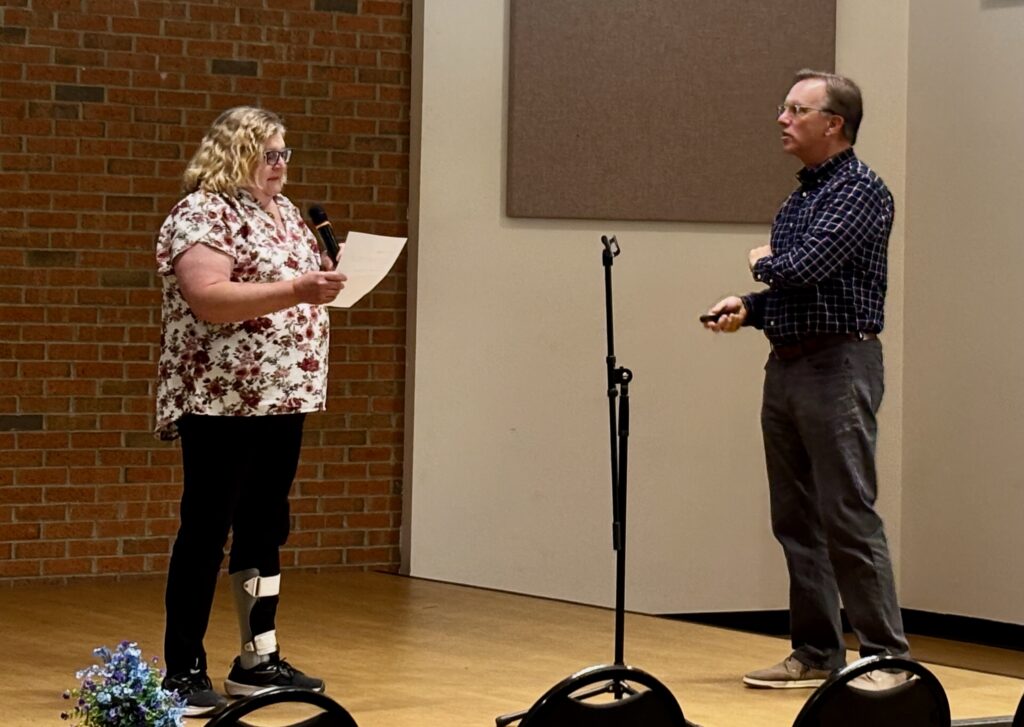
As part of Gillan’s presentation, individual audience members joined him on stage and contributed to the message of hope and help.
Representatives from the National Alliance on Mental Illness (NAMI) of Wood County, Wood County Health Department, Unison Health, Harbor, and Wood County Alcoholism, Drug Addiction and Mental Health Services talked about the mental health resources available in Wood County.
Each mental health professional also read a statement taken from Reddit posts about coping with suicide loss. The collective group provided the audience with immediate, actionable steps they could take to find support, such as by calling or texting 988, visiting 988lifeline.org to chat online, or calling the Wood County Crisis Line at 419-502-4573 (HOPE).
By modeling vulnerability, Gillan and the other speakers created a safe space for others to consider their own mental health and the well-being of those around them, potentially leading to increased engagement with local mental health services.
“The power of community and connection amplifies positive emotions and reduces the pain of suffering,” Gillan said.