By JULIE CARLE
BG Independent News
For 45 years, the Montessori School of Bowling Green has built its reputation on educating the whole child through self-directed learning, where children develop mutual respect, personal responsibility and a passion for learning.
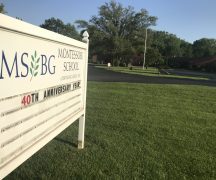
What was founded in 1980 by Marie Pendleton as a half-day preschool in the former Nazarene Church (and now the Simpson Garden Building), has grown into a school that welcomes toddlers through ninth graders to the campus at 515 Sand Ridge Road.
The 45th anniversary gives the school reason to celebrate “Then and Now,” and acknowledge what’s changed and what’s the same over the school’s nearly half a century.
Advancement Director Kaitlan Sewell has been researching the history and sharing old photographs and new photographs, showing the similarities and the changes over the past 45 years on the school’s Facebook page.
“There has been a lot that has stayed the same,” said Executive Director Bev Bechstein. The teachings of Maria Montessori are still foundational to the school. “When you think about the materials and the pedagogy that she designed, it’s timeless.”
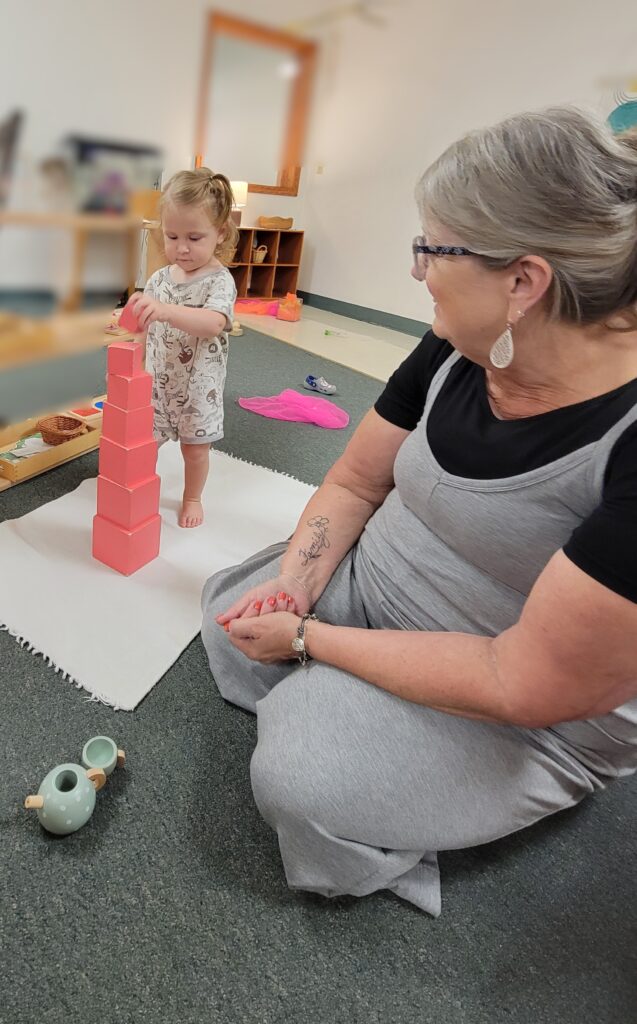
The school still uses materials she designed – the iconic (in Montessori circles) pink tower for developing visual discrimination of size, knobbed cylinders to refine motor skills and visual perception, sandpaper letters that are used for early reading and tactile learning. and golden beads for learning the base-10 number system in mathematics.
“The way we teach here is so individualized and so driven to the child as a whole,” said Bechstein, who was an intervention specialist and an administrator in the public school system for 20 years before taking the executive director position in 2010. “I have nothing against public education, but they don’t have the same philosophy, the same resources or the same pedagogy.”
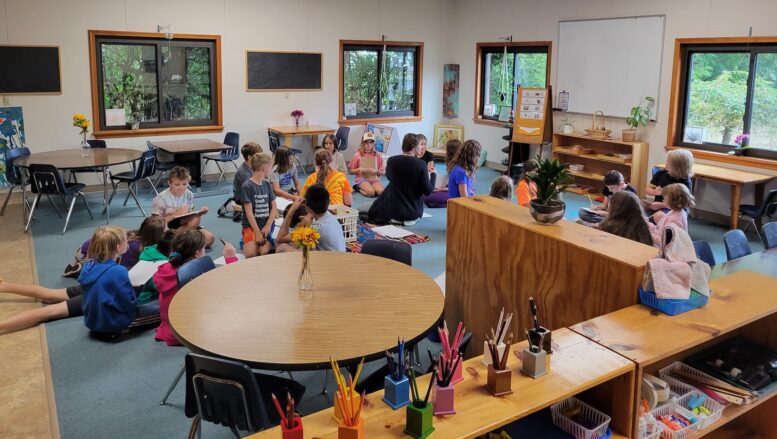
Every day at Montessori, the children “get their individual needs met and grow at their own pace,” she said, which can be faster or slower than the child next to them. “We follow their interests so that it keeps them engaged in what they’re doing and excited to be here.”
They are learning mutual respect, personal responsibility and a passion for learning. Peace education and character education are also integrated throughout the curriculum.
There have been some changes over the years, mostly in the growth of the programs, with the addition of a toddler program seven years ago and the middle school program through ninth grade in 2013, said Bechstein.
Adding the toddler program in 2018 “was a real coup,” for the school, she said “Toddler programming is definitely a need in this community, so we added that for 18-month to three-year-olds.”
Starting with seventh and eighth graders, the middle school program was relaunched after an earlier pilot program was dropped, and eventually added a ninth grade to conform to the three-year cycle of the other classrooms.
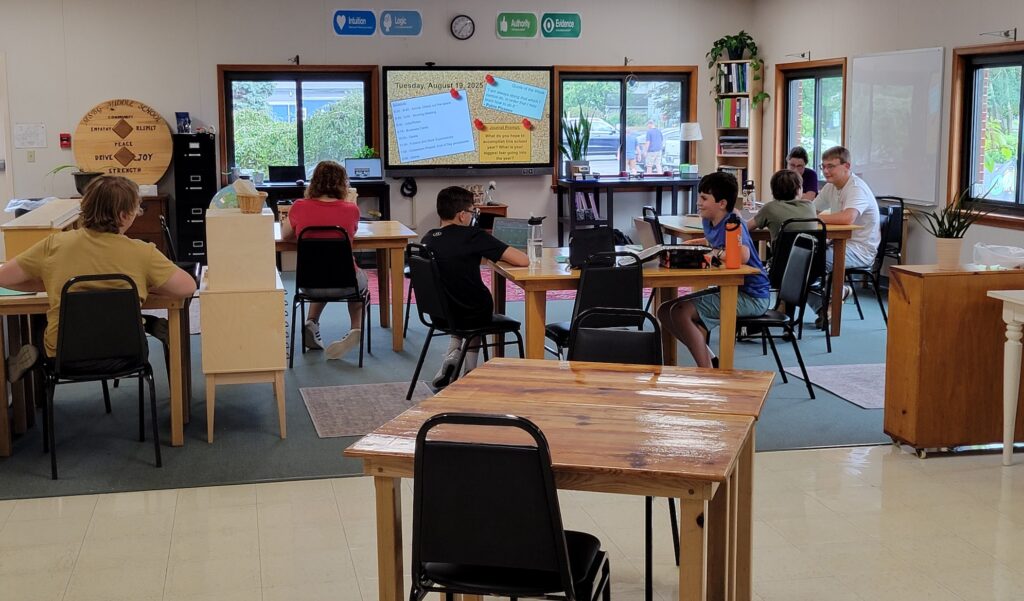
“We started with one (middle school) student and now there are nine in the program,” she said. “We hope to get into the double digits” by maintaining strong enrollment in the toddler through upper elementary classrooms.
The secondary program is different from the toddler through upper elementary curricula. The middle school curriculum becomes research and action-focused, “getting them ready for getting out in the world,” she said.
They become involved in more community service and entrepreneurial projects and learning about local government, health and safety. They have created their own coffee shop and now have plans to expand into a screen printing business.
Jeremy Rober, the middle school teacher, incorporates cooking and travel into cultural lessons. The students get out in the community and beyond. They plan to go to New York in the spring.
The curriculum follows Maria Montessori’s focus of giving back to the community and serving our earth and environment. According to Bechstein, Montessori called it Erdkinder, or children of the earth. The idea is to promote care of the earth, people and the environment. In addition to the more traditional reading, writing, math, science, biology, and botany, the lessons are integrated with activities such as gardening, raising animals, conservation and recycling.
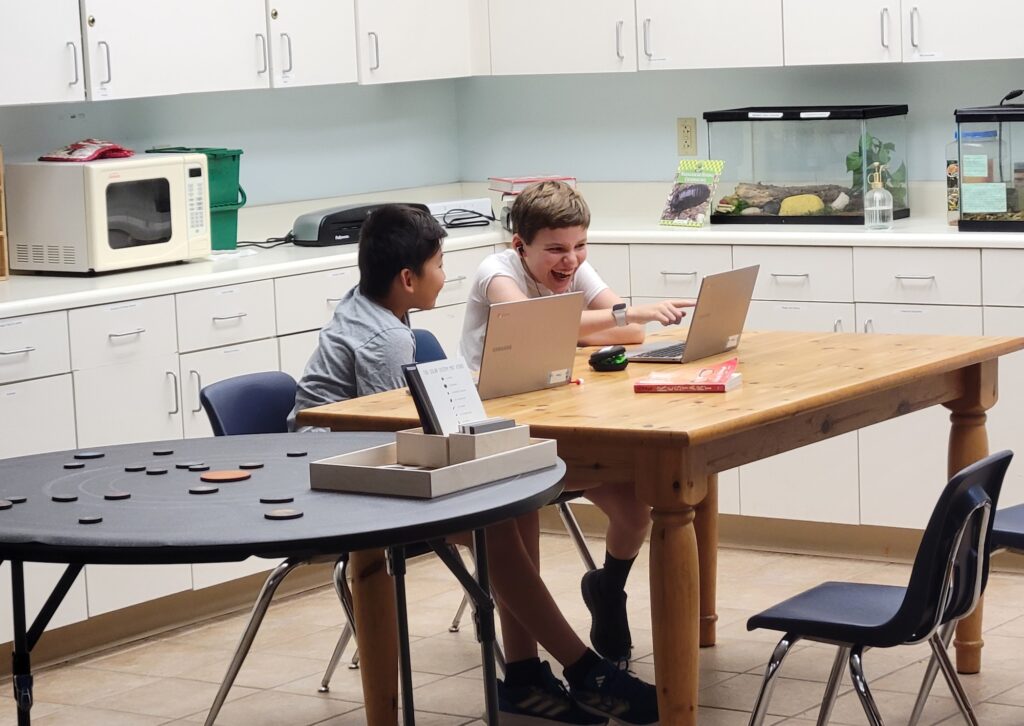
All in total, enrollment at the school is about 130 students, with room for growth in the lower elementary and middle school programs. Usually, with two teachers in the room, they maintain a 12:1 student-to-teacher ratio in the elementary classrooms.
A look back
“We started as a little tiny preschool in a church, ages three to six,” Bechstein said.
The preschool opened in 1980 as the Nazarene Montessori School and then leased space in the Greenwood Center as the Montessori School of Bowling Green before moving into the new Sand Ridge Road building in 1992.
“They had preschool for the longest time before they started the (lower) elementary program (first through third grade). And then they added the upper elementary program (fourth through sixth grade). And then we stayed preschool through upper for a long period of time before adding the middle school. As the program grew, the building was expanded twice, with the final addition put on in 2004.
The school was the first Montessori school in Ohio to become accredited by the American Montessori Society and is a chartered, nonpublic school through the Ohio Department of Education and Workforce, Bechstein explained. The school receives “a very nominal amount of public funding, and with that comes hoops we have to jump through,” Bechstein said.
Nearly 20 years ago, the school became an autism scholarship provider. They added the Jon Peterson Special Needs Scholarship in about 2013 and EdChoice eight years ago.
Only a handful of students participated in the scholarship programs early on. However, in the past three years, the number of students accessing the vouchers has increased. According to Bechstein, currently more than half of the students have vouchers.
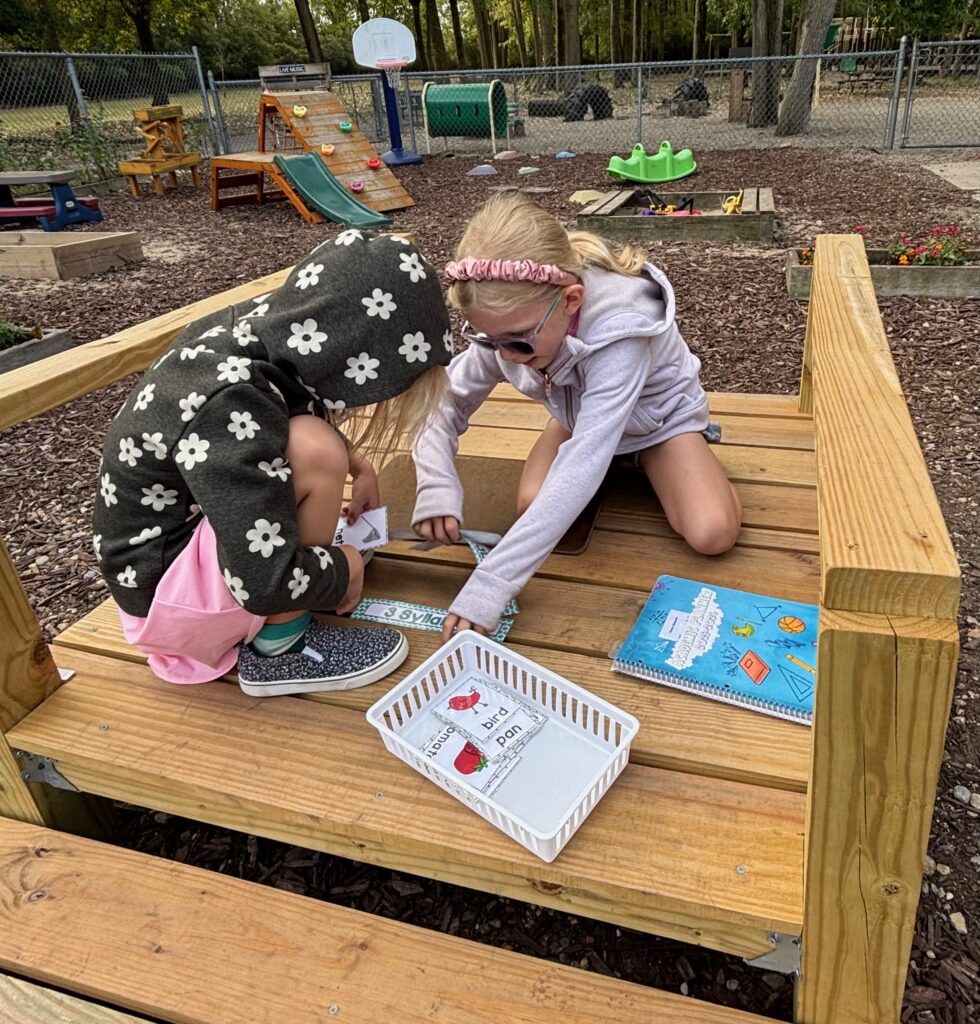
Access to the state’s scholarship program requires the school to test the students, which is different from Montessori’s usual practice of assessing students’ progress.
They searched for testing materials that aligned as closely as possible to Montessori philosophy. “Testing is not necessarily one of the constructs we follow,” she said. “We wanted not to stress our kids too much and still meet that requirement for the state. We did a lot of progress monitoring, so we just had to switch gears a little bit to the standardized testing.”
“It’s really changed in recent years, but we try to make it as worthwhile of an experience for them and help to guide the teacher’s instruction,” Bechstein said.
The tradition continues
“Sometimes I swear, magic is happening here. Just seeing the teachers work in the classrooms, it’s all about wanting to meet the child where they’re at, and treating them as an individual, and at the same time we’re educating them as a whole,” Sewell said.
The “Then and Now” theme is part of the school’s annual campaign. “About 85% of that goes right back into our classrooms,” she said.
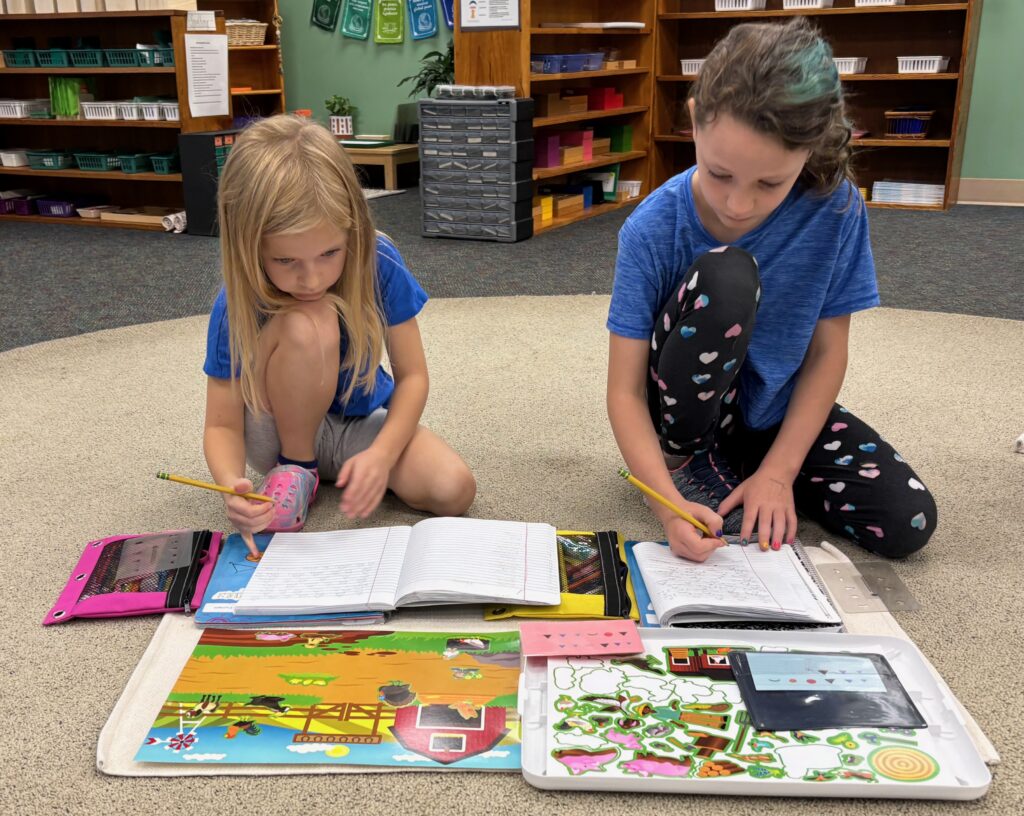
“I am still in awe when I go into the classrooms and think about all that’s going on and how it works so beautifully in all the classrooms,” Bechstein said. “As we think about the 45 years of inspiring lifelong learners, the longevity, the continuity and the stability of the program and of the school, that is a very high testament to the school, the pedagogy and the philosophy.”