By JAN McLAUGHLIN
BG Independent News
At a time when trust in government is at an all-time low, Bowling Green is still the place where residents and businesses can count on their community.
When the wind blows a branch into the street, people call the city. When a storm knocks out power, people look for local crews. When a sidewalk is impassable, citizens turn to city staff for a solution.
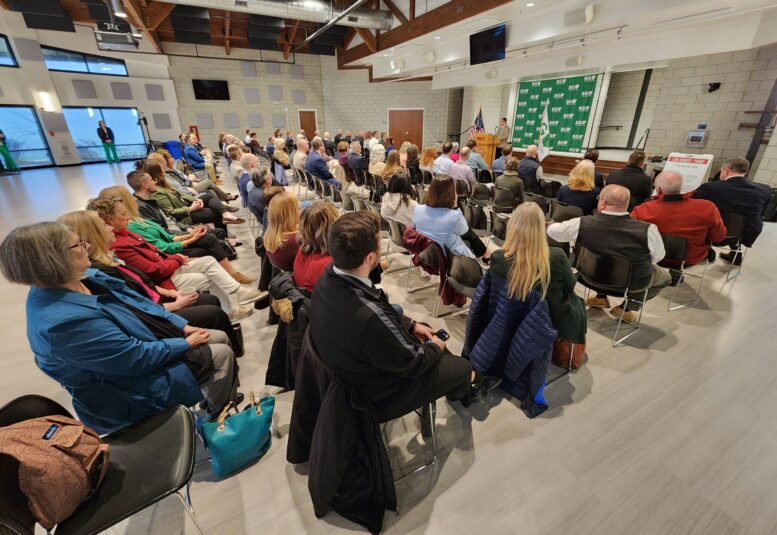
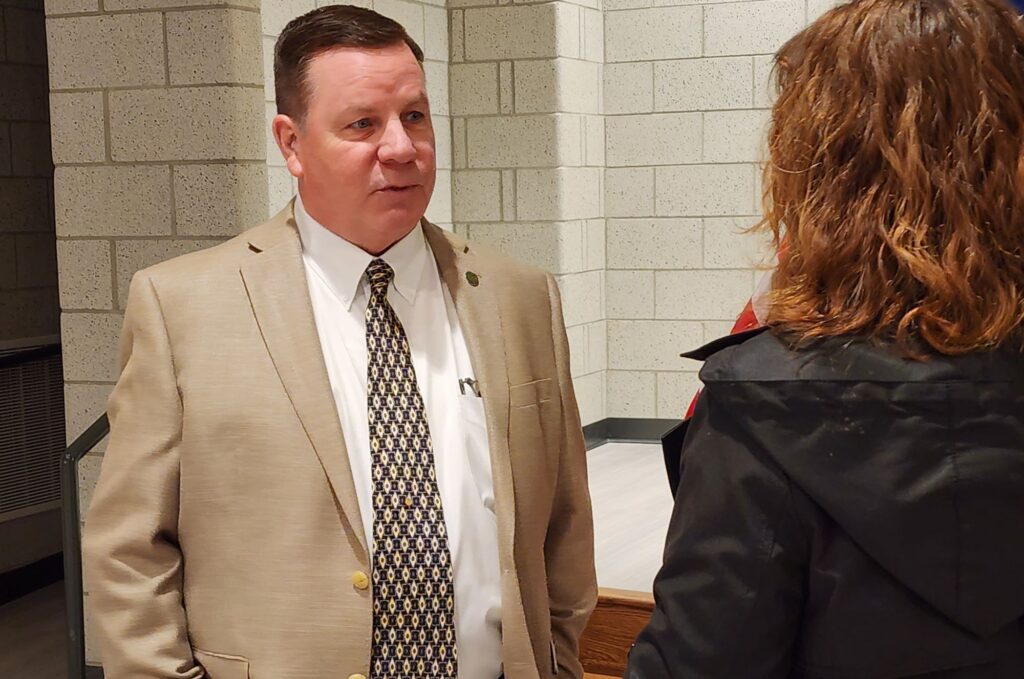
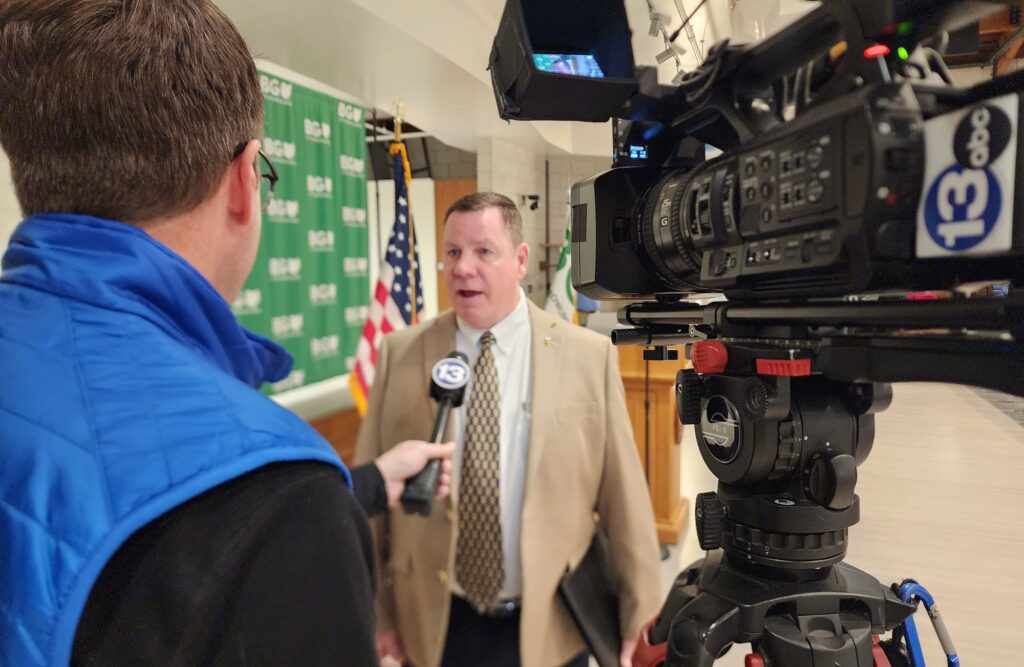
Mayor Mike Aspacher talked about Bowling Green’s reliability and responsiveness during his annual State of the City address on Thursday morning.
It is this shared sense of responsibility that turns policies into progress and resources into real support, Aspacher said. The strength of Bowling Green has always come from people who are willing to serve and remain invested in their community, he explained.

“Bowling Green works because people participate. They participate by serving on boards and commissions. They participate by engaging in planning processes. They participate by asking questions, sharing concerns, and offering ideas,” the mayor said. “They participate by looking out for their neighbors and shared spaces. And they participate by voting thoughtfully and consistently on issues that shape the community’s future.”
Celebrating 250 years of America this year will give communities like Bowling Green the chance to show what democracy looks like in practice, Aspacher said.
“To reinforce the idea that our democracy is continuously shaped by community input, strengthened through participation, and sustained by people who show up, work together, and invest in the place they call home. Democracy doesn’t sustain itself automatically. It depends on people being involved and actively participating,” he said
Even when the national conversation feels distant or divisive, democracy is strongest and most visible at the local level, where government directly intersects with the daily lives of residents, the mayor said. This is where decisions are made close to home and their impact is felt every day.
Local governments play a critical role in protecting fairness and inclusion. By ensuring access to services, upholding transparency, and creating opportunities for all residents to participate, local government helps ensure that democratic ideals extend into practice.
“Everyday interactions, such as applying for a permit, attending a community event, or visiting a local park reflect a system built on trust, responsibility, and service,” Aspacher said.
Because local government is close to the people it serves, voices are heard, and decision-makers remain directly accountable to the community.
“You see it in the city council chamber and at school board meetings. You see it in planning commission hearings and neighborhood conversations. You see it when residents attend a public meeting, send an email, make a phone call, or simply show up to be heard. You see it when people disagree — sometimes strongly — and stay respectfully engaged with one another and with their community.”
“We are a community that values engagement, expects transparency and recognizes that progress is rarely the result of a single decision, but rather the result of many thoughtful choices made over time.”

There is no question, the mayor said, that the national political climate today can feel loud, polarizing and exhausting. Many people express frustration with the tone of national discourse and concern about the direction of broader institutions.
“I understand. I also have concerns about the current trajectory of our government institutions,” Aspacher said. “But here in Bowling Green, the work of local government looks different – and it feels different. At the local level, our focus is not on political opinion. It’s on responsibility.”
And those responsibilities transcend any political differences, he said.
“Fire trucks do not respond faster based on party affiliation. Snowplows do not clear streets differently based on political belief. Clean drinking water, reliable utilities, safe neighborhoods, and well-maintained parks are not partisan concepts. They are all shared expectations.”
All of it is grounded in the same belief: that democracy, when practiced locally, is not only resilient – it is powerful.
Aspacher recognized the nearly 330 city employees responsible for providing utilities, public works, IT, planning, parks and safety services.
“They maintain infrastructure, respond to emergencies, treat and deliver water, manage utilities, support housing programs, care for parks, process permits, maintain equipment, and ensure that the city’s daily operations function smoothly.”
In 2025, the city made significant investments across water, wastewater, and electric systems. These included upgrades to Carter Park ballfield lighting, construction work at the water treatment plant’s low service pump station, and major improvements to water infrastructure along South Main Street.
The city also moved forward with critical projects at the Water Pollution Control Plant and began a comprehensive electric distribution study to identify future system needs before problems arise.
Aspacher noted how planning plays a critical role in shaping how Bowling Green grows – setting clear expectations for development, ensuring that new investment fits within the character of existing neighborhoods, and creating a predictable environment for businesses and property owners. Thoughtful planning provides clarity, and helps ensure that growth strengthens the community rather than strains it.
Economic development in Bowling Green continues to be guided by a simple, steady principle: “take care of what we have and prepare for opportunity,” the mayor said. Rather than focusing solely on recruitment, the city has invested significant time and effort into business retention, recognizing that the majority of economic growth in communities comes from existing businesses choosing to stay, expand and reinvest.
Looking ahead, the city remains focused on reinvestment, responsiveness, and downtown vitality, ensuring that Bowling Green is prepared when opportunities arise and is intentional about how growth aligns with infrastructure capacity and community values.
“Economic development is not about chasing trends. It is about creating conditions for long-term success,” he said.
The mayor also talked about the city’s safety services. The Police Division has renewed its emphasis on community policing, encouraging officers to spend more time out of their vehicles and engaging directly with residents and businesses.
“This approach is rooted in a simple belief: trust is built through presence and relationship,” he said.
Significant investments in training well beyond state requirements and upgrades to body-worn and in-car camera systems will continue to reinforce accountability, transparency, and preparedness, he added.
As for the BG Fire Division, call volume rose again this past year, with the majority of responses related to medical emergencies. The city continually studies call volume, response times, and service models – not because there is a crisis, but because planning ahead is how crises are avoided, Aspacher said.
Last year, city residents voted to support an increase in income taxes for fire and EMS equipment upgrades and to build two new fire stations – one on Newton Road near the Community Center and the other on Campbell Hill Road at Carter Park, near the water tower.
These locations will allow the Fire Division to reach approximately 90% of the city in four minutes or less, the mayor said. “We recognize that our residents and businesses put their trust in us during some of life’s most challenging moments and this change allows our Fire Division to uphold that trust by arriving quickly, with adequate equipment and professional training, to support those in need.”
Upon completion of the new fire stations, the police station in downtown Bowling Green will be renovated.
The community also showed its belief in shared responsibilities by passing a school operating levy last year. This decision ensured the continuation of academic programs, arts, athletics, transportation, and essential services while avoiding significant reductions that would have reshaped the district.
Strong schools are essential to a community’s foundation, Aspacher said. They prepare the next generation, strengthen neighborhoods, contribute directly to economic vitality, and help ensure Bowling Green remains a place where families choose to live, work, and grow.
In Bowling Green, education extends beyond K-12 school, the mayor said.
“We proudly embrace and celebrate being a college town. Bowling Green State University brings energy, innovation, and a distinct identity to our community.” In recent years, Aspacher added, BGSU has demonstrated remarkable momentum with increasing enrollment, investing in campus facilities, and launching innovative academic programs that are aligned with today’s workforce demands.
The mayor also pointed out that a community is defined not only by its infrastructure and institutions, but by the spaces where people gather, connect, and build relationships. One of those new places are the outdoor pickleball courts at the Community Center – the result of a community effort.
Parks and recreation are sometimes described as niceties, but in Bowling Green, they are essential community assets, the mayor said. They support physical and mental health. They create spaces for connection. They strengthen neighborhoods. And they contribute directly to the character and identity of the city.
This year, the Parks & Recreation Department will again be seeking community input as it updates its five-year master plan. This planning process ensures that decisions about facilities, programming and investments will reflect the needs and values of the people who use them. And later this fall, residents will have the opportunity to consider a parks and recreation funding issue on the ballot.
Also last year, the city adopted a Climate Action and Resiliency Improvement Plan. This plan provides a locally informed framework for strengthening city operations, improving resilience to extreme weather, and guiding long-term decision-making in a way that reflects Bowling Green’s values and responsibilities.
In closing, Aspacher offered a pledge to city residents, businesses, students and community partners. “We will continue to approach the business of running local government with integrity, professionalism, and the trust you place in us.”