By DAVID DUPONT
BG Independent News
Earlier this year the BGSU College of Musical Arts lost a dear friend and supporter, Dottie Hansen. A graduate of the college, she and her husband, DuWayne, a former chair of the Department of Music Education, founded the Hansen Musical Arts Series in 2014.
The series has brought world-class musicians to campus both for free performances as well as events on campus and in the community. As long as they were able, the Hansens were on campus for the event. Despite the passing of Mrs. Hansen, that series, founded in 2014, continues.
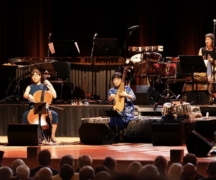
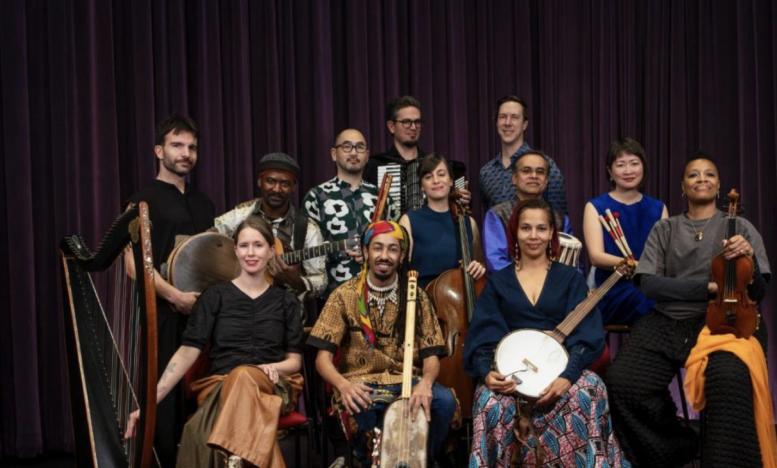
Next week, the Silkroad Ensemble, directed by Rhiannon Giddens, will bring its program “Sanctuary: The Power of Resonance and Ritual” to Bowling Green. On its website, the ensemble explains: “In this program, Rhiannon and the Ensemble explore how we can experience music to better understand our world, find comfort, process loss and a changing environment, and rebuild community based on our own humanity.”
“Sometimes it feels like you’re flying. It just feels a little bit like you’re a superhero.” — Mazz Swift
Ensemble member Mazz Swift, a violinist, vocalist, and free-style composer, in a recent telephone interview reflected on the experience of performing with the international cast of virtuosos and composers. Calling them all stars doesn’t do Silkroad justice, Swift said. “Sometimes it feels like you’re flying. It just feels a little bit like you’re a superhero.”
While the March 10 performance is sold out, the community will have the opportunity to interact with the cast of global performers.
The residency will include:
- Open Rehearsal, Kobacker Hall, Moore Musical Arts Center, Sunday March 8 at 11:30 a.m. to 1 p.m.
- Silkroad @ The Library Wood County District Public Library, Sunday, March 8, at 3 p.m. Silkroad musicians, Swift, and cellist Karen Ouzounian will present a public youth program that includes music and discussion. Kindergarten through middle school students, parents and caregivers are welcome.
- Discussion with Rhiannon Giddens and Community Jam, in Bryan Recital Hall, Moore Musical Arts Center, Monday, March 9 at 7:30 p.m. Click for free registration.
The Silkroad Ensemble was founded in 2000 by musical superstar Yo Yo Ma to evoke the ancient trade routes through music.
Other performers, most of whom also compose, coming to Bowling Green are:
- Shawn Conley, a bassist, who also serves as principal bass of the Hawaii Symphony and performs with The Knights chamber orchestra.
- Sandeep Das, who plays tabla and began his career at 17 performing with Ravi Shankar.
- Haruka Fujii, percussionist, a noted orchestral soloist..
- Niwel Tsumbu a guitarist and singer who grew up with the hip-swinging Soukous music from the Democratic Republic Of The Congo. His music blurs the boundaries of African, classical and jazz music.
- Multi-Instrumentalist Francesco Turrisi blends Irish and Mediterranean traditional music. He studies connections between southern Italian traditional music and Arabic music.
- Japanese flutist and percussionist Kaoru Watanabe’s work is rooted in traditional Japanese performing arts and infused with experimental and improvisational elements.
- Guest artist Mauro Durante, a violinist and percussionist is an inheritor of the folk roots of his native Salento, in Italy’s Puglia region.
- Guembri (a three-string lute) specialist El Mehdi Nassouli who learned from a family steeped in Gnawa culture of northwestern Africa. He has traversed his native Morocco for 20 years as part of his musical initiation as well as touring the world to celebrate the fusion of world music.
Swift first worked with Silkroad during a residency in 2017 that gave them a crash course in the mission of Silkroad both performing the global music and teaching others about it.
Most recently they toured with the ensemble’s project “American Railroad.”
Giddens moves ensemble in a new direction
Giddens assumed the directorship in 2020. The pandemic, Swift said, gave the ensemble a chance to consider how it wanted to proceed. It formed a world artist committee, of which Swift is a member, to strengthen the sense of collaboration.
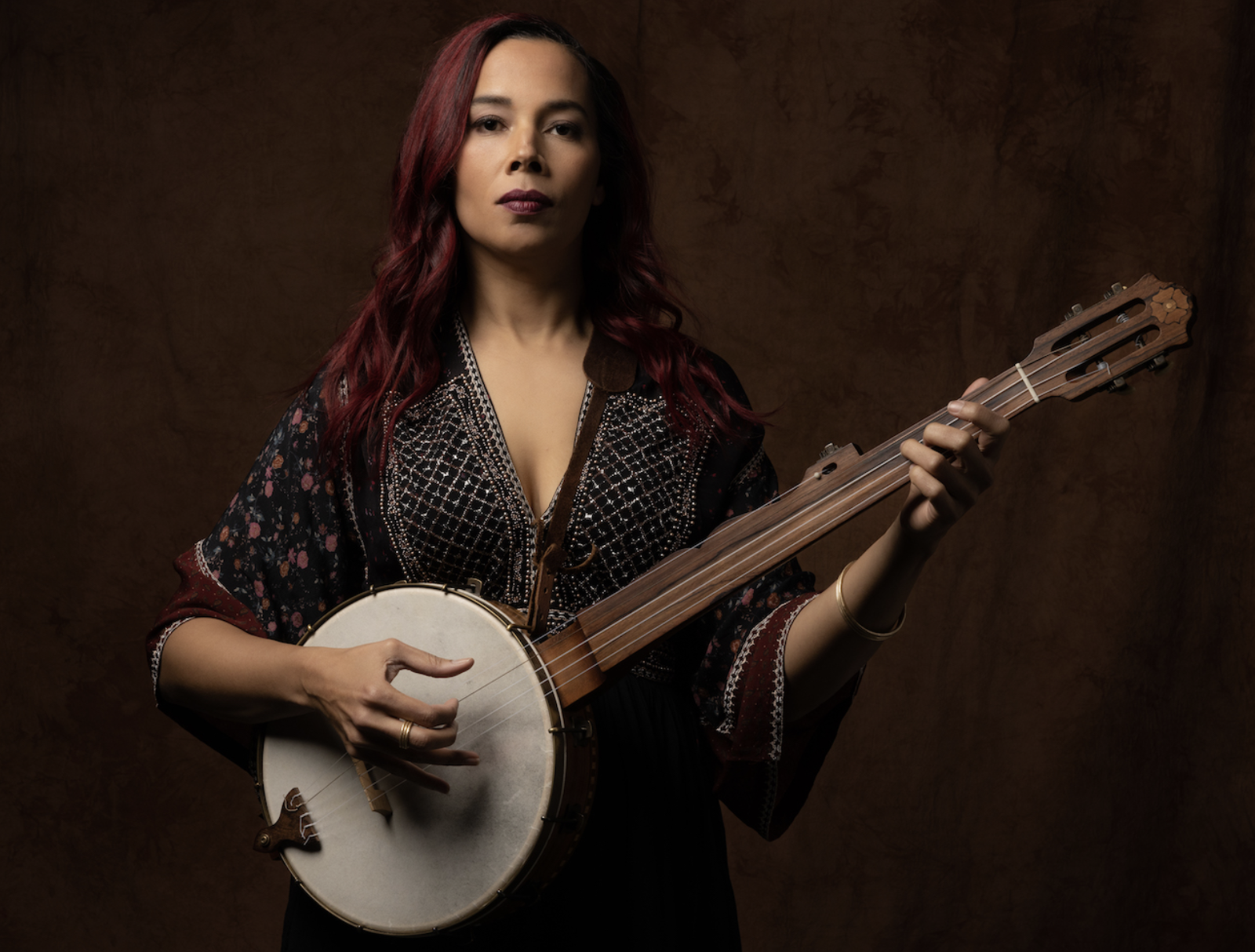
Giddens decided that rather than bring the ensemble together to polish an already determined program, the music and programs would be created through the interaction of the musicians.
“Rhiannon really wanted to get us together and have us start learning from each other … creating a program from scratch,” Swift said. “So we bring pieces of ourselves, pieces of things we want to share with the group, and we just spend more time experimenting with a sort of trance like repetition.”
All this comes together to shape an evening-long piece akin to an orchestral performance that has blossomed from seeds contributed by each of the members.
“I truly feel like we’re doing contributes to making the world a better place.” — Mazz Swift
Swift continued: “I play with all these amazing musicians. … It’s really powerful. From the inside there’s this deep sense that we are modeling for the world what it means to be in relation with people who are just really, really different from you. I truly feel like we’re doing contributes to making the world a better place.”
Swift’s quest to find their own voice
This will be a return trip to BG for the Swift. They performed at the 2011 Black Swamp Arts Festival both as a solo act and as a member of Howard Fishman’s traditional jazz band.
At that time, as MazzMuse, they were exploring electronic sounds with extensive use of loops. That was one wat station on their journey to find their own voice.
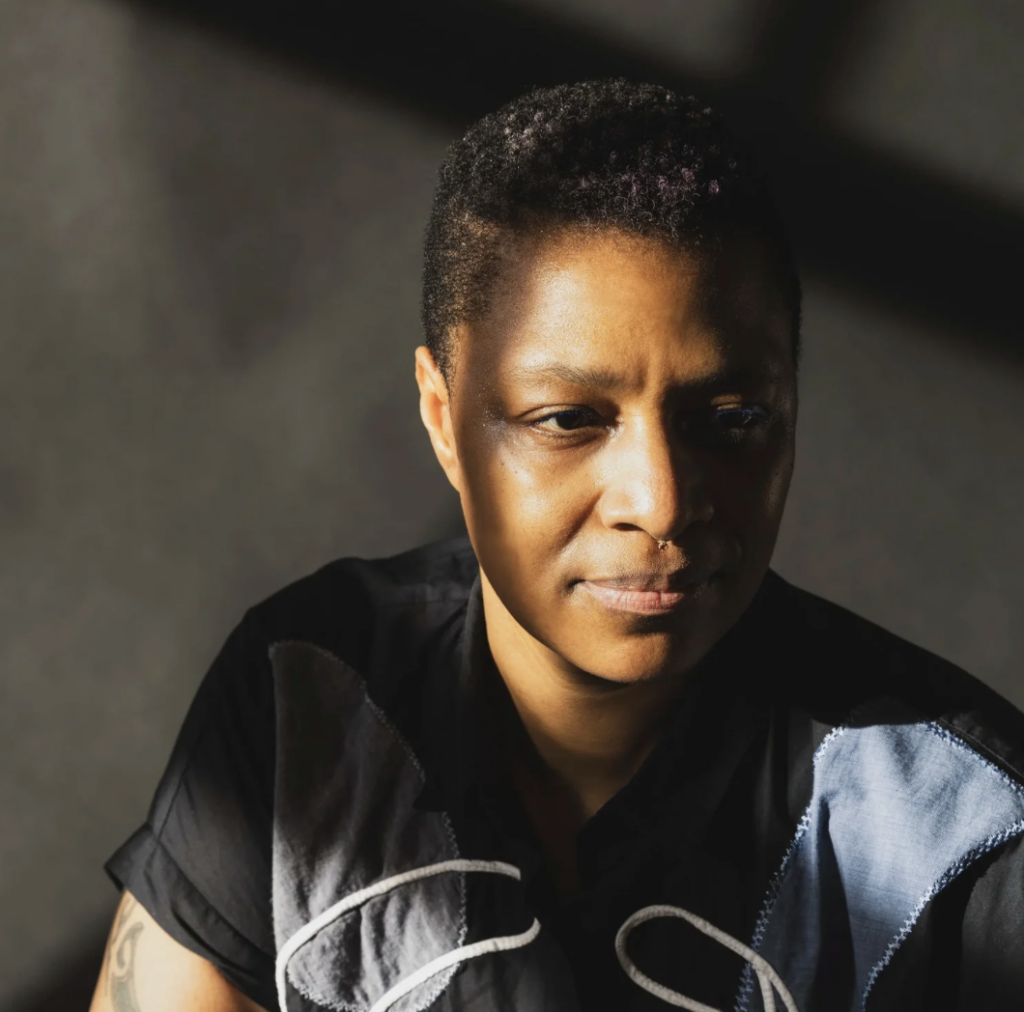
That journey started when Swift was a 5-year-old who proudly declared they were a violinist, except they had not yet started playing the instrument. Two years later their parents got them an instrument.
There was something “visionary” about the way the sound resonated with them, Swift said. “I fell in love with it immediately and I showed in a talent for it right away.”
In time that would take them to Juilliard where they bumped up against the expectations of classical pedagogy. “I left in order to figure out how to do it on my own.”
That proved to be a struggle. “Every time I played the instrument, I felt like I sounded like a thing that I didn’t want to sound like,” Swift said. “It either just sounded bad or it sounded like a classical musician trying to sound cool, you know? … It discouraged me, and I actually quit the violin for a couple of years. … I just put it down and never picked it up because every time I thought about picking it up, it hurt inside.”
Swift worked with tattoo and in body piercing artists in New York. Then they left the city to live on a farm. They learned how to construct buildings, lay brick, take care of goats, and garden. “So much cool stuff,” Swift said. “It got me thinking about how to be an authentic person and be a person first, and then let that inform my musicality.”
Swift played music with others on the farm. “They did all improvised music, and it wasn’t jazz, so that was like another sort of layer of not knowing what to do, that was taken away. It was just make sound, make whatever sound you want to make, and make music,” they said. “It actually kind of became like a religion for me in a way, this idea of improvisation and self-expression, but like authentic self-expression.”
The music just flowed. “It became less about like trying to mimic something and more about trying to become more of the musician that I am naturally.”
That ethos melds with the ethos of the Silkroad Project. The ensemble adds yet another dimension. The ensemble’s concept is to come up with new, contemporary sounds that are deeply rooted in musical traditions.
Swift pointed to Giddens who has explored the banjo’s roots in Africa, and now takes that to create her own distinct sound.
It reflects a Ghanian belief. “It’s remembering your past, acknowledging it in order to move forward,” Swift said. “Know where you’re coming from so that you know where you’re going. That’s like a beautiful, summation of what the ensemble is doing. They’re taking deeply rooted pieces of music and sounds and approaches to music and making something new.”