By LINDSAY-JO DOUGLAS
BG Independent News
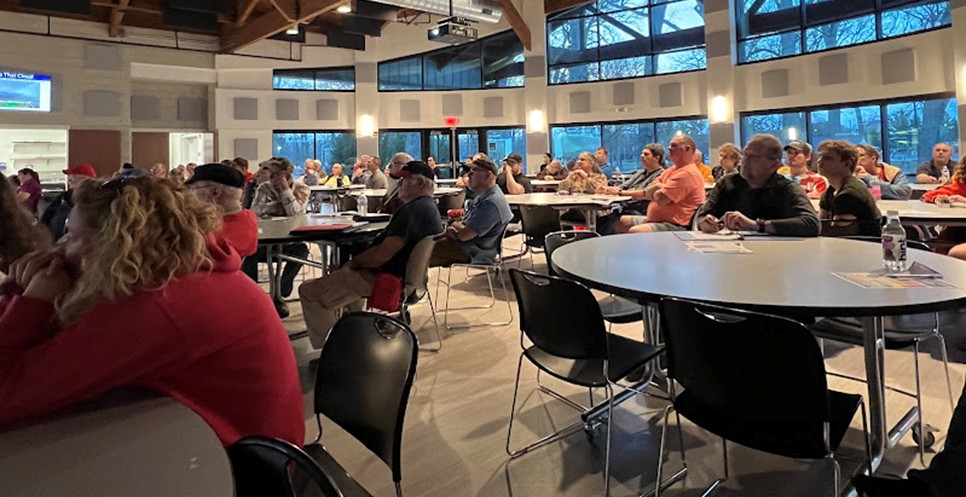
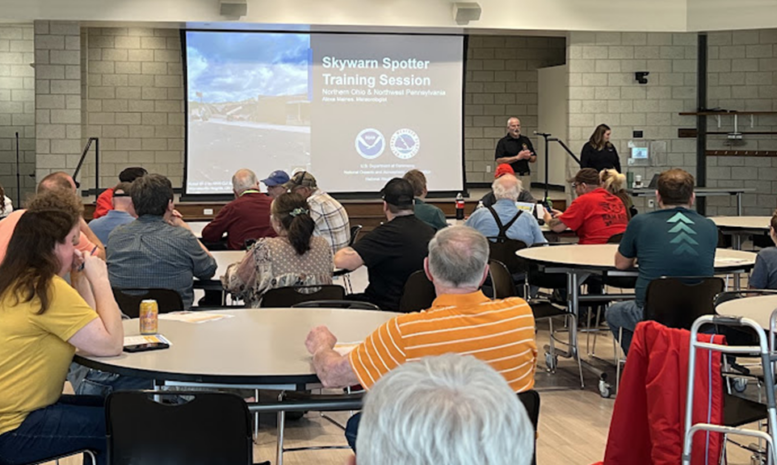
Hours before a storm rolled into Wood County on Tuesday, citizens gathered for the SKYWARN weather spotters training. This two-hour program educated participants on different types of severe weather, the hazards that come with each, and how to report harsh conditions and damage to the National Weather Service.
The mission of the NWS is to “provide weather, water, and climate data, forecasts, warnings, and impact-based decision support services for the protection of life and property,” while its vision is to have a “weather-ready nation.”
Jeff Klein, director of the Wood County Emergency Management Agency, said that Wood County has some of the highest SKYWARN training attendance in the state. He noted that 91 people had signed up prior to the training, with more people signing up at the door.
Dave Steiner said that he was taking the course because he has a “general interest” in the weather. He was a certified spotter “a few years ago” and came “to get recertified.”
Pam Leid has been a certified spotter since 2000 and recommends everyone take the training. “It’s two hours every two years, it’s worth it.” When asked if there was a sense of community amongst the existing spotters, Leid replied, “Oh, yeah.” She then emphasized, “We don’t chase – we spot,” and said that the Home Depot parking lot is a “hot spot” for weather-watching.
Alexa Maines, meteorologist for NWS – Cleveland, first reminded attendees of all ages, including first responders and amateur radio enthusiasts, that weather spotting can be dangerous. Everyone was encouraged to prioritize safety over reporting.
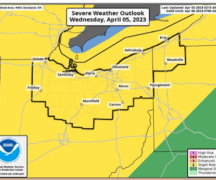
Maines then went through the process of reporting weather, from a five-day outlook to the aftermath of severe weather. She also discussed the difference between a “watch” and a “warning.”
A severe storm “watch” means that “all the ingredients [for severe weather] are present.” During this time, people should review and discuss emergency plans, check supplies, and prepare their shelter. When a severe storm “warning” is announced, “people should take action,” because there is imminent danger to life and property. Typically this means people are to find shelter and stay in place until the severe weather passes.
Maines noted that during a tornado, people should not take cover under an overpass. “The winds can actually pick up in this area,” creating a more dangerous situation.
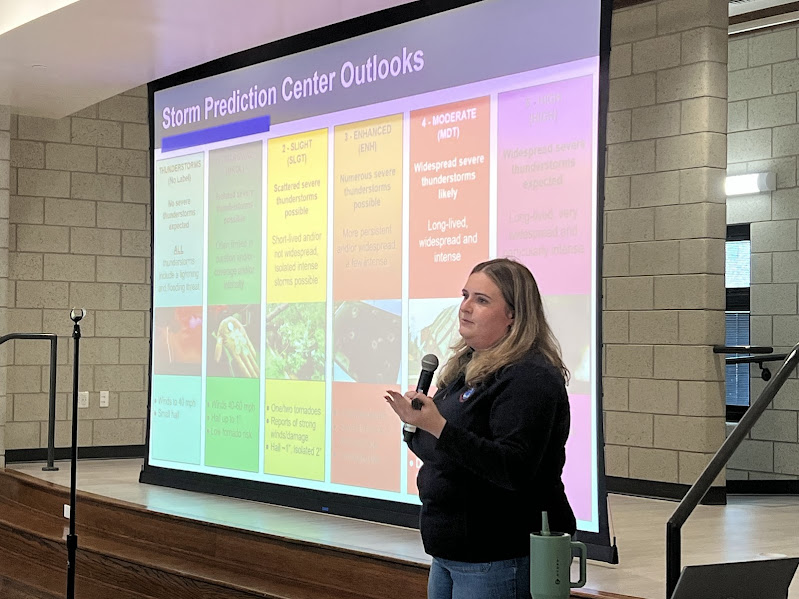
Maines also encouraged everyone to have multiple ways to receive alerts for watches and warnings. This includes weather apps, social media, weather radios, and a way to be awakened and alerted in the middle of the night. She stressed the importance of keeping wireless emergency alerts enabled on cell phones. NWS is selective about when it uses this service, so if someone receives an alert this way, they are to take immediate action.
Maines said that outdoor warning sirens are only meant to alert people who are outdoors. The sirens are not meant to wake people up from an indoor slumber. Klein said that the current sirens Wood County uses are “old air-raid sirens” and recommended people move to more modern technologies. The county is currently transitioning to a new emergency alert system, “Everbridge,” while CodeRED is no longer in use.
(Note: Everbridge is not yet fully functional. People should rely on other alerting methods.)
Attendees also learned the difference between “nuisance” flooding and “flash” flooding: “With nuisance flooding, typically, you find the floods. With flash flooding, the flooding finds you,” Maines said.
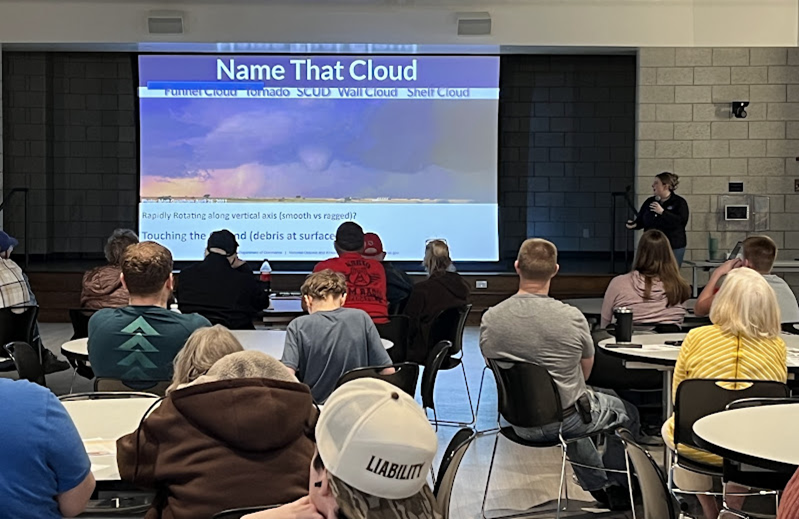
Participants then learned about different cloud formations including funnel clouds, tornadoes, scud, wall clouds, and shelf clouds. Then, they played a game of “Name that Cloud.” People looked at details such as the cloud formation’s roughness or smoothness, shape, slope, and if there was debris present to determine the type of cloud.
Next, attendees learned how to properly report severe weather and weather-related damage to the NWS. They learned which details to include, which to omit, and that photos are always welcomed.
Maines said that she appreciates the credibility that weather spotters add to the warnings NWS issues. “Your reports may cause people to take action.” At the end of the program, registered participants became certified weather spotters for NWS.
To learn more about the National Weather Service, visit https://www.weather.gov/.