BY MEGAN HENRY
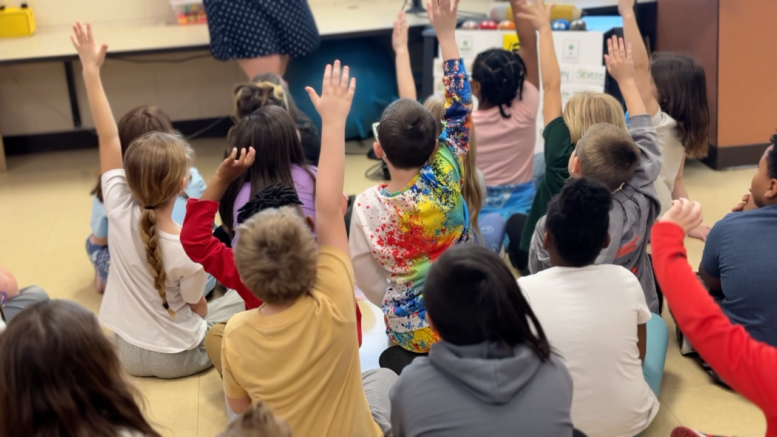
Ohio special education advocates fear recent changes to the U.S. Department of Education will cause confusion, delays, and a loss of service to students.
The Trump administration announced in June it will move the Office of Special Education and Rehabilitative Services to the U.S. Department of Health and Human Services, and the Office for Civil Rights to the U.S. Department of Justice.
The special education office is responsible for making sure states follow the Individuals with Disabilities Education Act (IDEA), a federal law that ensures students with disabilities have access to a free and appropriate public education.
The civil rights office investigates complaints from students and families.
Dee Marks sits on the Member Organization Council, an arm under the governing board of the Ohio Coalition for the Education of Children with Disabilities.
“For special education in Ohio, it means the process of children with disabilities getting their needs met just got significantly more complicated,” Marks said.
“There’s significant fear that it’s going to degrade the programs and services that have historically been provided under IDEA to the point where students with disabilities will no longer be educated to the level that the law dictates that they should be educated to.”
About 14% of Ohio students receive special education services, said Jennifer Webb, past president for the Council for Exceptional Children’s Ohio chapter.
“It puts special education back 50 years to when we were diagnosing and trying to fix kids versus identifying them to give them the services they need to help them learn the best,” said Webb, chair of the teacher education programs at Malone University, a private university in Canton.
This move also creates a stigma that students with disabilities are viewed as having a medical need first, instead of being viewed as a student first, Marks said.
For example, she talked about students with disabilities who are blind.
“You have specialized needs, but all of those needs are focused on education … that student navigating the education building, accessing the curriculum, making sure that it’s in braille or audio so that that student has access,” Marks said.
She wonders if the focus would now be a medical first model under HHS.
“It becomes less about them getting access to the education and more focus on that student who’s blind, which then becomes a big concern that that student might be segregated because they’re different,” Marks said.
Robyn Linscott, director of education and family policy at The Arc of the United States, agrees.
“Moving IDEA oversight into HHS pushes students with disabilities toward a medical model, where disability is treated as a diagnosis to manage instead of a natural part of human life,” she said in a statement.
“When that mindset drives education decisions, students are more likely to be segregated, underestimated, or treated as separate from the school community.”
The U.S. Department of Education will continue to be in charge of the statutory responsibilities over special education as required by federal law, but this shifts the day-to-day operations to HHS.
“It adds another layer of complexity because two departments are involved, and one is still going to have the ultimate responsibility for this other department underneath it, but then how does a parent of a child with a disability who has an issue navigate that?” Marks asked.
She also wonders how HHS will be able to support students’ educational needs.
“The Department of Education has, for decades, been in charge of special education, and all of a sudden they just carve special education out, send it to Health and Human Services, and they’re not qualified to handle that programming,” she said.
This move further shrinks the U.S. Department of Education as President Donald Trump works to fulfill his campaign promise to dismantle the department.
The Education Department had announced 10 earlier interagency agreements, or IAAs, with HHS, Labor, Interior, State and Treasury, which transfer several of Education’s responsibilities to those agencies.
Follow Ohio Capital Journal Reporter Megan Henry on X or on Bluesky.
Also on OHIO CAPITAL JOURNA:
Ohio governor candidate suggested consolidating universities. Economists think it’s a bad idea.
Republican nominee for governor Vivek Ramaswamy in March said that consolidating Ohio’s public universities would make higher education better and more affordable.
The strong consensus of economists surveyed on the topic this month said such a move would reduce the number of graduates in Ohio and reduce economic output. They split on whether it would even save any money.
Amid a backlash, Ramaswamy is now backing away from his call.
“I think that we have too many duplicative programs in our universities,” Ramaswamy told a Strongsville audience earlier this month, according to Cleveland’s WEWS. READ MORE