
By JULIE CARLE
BG Independent News
Jakobi Turner, a 2026 Elmwood High School graduate, was one of 400 first-time voters chosen to participate in a national conference to talk about important policy issues.
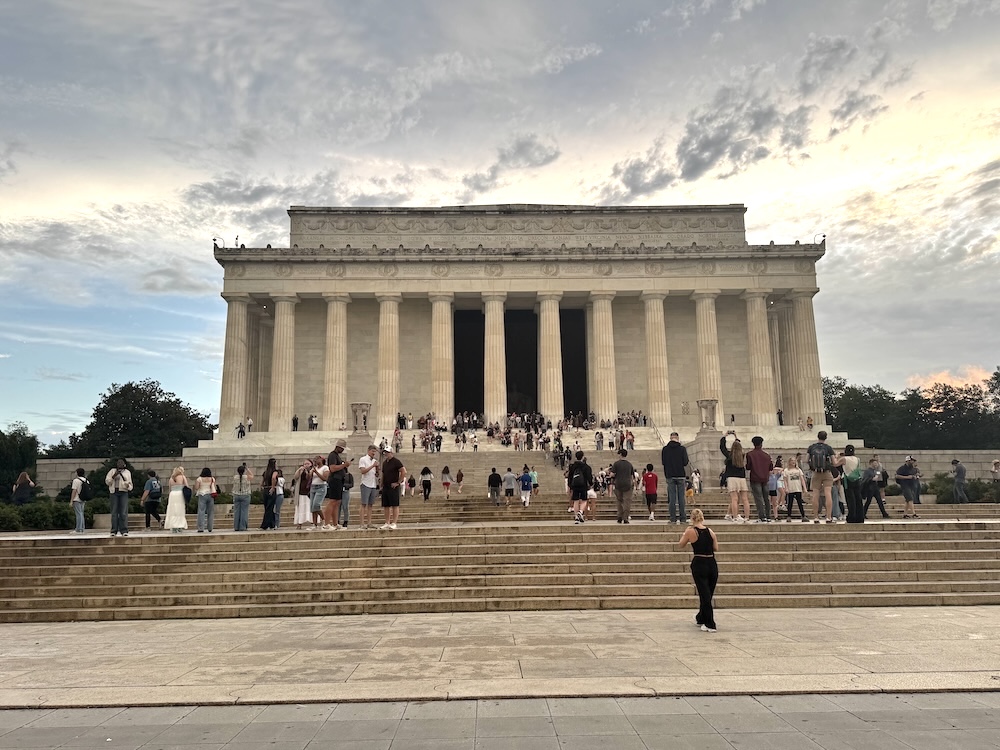
In early July, the group of young people spent four days in Washington, D.C., discussing artificial intelligence and the economy, immigration, and voting and Congress.
The conference, Close-Up: Next Gen 2026, was held to inform, inspire and empower participants to become active citizens.
“There were people from across the country, from all kinds of backgrounds, which meant all different kinds of views,” he said.
Turner, who was a track and cross-country athlete at Elmwood and vice president of the National Honor Society, has been politically aware since he was about 12.
His high school social studies teacher Heidi Meyer helped fuel his interest in politics, social issues and voting rights by suggesting her students explore opportunities such as helping with election day setup or experiences such as the Close-Up conference.
Turner jumped on the chance to help set up voting machines for election days as soon as he was able to drive.
“Every fall or May, whenever they have an election, I help out at the courthouse when I can,” he said. “I like to help them out, get paid and make connections along the way.”
The 2024 presidential election, when he was 16, truly sparked his political fire.
“That was a huge election for so many people. And even still today, these issues are so prominent,” he said. “I think the more that you dig into it, the more you want to do something about it.”
The conference gave him that opportunity.
With all 400 participants first-time voters—a number intentionally selected to closely resemble the number of representatives in the House of Representatives—the experience was an affirmation for Turner.
The topics discussed—first in smaller groups of 12 to 15 participants before moving to the large group to listen to panels of experts—were issues earlier identified by the participants as important.
Turner felt strongly about the topics discussed, but was, and still is, especially fervent about voting rights.
“My age group is probably the one that is least likely to participate,” he said, pointing to a disconnect between his demographic and the older-aged congressional representatives who appeal more to an older demographic.
“I feel like the more that my generation tries to apply themselves to those offices and , I feel like it could drive them to want to participate even more,” he said.
“I don’t understand why some people don’t go out to vote. You have that right, so why not use it?” he said, adding, “You don’t have to completely like a candidate at all. But in the end, if you don’t want one, pick the other. Because regardless, one of them is going to get in.”
Discussion about voting at the conference centered on whether to expand the U.S. House of Representatives or Senate and on voting security.
The smaller group discussions debated whether “to give more representation to smaller states who may not have as many members due to their population,” Turner said.
During the conversation about voting security, Turner said there was general agreement. “As much as people say how safe and secure voting is in the U.S., people still have their suspicions about it.”
“We talked about AI and not just AI in general, but about its effect on our economy in the future,” he said. “It’s revolutionizing the way we do things. We also talked about how people make their own relationships with it.”
Turner is not a big fan of AI, or at least the way some people are utilizing it in unproductive and mean-spirited ways. Also, he is concerned about long-term implications on resources and the job market.
The topic of immigration was also a major topic of conversation. “It’s a huge topic right now given everything that’s going on, and there were a lot of opinions about it,” he said.
The majority of participants held similar views to Turner, which he said was a little different than the minority perspective he represented at school. At the conference, there was plenty of discussion with people willing to share their viewpoints, but the bottom line was that many felt the same about the topics.
The expert panelists provided different perspectives on the issues, “which really made us think outside of our typical thoughts,” he said.
Among the highlights were the new friends he made and the discussions they had outside of the conference, during dinners, or traveling on the bus. “We were discussing the topics further outside of the time in the meetings,” he said. “That helped give us more perspective as well.”
Many of the participants are going into college this fall, and many are planning to major in political science. “The conference just boosted them to want to do that even more,” Turner said.
One of the many friends he made at the conference hopes to run for a congressional seat someday. “That takes a lot of courage because they are representing so many people,” he said.
“The conference in D.C. was very comforting to know that there were many people there who had the same views as me,” from a moderate left perspective, “instead of having to defend my views,” he said.
He always appreciated his teacher’s ability “to play devil’s advocate, to make you think about what you really stand for,” he said.
At the conference, he was pleased to learn most people have a real love for their state, even though they may not agree with the majority.
“I expected some of those smaller states to have more right-leaning views, so it was interesting to know that blue dots are real,” he said. “I’ve done my own research (on issues), which has helped me shape my own views.”
Overall, participating in the conference “inspired hope in me and our generation,” he said. “I made so many new, good friends. And the best part: All these people, all from different backgrounds, could come together and have interesting and meaningful conversations with a focus on the future.”