
By JULIE CARLE
BG Independent News
While religious leaders of many faiths often avoid discussing religion and money, a multifaith panel at Bowling Green State University recently cast taboos aside tackled the sensitive topic.
“Religion and money are two things that people are told not to talk about,” Dr. Andrew Kunze, assistant teaching professor of history, Asian studies, and international studies, Kunze said as facilitator of the panel discussion. “So naturally, we decided to talk about both.”
The goal was simple, yet ambitious: open an honest dialogue about how different traditions understand wealth, ethics, and economic life.
Despite representing vastly different faiths—Christianity, Hinduism, Islam and Buddhism—bottom line, the religious leaders shared a common theme about the topic: money itself is not inherently good or evil—it is how people relate to it that matters.
A spectrum of beliefs
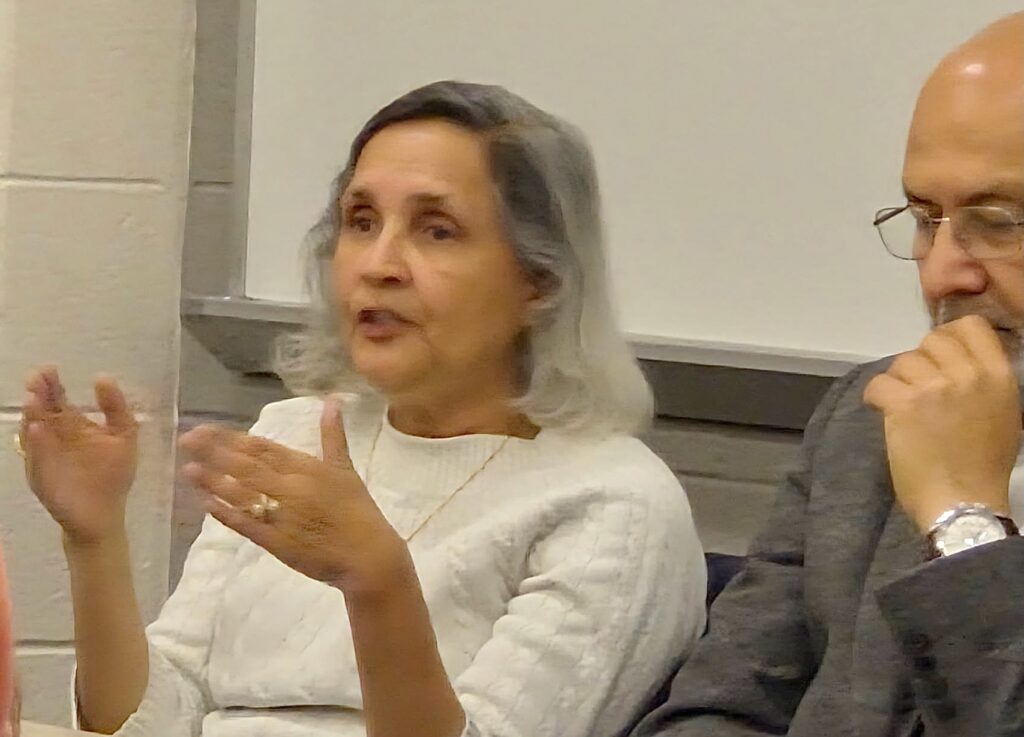
In Hinduism, wealth (artha) is one of life’s four essential pursuits, but must be earned ethically and used responsibly, said Dipti Vyas, vice chair of the Multifaith Council of Northwest Ohio “You can earn money,” she said, “but you should not hold onto it selfishly. It should benefit others.”
Dr. S. Zaheer Hasan, a member of Ohio’s Board for Faith-Based and Community Initiatives, echoed that sentiment from an Islamic perspective, describing wealth as a trust from God.
“In Islam, it is perfectly okay to talk about money,” Hasan said.
“There is no restriction on how much you can earn, as long as it is done lawfully and without exploitation,” he said. “Money, assets or resources are considered a gift from God. God created us to manage his earth, and that’s where we were given the responsibility to manage resources.”
Additionally, he emphasized that “zakat,” the obligatory charitable giving in Islam, is a mechanism to reduce inequality.
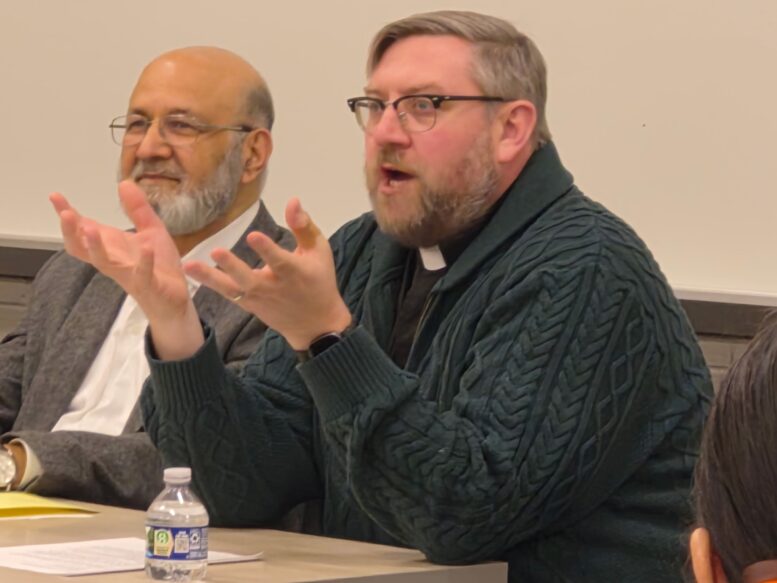
Dr. Jeff Schooley, pastor at First Presbyterian Church in Bowling Green, brought a critical lens from Christian ethics, challenging modern economic systems. Referencing the influence of capitalism, he argued that building systems around self-interest can conflict with religious teachings.
“You cannot squeeze virtue out of a vice,” he said, pointing to greed as a central moral concern in Christianity.
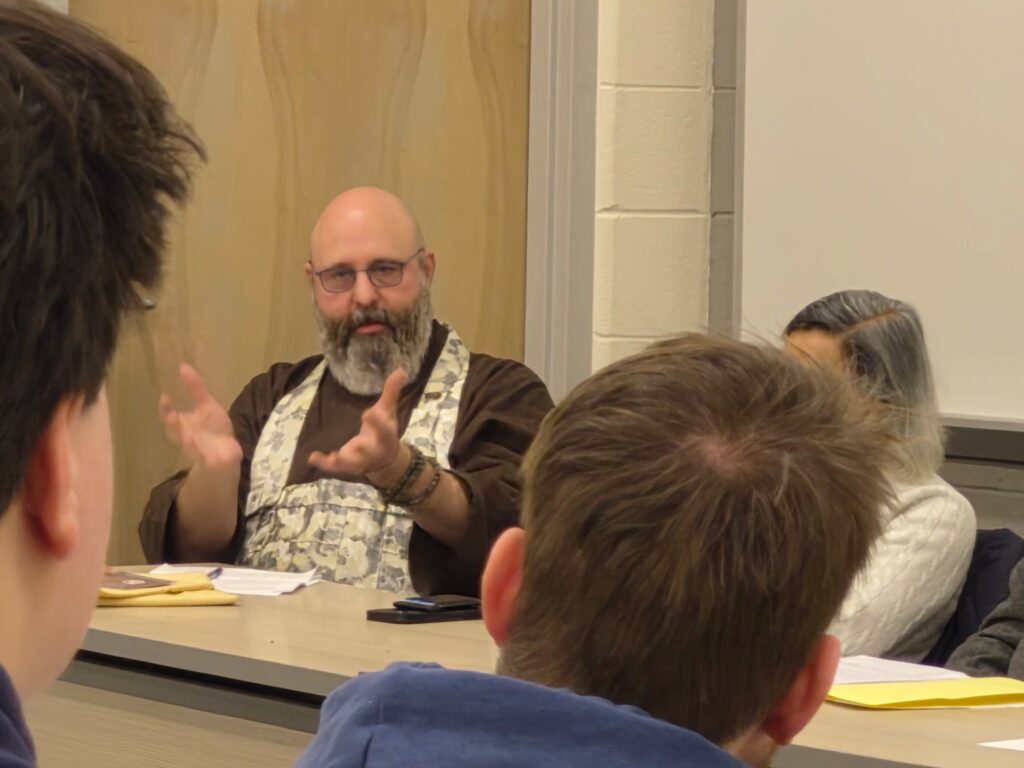
From the Buddhist perspective, Jay Rinsen Weik Roshi, abbot of the Zen Buddhist Temple of Toledo, said, “Money isn’t the problem. Attachment to it is.” He explained that suffering arises not from wealth itself, but from misunderstanding reality and clinging to material things as permanent.
The panel also explored how teachings translate into everyday life. While some traditions include renunciation—such as Hindu ascetics or early Buddhist monks—most modern practitioners navigate a middle path, balancing spiritual values with practical needs like paying bills and supporting families.
Religious institutions vary widely in their economic roles. Some operate through donations and community support, while others manage significant wealth. Panelists acknowledged both the positive impact of charitable work and the tensions that arise when religious institutions accumulate large resources.
A Shared Moral Thread
Despite theological differences, a shared ethical thread emerged: generosity, fairness, and accountability.
Whether through Christian charity, Islamic zakat, Hindu dharma, or Buddhist compassion, each tradition emphasized responsibility toward others—especially the vulnerable.
As one audience member asked whether money is “the root of all evil,” the panel offered nuanced answers. Schooley clarified that it is “the love of money,” not money itself, that leads to harm. Others agreed, stressing intention, ethics, and awareness.
In a world shaped by economic pressures, the panelists each suggested that religious perspectives still offer powerful frameworks for rethinking wealth, not just as a resource, but as a moral responsibility.
