By JAN McLAUGHLIN
BG Independent News
Finding family roots has become a fascination for those tracing their lineage back centuries.
In Wood County, one agency is using sleuthing skills to find family members for the future of children separated from their parents.
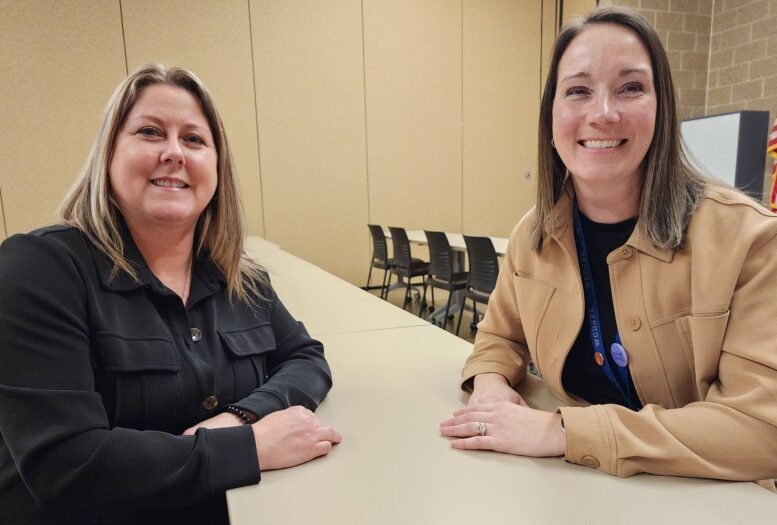
Since 2018, Wood County Children’s Services has matched up children in its care with family members through its Kinship program. Kristin Weymer, the ongoing Kinship supervisor, and Liza Swartz, the Kinship and Kinnection family specialist, search the branches of family trees to link children in the agency’s custody with their kin.
“All of our case workers are always looking for family members,” Weymer said.
That may be grandparents, aunts and uncles, or cousins – anyone with a family connection able to take in a child in need of a home.
In the eight years of the Kinship program, Wood County Children’s Services has located far-flung family members willing to accept youngsters.
For example, when a 3-year-old was put in Children’s Services care after his parents were arrested, Swartz and Weymer started building his family tree. The little boy, whose family was based in Haiti, spoke only Creole.
The search took them to New York, where most of the family was located, but not all had legal status. So they investigated further through social media links, and found the patriarch of the family in Haiti.
“I was trying to find anyone who would talk with me,” Swartz said. Her search tracked down the family patriarch, who knew the toddler, had bought the child’s first stroller, and who had a three-bedroom home and the means to support the little boy.
The relative had no idea the child was in the care of Wood County – and was elated to be reunited with him.
“If you don’t know you have family in agency care, you don’t know to look for them,” Swartz said.
Some parents who lose custody are ashamed to tell other family members, or they are estranged from family members.
Maintaining family connections help children remain in touch with their culture and their family roots, Weymer said.
“That changes the course of his life forever,” she said. “Everybody here works really hard to keep kids connected to their family.”
“It would be good for him to be connected, so he will always know he is wanted,” Weymer said, adding that studies show there is less trauma for children removed from their parents if they can stay with family members. “Anybody raised outside their family always wonders who their family is.”
Over the last year, 3,701 children were served by Wood County Children’s Services, with 1,645 being placed with someone other than their parents.
Since starting the Kinship program in 2018, Wood County Children’s Services has had a 67% placement rate with families, Weymer said.
“Every child has a family – we just have to find them,” Swartz said. “If it were your child, wouldn’t you want someone to work as hard as they can to find them.”
Wood County Children’s Services doesn’t leave children with the first family members they locate. Staff continues their searches until they find a good match for a child. Sometimes that means digging up information on many branches on family trees. In addition to social media, and legal records, obituaries are also used to find family links.
Just as with other custody cases, regular home visits are made to ensure the placement is working well for the children.
In Ohio, Wood County holds the record for creating the largest family tree locating 609 family members in a genogram, according to Swartz and Weymer.
Genograms contain basic data found in family trees such as the name, gender, date of birth, and date of death of each individual. Additional data may include education, occupation, major life events, chronic illnesses, social behaviors, nature of family relationships, emotional relationships, and social relationships.
“It’s so important for kids to be connected with their families,” Swartz said.
The goal still remains to get children back with their parents if that is possible.