by MAKENNA HALM
BGSU Public Good News Lab
While roughly 80% of Wood County residents drive alone in their cars to work, just 0.1% use public transportation, U.S. Census data shows.
In a county largely dependent on private transportation, how do the 1 in 20 Americans above 16 who live in a household without a personal vehicle get around?
Public transportation advocates, including those who came to northwest Ohio last week for RailNation Toledo, a national passenger rail conference, said residents can help shape transit options.
“People have always wanted trains, but I think now the frustrations are growing,” said High Speed Rail Alliance Executive Director Rick Harnish. “Things that have been happening recently [gas prices and inflation] have made the demand of high-speed rails more urgent.”
The High Speed Rail Alliance is an organization that aims to educate people on the power of high-speed rails and what they can do now to help bring public transportation to their hometown. Although its end goal may be a high-speed rail system, this is only part of what will become a reliable public transportation system.
According to Harnish, a “web” of buses and trains is what a reliable public transportation system needs.
Bowling Green already has part of that web in place thanks to two bus systems run by the city and university.
The city offers BG Transit, a “a demand-response public transit system that operates more like a bus service whose route is determined by scheduled rides.” The service is funded through the Federal Transit Administration 5311 Program, the Ohio Department of Transportation and Community Development Block Grant dollars.
Riders can call 419-419-5001 or call the Ohio Relay Network at 800-750-0750 at least one hour in advance of the time they want to be picked up by a BG Transit van. Most riders pay $4, while seniors pay $2.
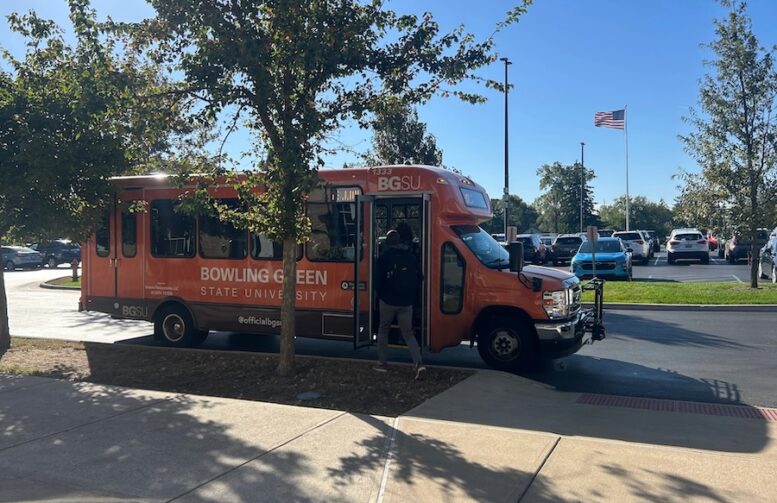
Bowling Green State University introduced its shuttle system in 1990. The service is still running today.
“Our main goal is to be a safe option for night and for students on campus for class,” said John Stewart, the manager of parking and shuttle services at BGSU. “We are the only service open to the public that’s free in Bowling Green.”
According to Stewart, the hours the shuttles run and the routes they take are some of the shuttle system’s limitations.
“We would love to run later or more [on the weekends],” said Stewart. “But that would mean taking away from another route we have running.”
Stewart said changes to campus transportation are possible from the university.
“We’ll have some conversations internally, on the government side of things on campus and gather some thoughts from them,” said Stewart. “We don’t want to make massive changes every year. This is about dialing in something that is a degree or two off.”
Wood County residents can play a role to help bring more access to public transportation to the area, Harnish believes.
“Attend public meetings and tell people, if you’re elected or reelected, the demand for trains and buses are urgent,” said Harnish. “Make your voice heard.”
Susan Gettum, the chief planning and program officer for Toledo Area Regional Transit Authority (TARTA), said actually using public transportation and facing worries about taking a different form of transportation is a great first step.
“Get over the fear and use it and talk about it,” said Gettum. “Bring your friends, make it a thing. Put it on social media! What can you do today? You can take advantage of what’s out there.”