By JAN McLAUGHLIN
BG Independent News
Coming up with a five-year forecast for a school district in Ohio this fall is similar to putting a jigsaw puzzle together … in the dark.
Like most school financial folks, Bowling Green City Schools Treasurer Matt Feasel budgets on the conservative side. But this year, his prediction skills were tested by the unknown impacts of the four bills passed by the state legislature to ease property tax burdens on Ohioans.
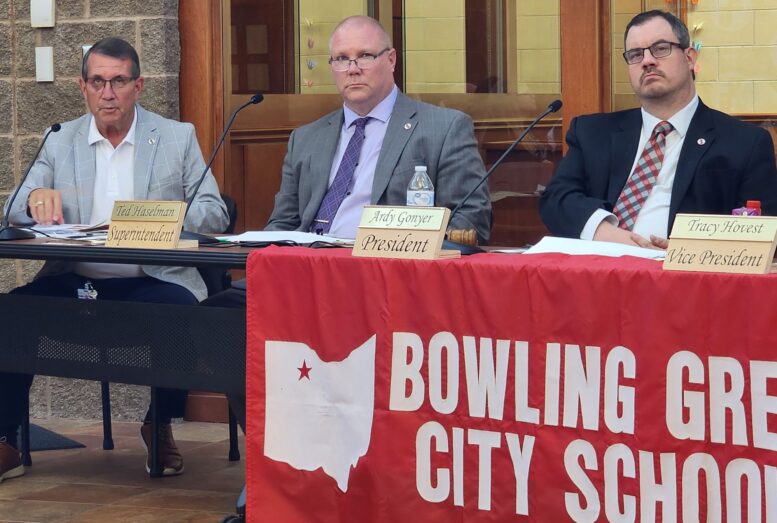
“We’re trying to put a forecast together with information we don’t have,” Feasel told the BG Board of Education Tuesday evening.
“This has been very challenging,” he said.
Feasel gave brief predictions of how those bills might affect the district.
- HB 129 reclassifies fixed-sum levies to be included in the 20-mill floor calculations. This is expected to lower BG Schools collections by $30,000 to $40,000.
- HB 186 establishes “inflation cap credits” and a retroactive “claw back” of realized revenues. BG Schools is anticipated to lose $279,900 this year in inflationary cap credits. The loss next year is expected to be $419,985. And anticipated losses through 2031 are estimated at $1.5 million.
- HB 309 empowers county budget commissions to reduce voter-approved levies. This shifts fiscal authority and creates unpredictable risks to local levy yields.
- HB 335 limits revenue growth from inside millage to the GDP deflation factor. This restricts the district’s ability to realize revenue gains from property valuation reappraisals.
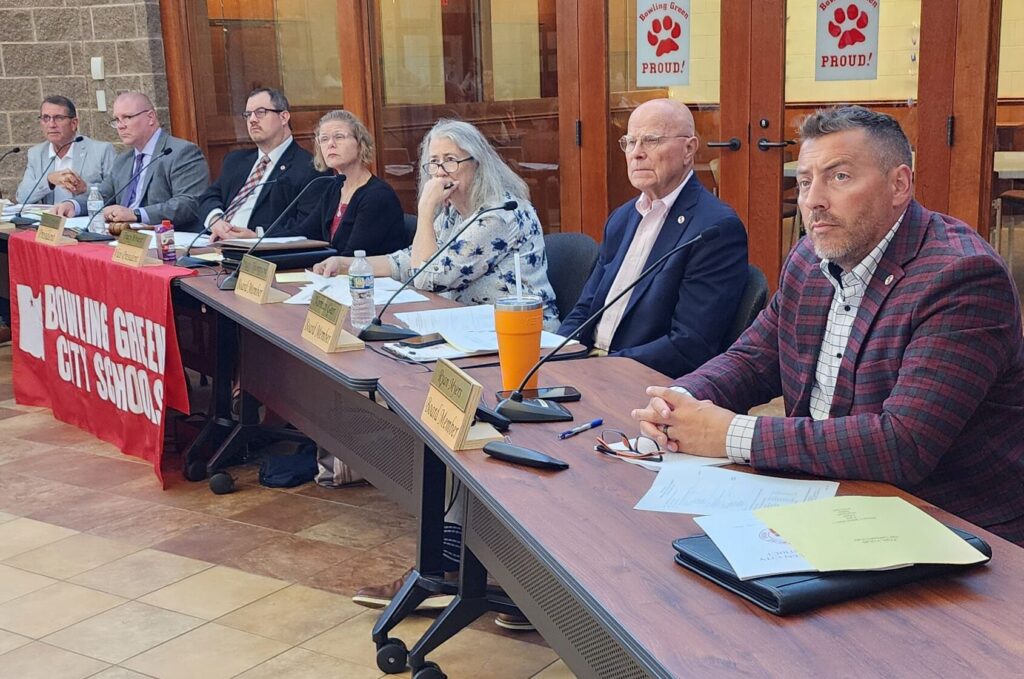
School Board President Ardy Gonyer thanked Feasel for his efforts, acknowledging that time will tell the impacts of the new legislation.
“Often Columbus passes things and says it’s going to fund schools – but that’s not always the case,” Gonyer said.
The state budget is operating on old figures when it comes to school funding, Feasel added. For example, school expenses are calculated using 2021 averages for teacher pay, he explained.
“We lost state dollars as a result of that,” Feasel said.
Meanwhile, the local share of the district’s general fund revenue is more than 76%. According to a pie chart in the five-year forecast, the fiscal year 2027 revenues include:
- Local real estate taxes: 49.3%
- Local income tax: 22.8%
- Other local: 4.2%
- State foundation: 18.2%
- Other state: 5.4%
However, Feasel remained optimistic about the district’s position.
“Financially, we are extremely stable,” he said.
Part of that stability is due to the income tax levy passed last year by the district voters. The income tax revenue is coming in 20% higher than Feasel predicted.
“Which is good news. We hope that continues,” he said.
The board and school administration regularly review budget forecasts and compare revenues to actual results to ensure resources are aligned with educational priorities, operational needs and long-term stability, Feasel said.
“While these funding changes present challenges,” he wrote in his five-year forecast, “the district remains committed to thoughtful planning, transparency, and maintaining strong financial stewardship on behalf of our community.”