By JULIE CARLE
BG Independent News
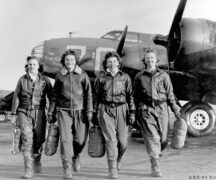
During World War II, nearly 1,100 women covered 60 million miles, piloted 12,650 planes and wore their wings of courage as a badge of honor.
The Women Airforce Service Pilots (WASP) as they were known, were indeed a force, especially when the country needed them most during World War II.
While men fought overseas in the war, the small but extraordinary group of American women redefined what women could do in aviation.
They didn’t receive military status, and they received minimal pay and very little recognition. But their contributions were monumental in the war effort.
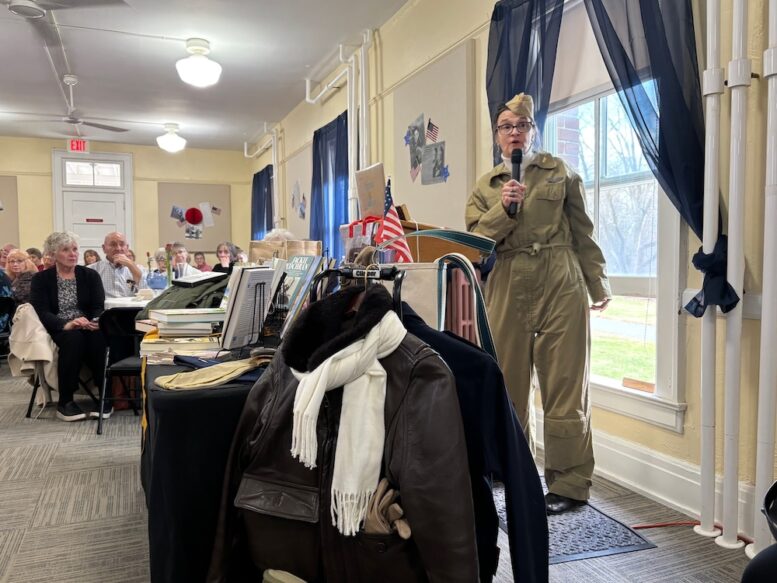
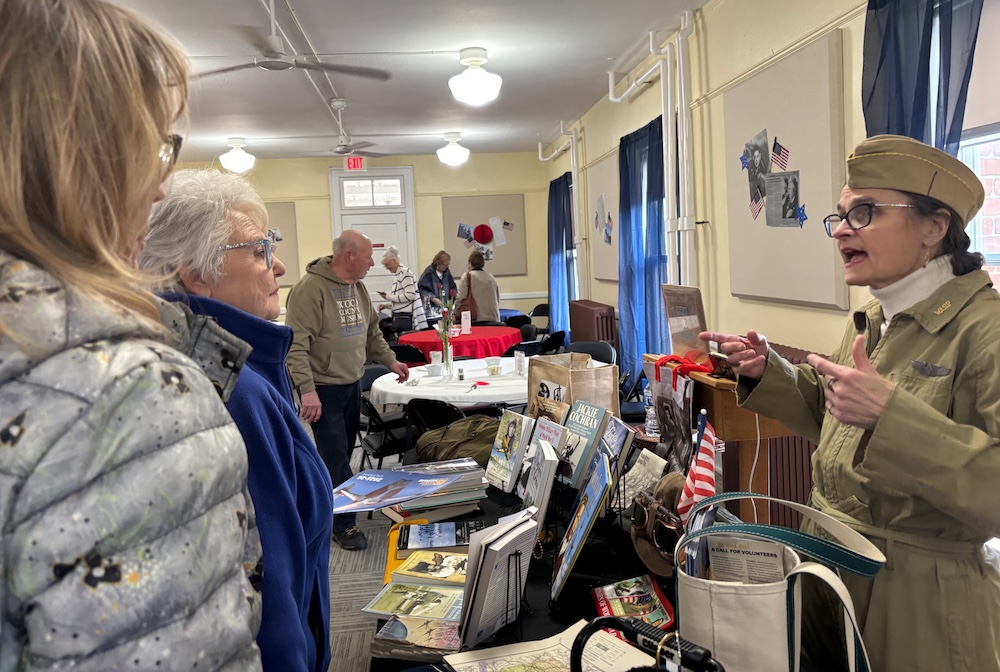
They were also a symbol of grit, sacrifice and quiet revolution, according to Wendy Zielen, a volunteer with the Michigan Flight Museum. She was the guest speaker at the Wood County Museum’s recent “Tea and Talk” event.
“They were really good pilots,” Zielen said. “In 1929, there were fewer than 1,000 female pilots in the entire country. For every female pilot there were about 26,000 male pilots.”
Among the most famous female pilots of the era included, of course, Amelia Earhart, whose fame helped inspire a generation of women to look skyward.
Inspiration alone wasn’t enough. Opportunities were scarce. And acceptance was even more elusive.
Zielen also talked about two other women whose passion for aviation and rivalry led to the WASP program.
Nancy Harkness Love was a skilled and pragmatic pilot who proposed using experienced female aviators to ferry aircraft across the United States. Her group, the Women’s Auxiliary Ferrying Squadron (WAFS) quickly proved invaluable, Zielen reported.
Jacqueline Cochran was a bold and ambitious person who had a broader vision. She wanted women to do more than ferry planes. With a goal for women to train, test and expand aviation roles, she established a training program in Sweetwater, Texas.
Eventually, the two efforts merged into the WASP program.
Flying without a safety net
The women who joined WASP faced conditions that were anything but glamorous, Zielen explained.
They trained in harsh environments—dusty, snake-infested airfields with minimal facilities. Their uniforms were designed for men. Their pay was low. And they were classified as civilians, meaning no military benefits—even in death.
Yet they flew.
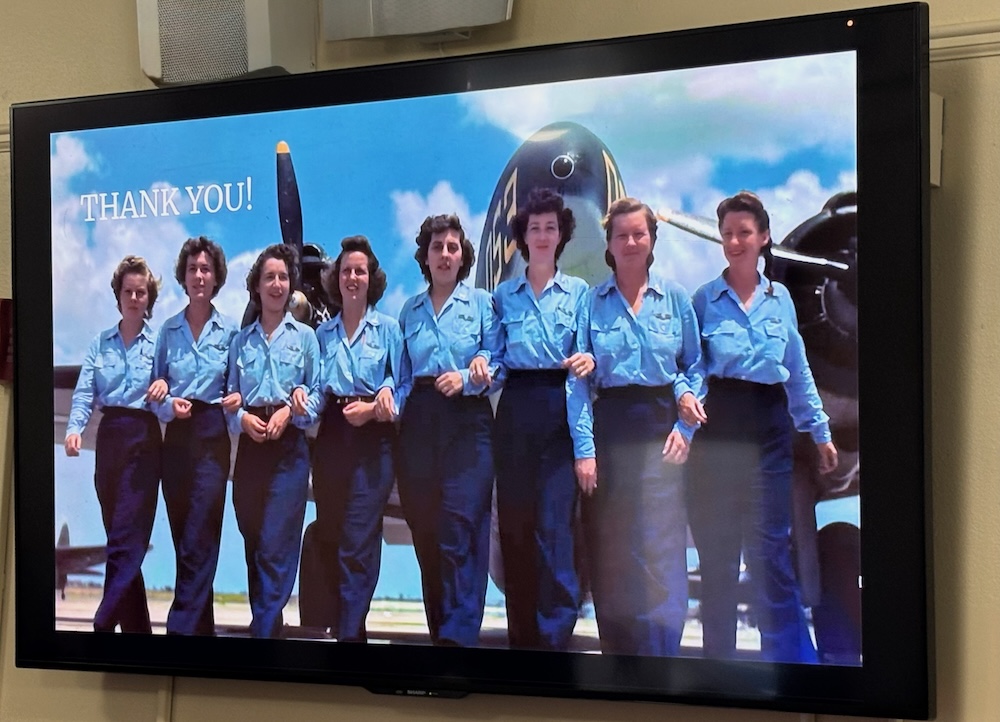
They piloted everything from basic trainers to heavy bombers like the B-17 “Flying Fortress.” Many mastered up to 78 different aircraft types—far more than most male pilots at the time.
“For men, if they trained on a B24, they didn’t know how to work the latest planes, but the women did,” Zielen said.
Their missions included:
- Ferrying planes from factories to bases
- Testing newly repaired aircraft
- Simulating enemy targets for live-fire training
- Demonstrating dangerous aircraft like the B-29 to skeptical male pilots
One particularly risky job involved towing targets behind their planes while live ammunition was fired at them—a task few others wanted.
Flying during WWII was inherently dangerous. For WASP pilots, the risks were even greater.
Planes were often incomplete or malfunctioning. Navigation relied on rudimentary radio signals. Weather forecasting was limited. And sabotage—real or suspected—added another layer of fear.
Despite this, 38 WASP pilots lost their lives in service.
Because they were civilians, their families received no compensation. Fellow pilots often pooled their own money to bring fallen comrades home.
The WASP program also reflected the inequalities of its time.
Women faced strict rules: no marriage, no pregnancy, no dating pilots. At one point, they were even barred from flying during menstruation.
Racial barriers were even harsher. Despite qualified candidates like Willa Brown, no African American women were admitted to the program.
From heroes to forgotten
As the war progressed and male pilots returned home, public sentiment shifted.
The same women once celebrated as patriotic pioneers were now seen as unnecessary. In 1944, the WASP program was abruptly disbanded.
“They received the notice that on December 20, 1944, ‘You’re done,’” Zielen said. “’We don’t care where you are in this country. We don’t care where your family is, find a way home.’”
The women were forced to find their own way home without military transport or support.
A legacy deferred
For decades, the contributions of the WASP were largely ignored, Zielen said.
Not until 1977 were they officially granted veteran status, and in 2009, they received the Congressional Gold Medal, one of the nation’s highest honors.
Their legacy went beyond aviation, she said. They proved that women could handle machinery, perform under extreme pressure and contribute meaningfully to national defense. “They helped pave the way for future generations of female pilots, astronauts and military personnel.
They helped pave the way for future generations of female pilots, astronauts, and military personnel.
Today, women make up only about 7% of pilots—a significant increase from the 1% in the 1930s, but still far from parity.
Yet every woman who steps into a cockpit carries forward the legacy of those who flew before—women who navigated not just the skies, but the barriers of their time. “So, we have made progress, but we are trying to keep telling this story so they are not forgotten,” she said.