By JAN McLAUGHLIN
BG Independent News
Energy efficiency efforts have led to flat sales for utilities in Bowling Green. While the city’s public utilities department is seeing growth in its number of customers, the energy consumed has not followed suit.
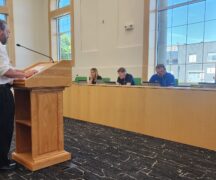
That is good news for sustainability efforts, however, the costs to provide utilities has gotten more expensive. That has led to declining fund balances for the city’s electric, water and wastewater programs, Public Infrastructure Director Brian O’Connell explained Monday to the city’s Board of Public Utilities.
O’Connell warned the board about pending rate increases last year.
“The rates are not keeping up with expenses,” he said.
Monday evening, the utilities board learned that at the current rate, the water fund balance would just barely be above the city’s policy of having a three-months’ reserve, O’Connell said.
So the board unanimously approved a 7% increase in the city’s water rates, which will go into effect on April 1.
“We’re not trying to develop a windfall of cash sitting in the bank,” O’Connell said. But the utilities department must have enough for needed capital projects.
Several public entities in Ohio are in severe financial distress, and have fallen behind on capital projects – which O’Connell said he is trying to avoid.
According to information presented at Monday’s meeting, the typical water bills for customers will see the following increases:
- Residential – an additional $1.05 a month for a total monthly bill of $14.75.
- Commercial – an additional $9.20 a month for a total monthly bill of $125.20.
- Industrial – an additional $46 a month for a total monthly bill of $635.
O’Connell recommended the city needs a cost of service study conducted this year for its water, wastewater and electric programs.
After Monday’s meeting, O’Connell said the sale of city water to the Northwestern Water and Sewer District for the Meta data center’s use of 600,000 gallons a day, has not led to the need to raise rates.
Last November, the utilities board voted to increase its wastewater rate for 2026 by 10%. That new rate went into effect on Jan. 1.
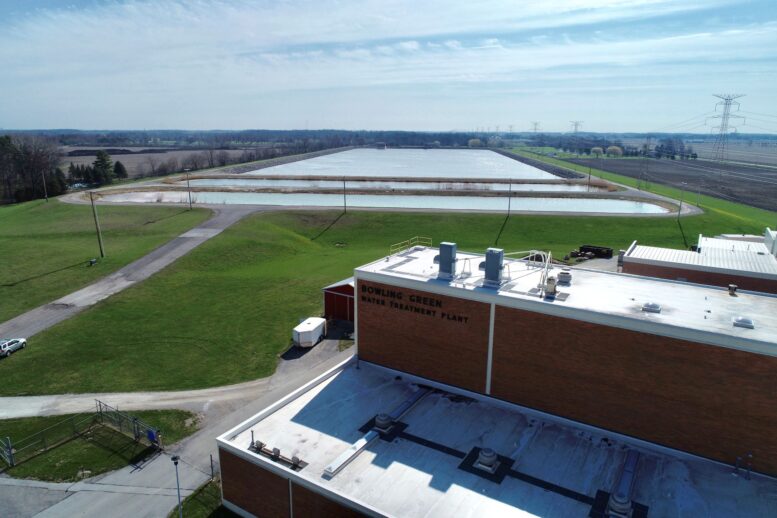
As with water services, the city has not completed a cost of service study for wastewater. The wastewater sales have also remained relatively flat as operating costs and capital project expenses have increased.
Past budgets have used cash reserves for one-time capital expenses which can be a useful budgeting tool to limit rate increases. This option is only viable if cash reserves remain at acceptable levels, O’Connell said. The projected wastewater cash reserves in the 2026 budget show the reserve funds slightly below the minimum three-month cash reserve policy per city financial policy.
The 10% increase in wastewater rates will add up to an average of:
- Residential – Monthly increase of $2.50, for total of $25.75 a month.
- Commercial – Monthly increase of $17.20, for total of $177.20 a month.
- Industrial – Monthly increase of $81, for total of $830 a month.
Next to be considered by the Board of Public Utilities will be an increase in the city’s electric rates, targeted to go into effect in July. O’Connell said the amount of that rate increase is not yet known.
Also at Monday’s meeting, the board authorized that bids be advertised for the lease of city acreage for agricultural purposes. The current three-year contracts for the properties will expire at the end of 2026.
Following is a list of the available acreage:
- 6 acres on Van Camp Road, east of Brim Road.
- 34.17 acres at the northwest corner of West Poe Road and Green Road.
- 19.15 acres on Napoleon Road, east of Dunbridge Road.
- 14.02 acres on Bishop Road, east of Brim Road.
- 14.23 acres on King Road (west).
- 28.39 acres on King Road (east).
- 72.06 acres at the northeast corner of Hull Prairie Road and Ovitt Road.
- 36.18 acres at the southwest corner of West River Road and Forst Road.
Several of these properties are located in industrial business parks on acreage not yet being used. If a property is sold for development purposes, the contract will allow the property to be removed from the lease. To be fair to the farmers, the city will compensate them for their costs if they are unable to harvest their crops.