
By JAN McLAUGHLIN
BG Independent News
Nobody likes paying taxes. But before Ohioans vote to abolish all property taxes, local government officials want to make sure they know what is at stake. The banning of property taxes comes with a price tag in the form of decreased services and increased reliance on other taxes.
A citizen-led effort is underway to put a constitutional amendment banning all property taxes in Ohio on the November ballot.
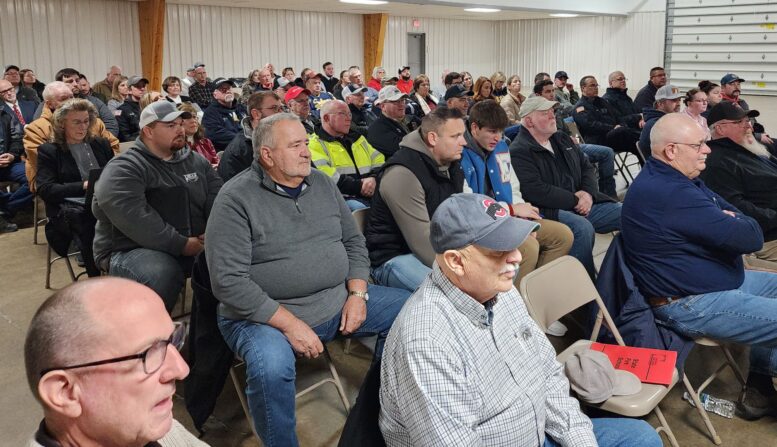
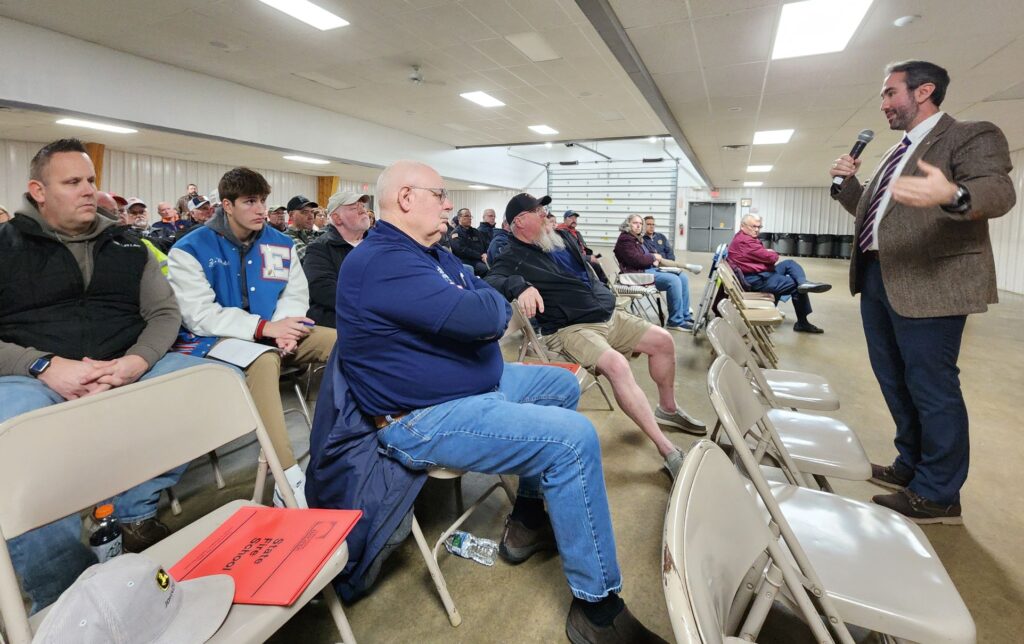
On Thursday, a meeting was held for local township leaders, other grassroots government officials, and state legislators. The meeting was organized by Washington Township Trustee Steve Powell, to make sure officials know the risks and find a strategy to make voters aware.
The gathering – which came the same week as the latest property tax bills were mailed out by the Wood County Auditor’s Office – was not a forum for venting or a bully pulpit for politicians. Rather it was a call to action to make sure local government officials can accurately discuss the ramifications with their constituents, Powell said.
What’s at stake?
Ohio residents and businesses pay approximately $24 billion annually in property taxes that support a wide array of community services – schools, police, fire and EMS, parks, libraries, senior services, public health programs, developmental disability programs, plus mental health and addiction services.
No other state has taken such action to eliminate property taxes.
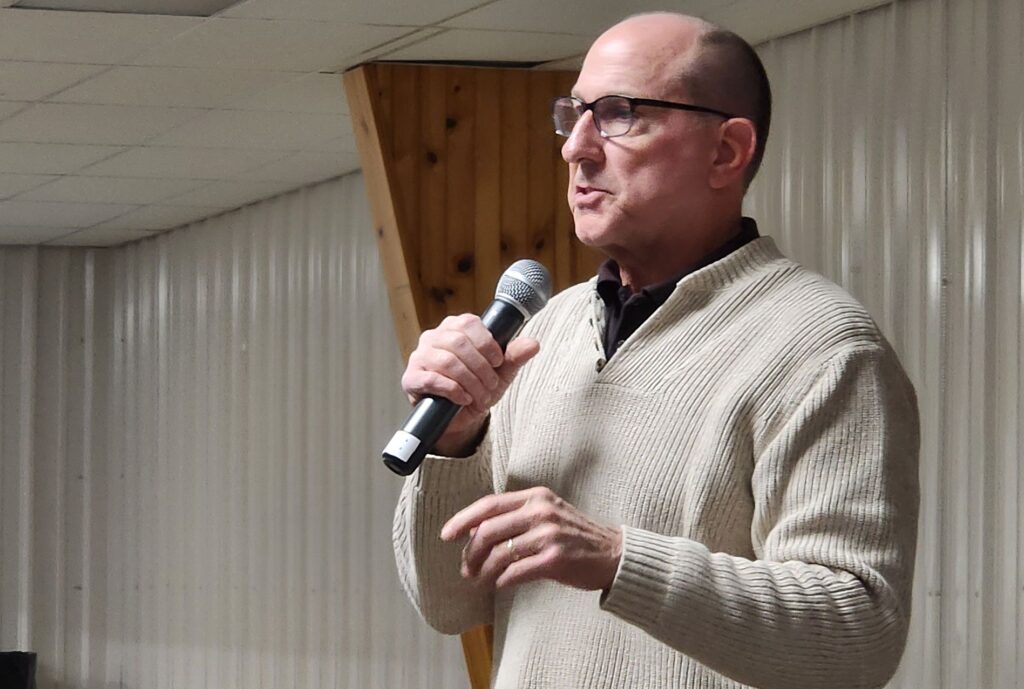
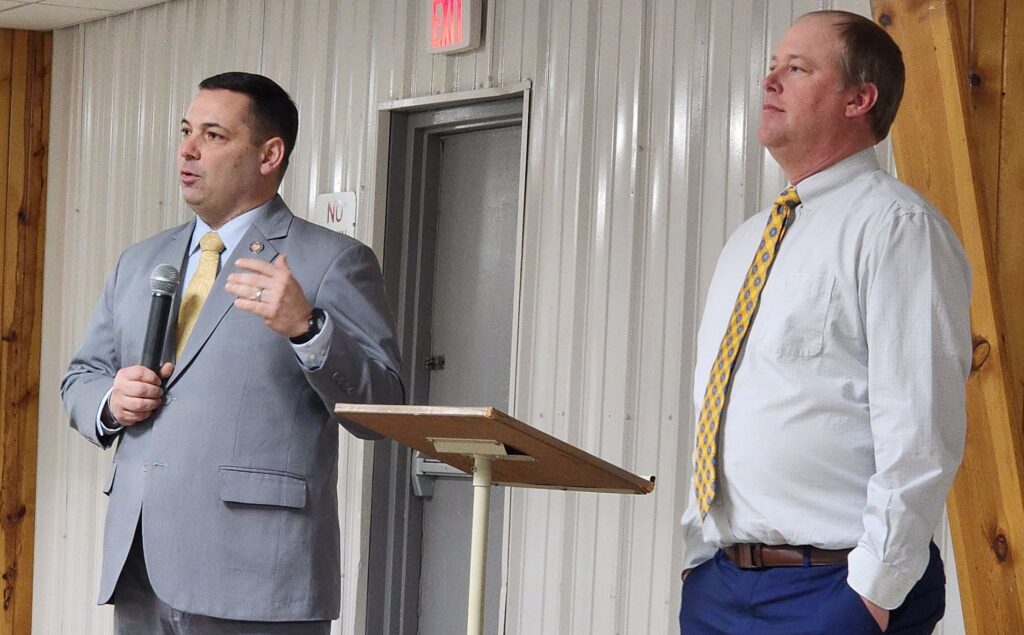
Speaking at the meeting were State Rep. Haraz Ghanbari, R-Wood County, State Rep. David Thomas, R-Ashtabula County, and Wood County Auditor Matt Oestreich.
Petitions on property tax
The citizen-led organization is seizing on the anger and frustration about rising property taxes in Ohio to propel a petition effort to get all property taxes banned in the state. After years of watching property valuations spike, many voters are saying, “enough is enough,” Thomas said.
Meanwhile, for years the state legislature looked the other way – until it is now a crisis, Thomas said.
In Ohio, the number of signatures required to get an initiated constitutional amendment placed on the ballot is equal to 10% of the votes cast in the preceding gubernatorial election. That would be 413,488 valid signatures.
Ohio has a signature distribution requirement, which requires that signatures be gathered from at least 44 of Ohio’s 88 counties. Petitioners must gather signatures equal to a minimum of half the total required percentage of the gubernatorial vote in each of the 44 counties.
Signatures are due 125 days prior to the general election – so by July 1 this year.
According to Thomas, the organizer behind the petition effort is hiding the number of signatures collected so far. Though they are reportedly accumulating in the organizer’s basement, Thomas said the state will have an idea if there are enough valid signatures by mid-April.
Polling on the issue shows 65% of Ohioans surveyed have voiced support for the property tax ban, he said.
Efforts to calm the crisis
With the proposed property tax ban looming, state legislators took action last year to show voters they were listening.
“We are not looking to abolish property taxes. We are looking to reform,” Thomas said. “Not to blow the system up.”
So a series of bills were passed in Columbus to stop the unvoted spikes in property taxes. Those bills will result in a $3.8 billion cut in property taxes over the next three years.
The bills ended the use of “replacement” levies, allowed for homestead and owner occupancy piggybacks, changes the valuation process, bans school districts from using emergency or substitute levies, caps schools property taxes at the level of inflation, and allows county budget commissions to rein in tax revenue that is not viewed as necessary.
“We wanted to lower the temperature in Ohio,” Thomas said.
This comes years after other funding sources have been abolished for local governments. Local government funds have been slashed, the state stopped allowing collection of tangible personal property taxes, and later replaced the Commercial Activity Tax. “Of course, the state kept that,” Oestreich said.
As he travels the state to talk about property taxes, Thomas said he is frequently asked why state lottery revenues aren’t paying for schools as promised. The lottery revenue making it to school districts is $1.5 billion a year – far shy of the $30 billion a year needed for schools, he said.
If ballot issue passes
There would be little time to prepare for the loss of property tax revenue, since the amendment calls for the ban to begin with the new year in 2027.
“We have no idea what will happen if it gets on the ballot and passes,” Thomas said.
To continue services currently paid for with property taxes, Ohio would have to look for different sources of revenue. For counties, that would likely be sales tax increases – and require the state to remove the current cap.
Oestreich explained that Wood County collected $31.8 million in sales tax last year. To make up for lost property taxes, the local sales tax would have to be bumped up another 8% to a total of 14.75%, he said.
In Ashtabula County, the sales tax would need to be hiked to 22% to compensate for the lost property taxes, Thomas said. That would be unsustainable, he said.
“Those are scary numbers,” Oestreich said.
Ghanbari said counties should be cautious about sales tax increases, since the higher the sales tax, the more likely consumers will go elsewhere for their purchases.
While the organizers behind the property tax petitions cite business tax abatements as being unfair to Ohio residents, Oestreich pointed out that getting rid of property taxes frees up commercial and industrial businesses, plus utilities, from paying any taxes.
Last year, businesses in Wood County paid $59 million in property taxes, and utilities paid $37 million. Abolishing property taxes would be the equivalent of giving all businesses 100% tax abatements – forever, Oestreich said.
Residents would have to make up that deficit – or do without services.
While voters may at first blush like the idea of no more property taxes, they may not like the consequences. Safety and security are the primary responsibilities of local governments.
“If you still want those services, you still have to pay for it,” Ghanbari said.
Cities and villages can collect income taxes, so a property tax ban could mean a shift to higher income taxes by municipalities.
Could be the end to townships
There is no easy fix. The hardest hit will be schools and township governments. Townships cannot collect income taxes or sales taxes.
“What happens when 90% of your revenue goes away?” Thomas asked. Currently, that’s what pays for township fire and EMS systems, law enforcement, the plowing of snow and the paving of roads.
One township official said he suspected that people strongly opposed to property taxes likely share similarities.
“A lot of these people never had a house fire,” he said.
“Townships sound like they will be hurt the most,” a Lake Township trustee said, adding, “I’m pretty sure people want an ambulance when they need one.”
If townships can’t provide fire services, businesses likely won’t locate there since insurance expenses are based on ISO ratings. And good luck getting fire insurance for homes, others at the meeting pointed out.
The result for townships may be larger population townships would be incorporated as cities, and smaller townships may be absorbed by neighboring municipalities. That would allow for more shared safety services, Thomas said.
The merging of multiple small fire departments into fire districts could be an answer for some areas, Ghanbari said. Plus collaborating is one way to show overburdened taxpayers that they are being heard.
Fighting back
Local officials on Thursday discussed how they could effectively prevent a property tax ban from being passed by voters.
“You as local leaders, you’re the best offense,” Thomas said to the large crowd of elected officials.
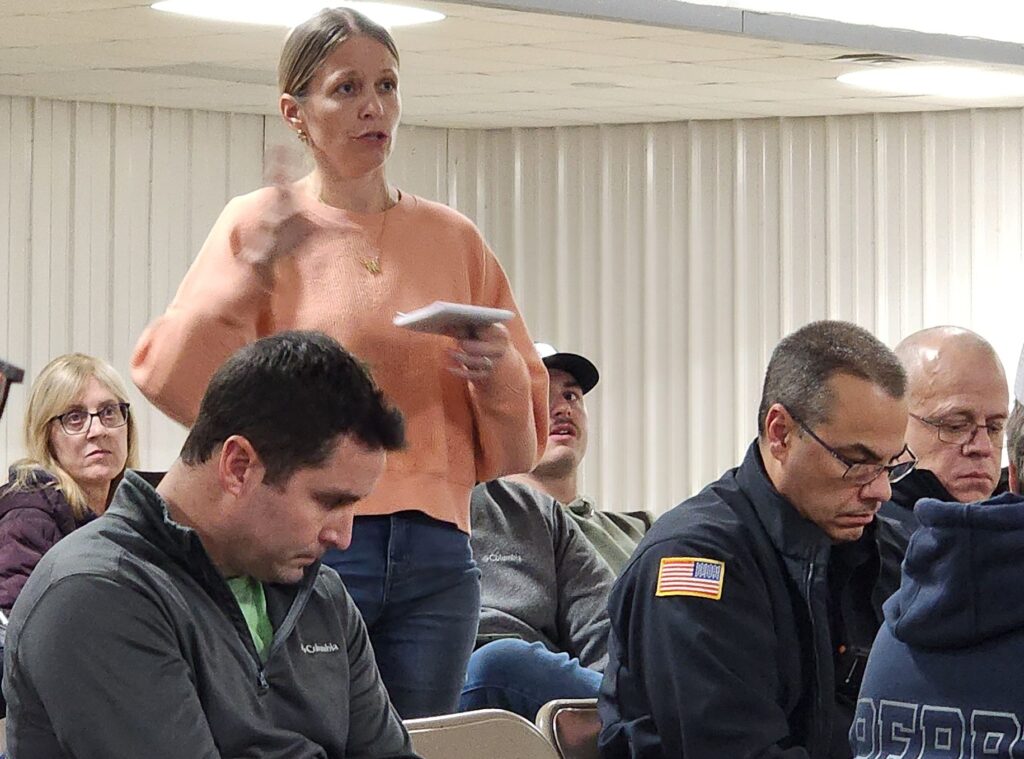
Middleton Township Trustee Melissa Petrea said voters should be made aware of all the services provided by their local governments through property tax revenues.
Perrysburg Township Trustee Jeffrey Moore said information should be made available to officials so they can speak intelligently on the issue.
Wood County Commissioner Craig LaHote introduced the county’s new Public Information Officer Alex Aspacher as someone who officials can reach out to for information.
“It’s our responsibility as leaders to educate our residents,” Tontogany Mayor Matt Shanahan said. “The hard part is after tonight.”
Lake Township Administrator/Police Chief Mark Hummer said local governments should be teaming up with school districts on the issue.
“Schools losing this amount of money will be disastrous,” he said. “Everybody is going to need to come together on a grassroots campaign.”
