By JULIE CARLE
BG Independent News
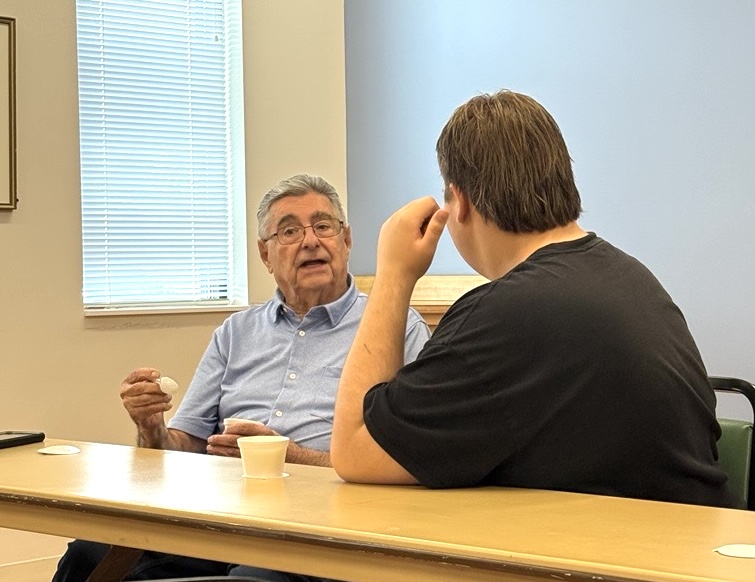
What began as a mentorship program between a veteran’s group at the Wood County Committee on Aging and teenagers from the Juvenile Residential Center of Northwest Ohio quickly became something neither group expected: a relationship built on shared experiences, vulnerability and the realization that their lives were not so different after all.
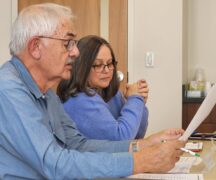
For six weeks, six young men from JRC met with members of the senior center’s veterans’ social circle as part of a program designed to bridge generations through conversation and life lessons.
At first, the differences seemed obvious.
The teenagers were living in a residential center and working to move beyond mistakes that had brought them there. The veterans had decades of life experience, including military service, careers and families.
But as the conversations unfolded, those differences began to fade.
One teen reportedly entered the program wondering what he could possibly talk about with older adults. By the final session, the same group was describing their conversations as open and natural—and saying they had formed genuine relationships.
The veterans discovered something, too.
Rather than seeing the young men simply as teenagers who needed guidance, they began to see pieces of their younger selves in them.
“I was doing bad stuff when I was a kid too,” one veteran was heard saying during a session. Another realization followed: perhaps the difference between their lives was not as large as it appeared. Some veterans reflected that they may have made similar choices as teenagers and simply had not been caught.
That recognition changed the tone of the program.
The program was based on a 2012 “mini-trial project between the Wood County Committee on Aging and the Wood County Juvenile Detention Center,” said Danielle Brogley, WCCOA director of programs. “It was four weeks, with similar themes, and was very well received.”
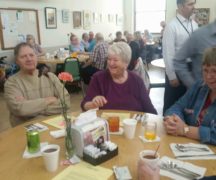
Now, 16 years later, the residential center was sending teens to help serve lunches twice a week at the senior center.
“Based on those interactions and how the kids were feeling about coming here and interacting with the senior citizens, we thought we might be able to find other opportunities that the kids would enjoy,” said JRC Assistant Director Bart Nenadovich.
Brogley remembered the 2012 pilot and thought it might be a possibility for the veterans’ social circle that is always interested in value-purpose programs.
The program could also help the teens “learn to communicate more appropriately and understand where the other person is coming from for when they get back out in the community,” he added. “It was two-fold for us. It was a great way to help set up peer relationships and to help them build their communication skills with people who they will deal with on a daily basis in their own homes.”
“This idea from the past was super well-received,” Brogley said. “It’s just making sure that we have the right leaders in place to make something super successful. And that’s what’s happened extremely well this time.”
“The veterans were excited about this opportunity to mentor the teens,” she said.
The teens were matched with veterans after an initial “speed meeting” session, allowing both groups to find people with whom they felt comfortable, explained Luke Holland, WCCOA program and wellness specialist.
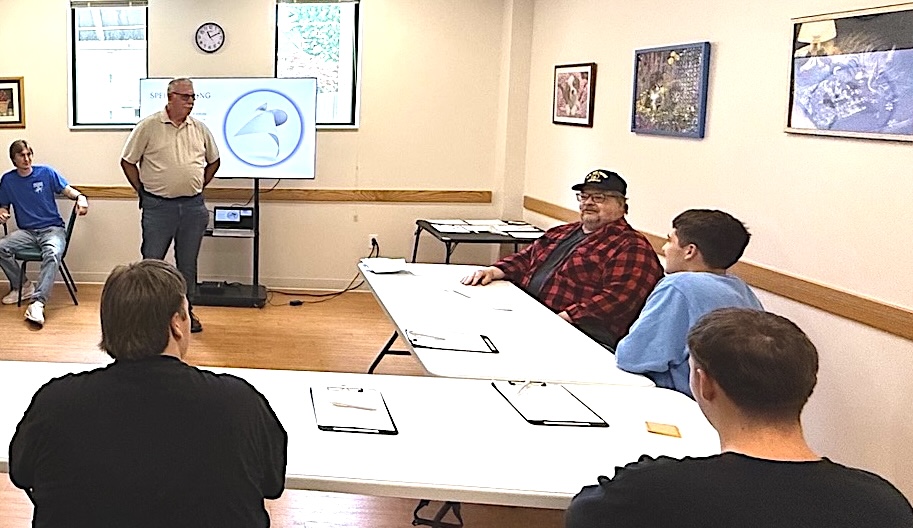
The weekly sessions, which started in June and ran to the first week of August, tackled subjects such as stereotyping, labeling, persuasion and conflict resolution.
And in the conversations, they learned more about each other. “They were good about staying on topic, but the class really thrived when they went back and forth talking about things like, ‘What is a leader?'” Holland said.
For the veterans, who learned firsthand why the teens were in JCR, some of the discussions brought back memories of times when they themselves had felt judged, ostracized or misunderstood, Holland said. The similarities between those experiences and what the teenagers were experiencing became increasingly clear.
For the teens, perhaps the most powerful lesson was that a mistake did not have to define the rest of their lives.
They saw veterans who had faced challenges, been judged for their pasts and continued forward to become productive members of their communities. In those men, the young people could see a possible version of their own futures.
“They’re able to bounce back and lead these lives and be productive members and turn things around for themselves,” Bart Nenadovich said about the veterans. “And I think our youth looked at that as like, ‘That could be me.’”
The veterans were learning as much as they were teaching.
Brogley said many initially expected to be the ones imparting wisdom. Instead, listening to the teenagers opened their eyes to what it is like to grow up today—and helped them recognize the similarities beneath the differences.
The program also created something both groups said they needed: a place to be heard.
According to Nenadovich, the teenagers said they enjoyed the sessions because they felt seen and listened to. The veterans, meanwhile, found renewed purpose in sharing their experiences and helping the young men consider different possibilities for their futures.
Larry Bateson, one of the veterans involved, summed up the experience simply: “”I truly enjoyed the opportunity to be part of the JRC program, having a great group of young men and veterans. We all shared our experiences, focusing on building positive means to handle life’s challenges. In turn, we became friends, where we could talk freely about any subject or situation.”
Perhaps the biggest surprise was that the relationships did not necessarily end when the six-week program did.
The veterans asked whether they could continue communicating with the teens. Plans included letters and possible visits, giving the new relationships an opportunity to continue. Both sides expressed enthusiasm about staying connected.
What started years earlier as a simple effort to connect young people with the community has grown into something much larger.
The lesson from this year’s program may be its simplest one: sometimes the best way to bridge a generation gap is to sit down, listen and discover what is already there.
The veterans came expecting to teach.
The teenagers came expecting to learn.
In the end, both groups did both—and discovered they had far more in common than they ever expected.